
Caching NextJS app on worker has long KV cache put times
Hey everyone, we're implementing a custom HTML caching layer in a Worker and running into an unexpected blocking issue that seems to contradict the documentation.
We're using
We're seeing two main issues in our traces:
1. High Latency Write: Our
2. Blocking Request: This 900ms latency is blocking the total request time for the client, delaying the
My understanding is that
I think the main issue is how
We're using
ctx.waitUntil()The Problem
We're seeing two main issues in our traces:
1. High Latency Write: Our
kv_put2. Blocking Request: This 900ms latency is blocking the total request time for the client, delaying the
return outOur Code & Confusion
My understanding is that
ctx.waitUntil(Promise)fetchI think the main issue is how
tee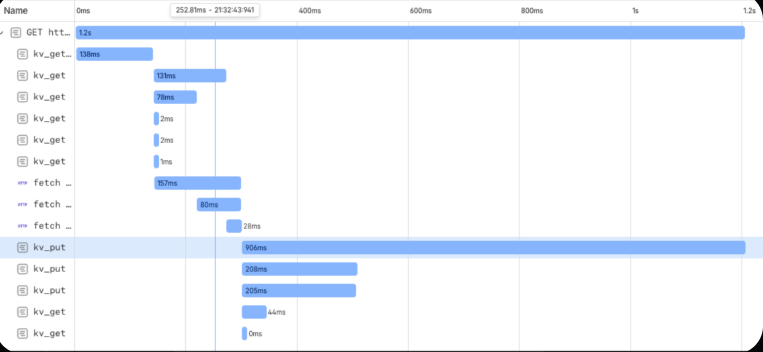

Welcome to the official Cloudflare Developers server. Here you can ask for help and stay updated with the latest news
86,942Members
Resources
Was this page helpful?
