
`cacheKey` is Enterprise only - if you're referring to `fetch(..., { cf: { cacheKey: foo }});`
cacheKey is Enterprise only - if you're referring to fetch(..., { cf: { cacheKey: foo }});cacheKeyfetch(..., { cf: { cacheKey: foo }}); V
V K
K VK
VKThere is no hard limit for duration. However, after 30 seconds, there is a higher chance of eviction.
KKVCF-Cache-Status: DYNAMIC. Any way to force it to cache?KV HHKH
HHKHUncaught ReferenceError: ENV is not defined Is this intended for JS files? It seems to just override the actual code, not setting the variable...Kprocess.env then that won't exist.--define is for, let's say you had console.log(FOO) in your code - you can set it so the built output replaces the global identifier FOO with "bar" as opposed to a runtime variable that you'd find under the second argument to a handler.HWORKER_ENV === 'stage' in a .ts fileHwrangler.toml I have define = { WORKER_ENV = "stage" }HH BK
BK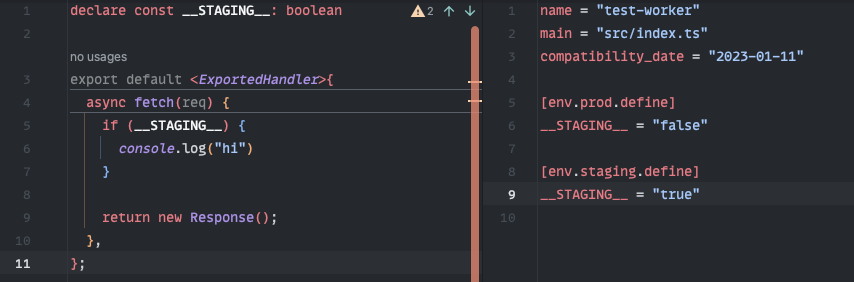 K
K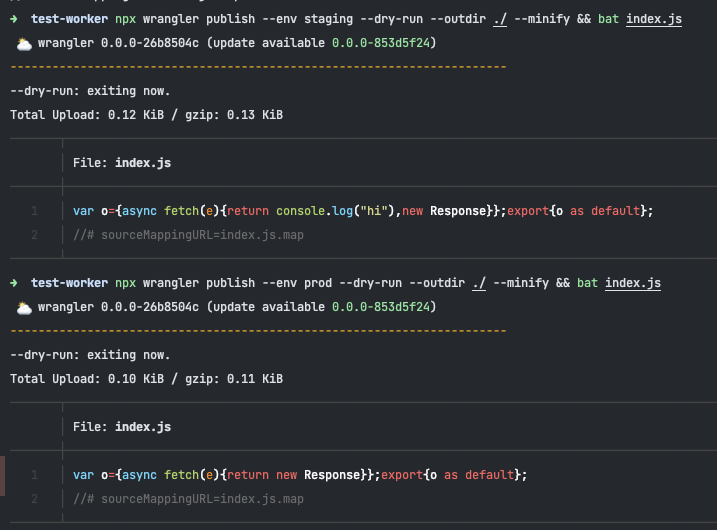 K
Kif (false) is dead code so esbuild removes it during minificationKFOO to be literally replaced with "bar" then it's...K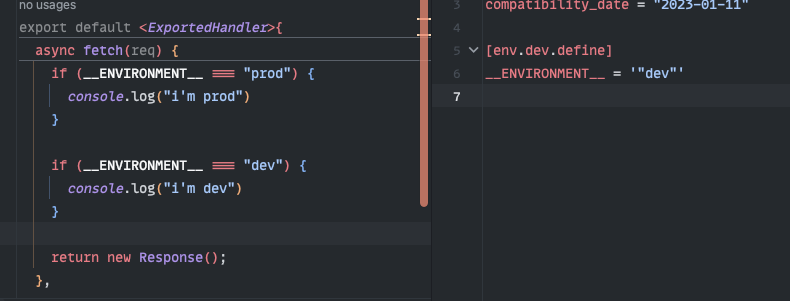
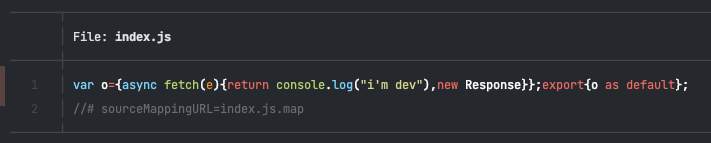 H
H KK
KKwrangler secret put to be stored on edge, and you can use a .dev.vars file for local development & .gitignore thatKKK SKK
SKK SS
SS wrangler 2.8.0
  KK
KK Z
ZCF-Cache-StatusDYNAMICUncaught ReferenceError: ENV is not definedprocess.env--defineconsole.log(FOO)FOOFOO"bar""bar"WORKER_ENV === 'stage'.tswrangler.tomldefine = { WORKER_ENV = "stage" }if (false)wrangler secret put.dev.vars.gitignore[define]
FOO = '"bar"' CDCloudflare Developers / general-helpCDCloudflare Developers / workers-and-pages-helpCDCloudflare Developers / workers-and-pages-help