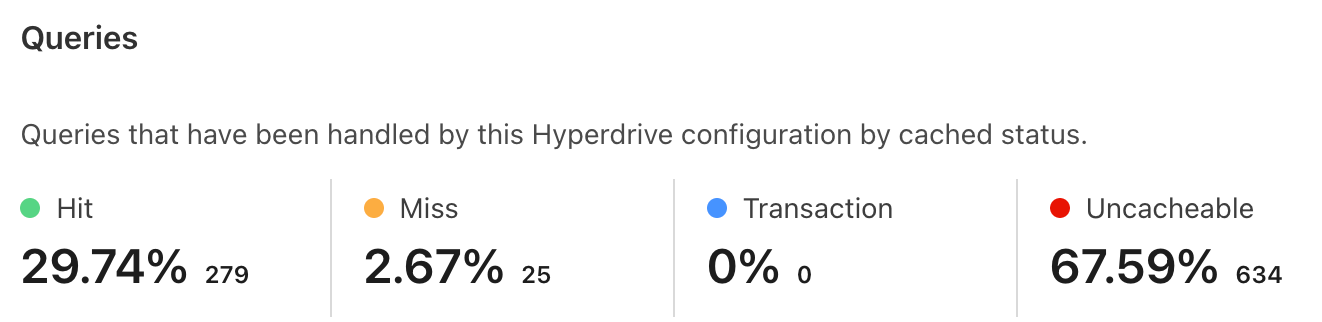
1. It's a simple TTL cache. Once a request is cached, Hyperdrive will attempt to serve from cache u
- It's a simple TTL cache. Once a request is cached, Hyperdrive will attempt to serve from cache until the cached result expires. It does not do any proactive purging on mutation.
- Same as 1. If you really need to bypass cache on individual queries, current best option is include any volatile function in your query (e.g. including
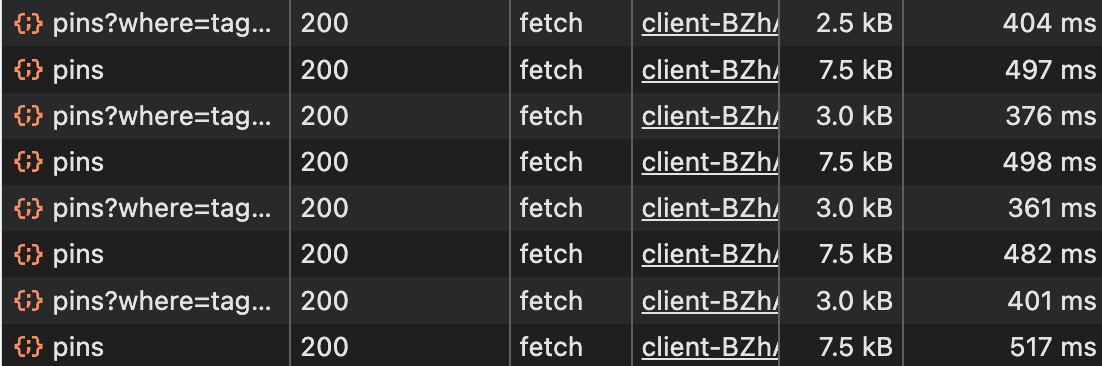
random()in your SELECT statement). Offering a better option for this is on our radar but not for very soon. - Latency will still be much better through Hyperdrive than a direct connection in most cases (with the caveat that networking is a dynamic thing and sometimes routes can get weird). However cache hits will always be much faster than anything else, so it's up to you what tradeoffs are right for your use case.