Hello everyone. I am Dr. Furkan Gözükara. PhD Computer Engineer. SECourses is a dedicated YouTube channel for the following topics : Tech, AI, News, Science, Robotics, Singularity, ComfyUI, SwarmUI, ML, Artificial Intelligence, Humanoid Robots, Wan 2.2, FLUX, Krea, Qwen Image, VLMs, Stable Diffusion
Ok, and is the tier1 48gb config optimal for A100 graphic card with 80gb or I should change something to make it better and use more available memory? Batch size around 4-7? Do you recommend onetrainer finetune over kohya_ss dreambooth?
I'll try to give results here if I find the best sweet spot for my number of training images!
I do think it could be useful to have somer kind of pinned message with recommended setups of epoch #, repeat # and such specific to the # of images, or at least a ballpark close to it
Yeah I only have 8 images, I'm hoping I can finetune a model and generate decent enough images to be able to train with more images... Not sure how that will go lol
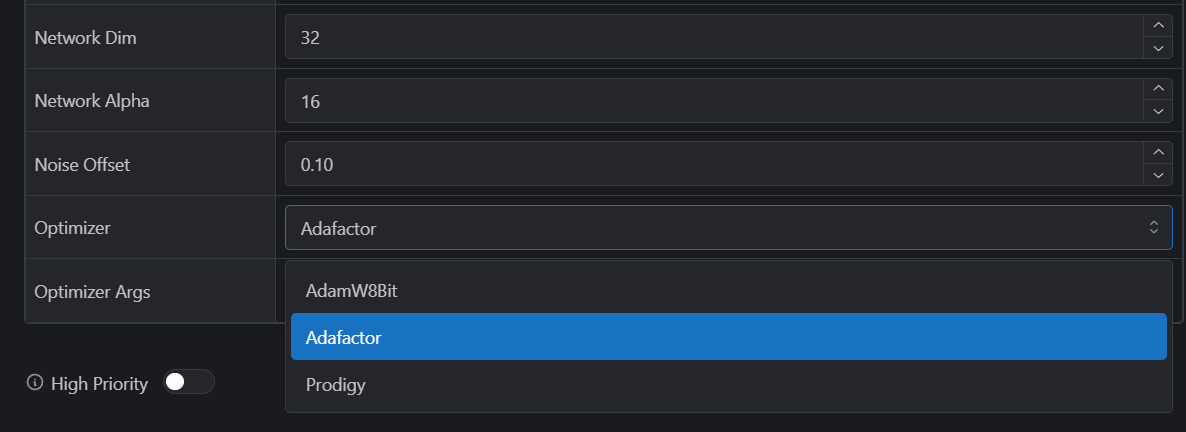
hi, for quick trainings I often use civitai. I remember you talked about rank of lora in kohya, here it is both rank and alpha, and not sure about these. The default seems to be the same for both flux and sdxl trainings: Default is also not adafactor, but the Adam...any recommendations here? realistic person training
Yeah, I'll first try to finetune with only 8 images, will try to find the best # of steps sweet spot until not too much overfit and then generate new images and finetune again
@Furkan Gözükara SECourses I am not 'urging' u to make a video now but I would like to know if Kohya can be used to train HiDream model (with my personal pics) like Flux ? Can I do it in Massed Compute ?
If I train model A for 3200 steps and model B for 5000 steps, both having the same base model, would the result of generating an image be the same for both if for model B I use a checkpoint that's near 3200 steps like model A (save every x epoch/steps)?
And if I train a model for 3200 steps and then retrain it for another 1800 steps for a total of 5000 steps, will that model be as efficient as if I trained a model to 5000 steps directly?
@Furkan Gözükara SECourses Is the kohya dreambooth sdxl 48gb config usable with the kohya sdxl lora extract configuration that you have in one of your patreon posts (not sure if I can post image here)?
I am asking because if I leave the default settings of Clamp Quantile at 0.99 and Minimum difference to 0.01, I think it says the text encoder does not need to be extracted or something similar and when I try to use the lora, it simply does not show anything of my trained model compared to if I use the settings in your image of 0.1 for Clamp Quantile and 0.00001 for Minimum difference where now it works fine.
It just made me wonder if that screenshot of the kohya sdxl lora extract settings was up to date with the latest 48gb config of kohya dreambooth settings!
I did see a recent post for lora extract, but it was for flux so I wasn't sure
Doctor, could you please tell me the best settings for LoRA training for SDXL? I saw your previous post about fine tuning... Have you already posted about LoRA training?
@JAV_Pomoe Personally, on my end and from what I see in all the guides, I get better results by training either with kohya_ss dreambooth or onetrainer and then extracting the lora from the finetuned model with koyha_ss. The resulting extracted lora seems better to me than one training directly trained as such. Plus, you also have the finetuned model you can keep too It's crucial to use the good settings for extracting the lora and finetuning the model though. For extracting the LORA, the settings can be found in an image at the very bottom of this patreon post However, do note that in the image, the Clamp Quantile and Minimum difference don't have red rectangels around them, but they do have different values than the default and you have to use those precisely.
Technique consisting in a fine-tuned AI model [WAN 2.1 / txt2vid]. Hundreds of hours of training and testing. Still far from good, but hopefully getting somewhere. I'm a huge fan of this technique.
Music by @klsr-av
You can access these new WAN 2.1 LORAs, through my Patreon profile.
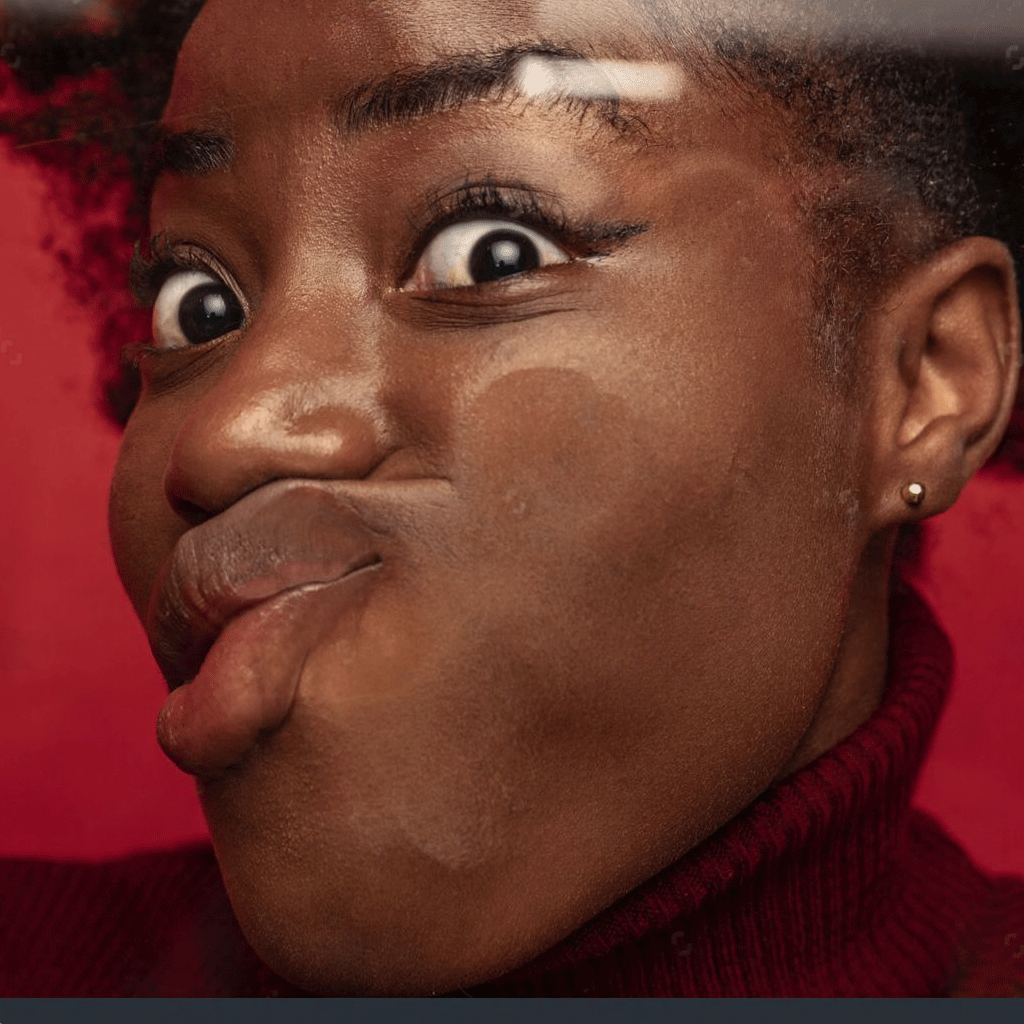
looking for some advice on this regularization workflow for training this flux concept. my concept im training is faces pressed against glass. So i have 75 images of faces like the above. Then I have captioned each one without any mention of pressing against glass, and have generated regularization images with those captions so that each training image has a corresponding regularization image to help isolate the concept. With this workflow, do i want to keep repeats on both training and reg images at 1?
Honestly I'm always wondering how to know the number of epochs and such. Should we just aim for a certain # of total steps and play with the # of epochs and repeats?
For example, with 15 images 200-300 epochs but how many images repeats? Or is it better 1 epoch and tons of repeats?