
That’s probably the issue then. Environment Variables aren’t populated on startup
That’s probably the issue then. Environment Variables aren’t populated on startup
 L
L HLHLLHLHL
 �
� FFF
FFF FF
FF III
III S
S DDD
DDD Z
Z M
M JJ
JJ FF
FFWhen the schedule interval is more than 1 hour, a scheduled Worker may run for up to 15 minutes. S
S wrangler 3.17.1SSS
 FIFF
FIFF UFUF
UFUF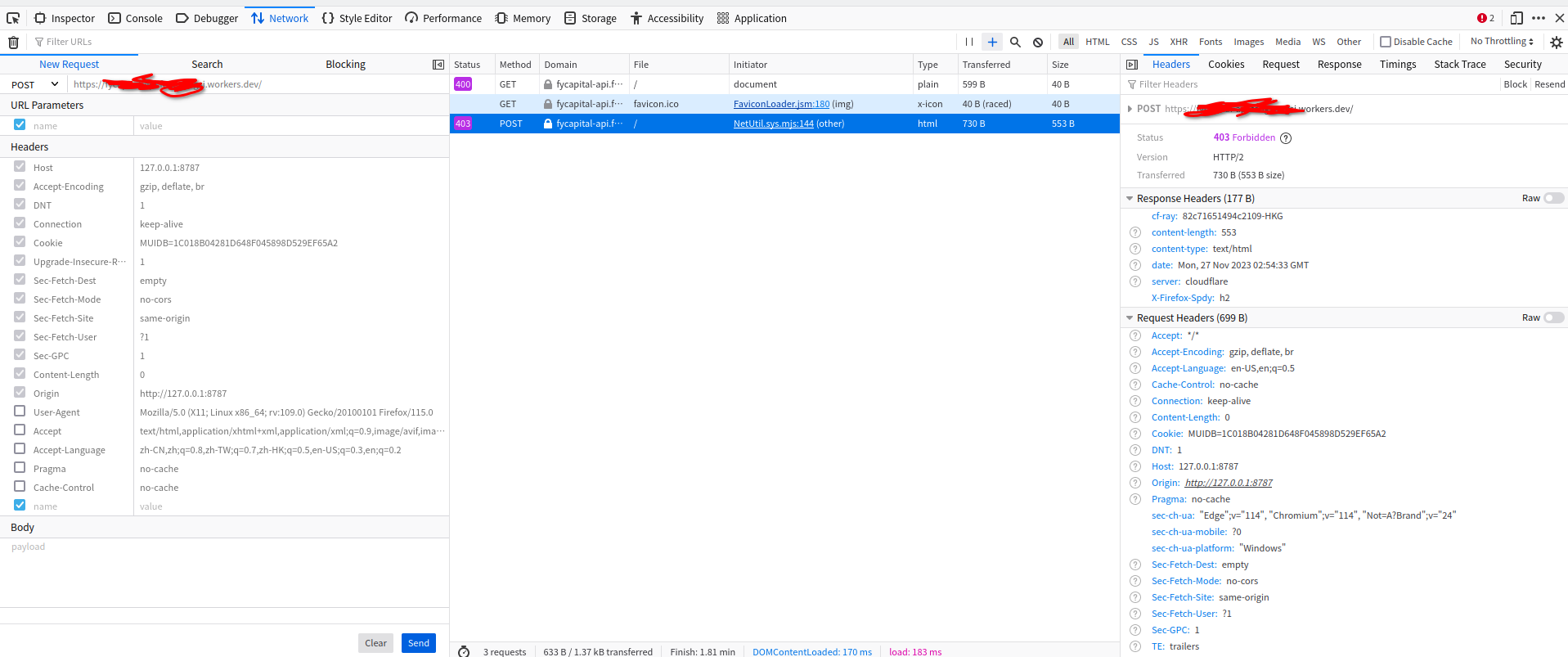 UFF
UFF
 F
F
 C
Ctext-to_Image 
 PPPC
PPPC
#[event(fetch)]
async fn main(mut req: Request, _env: Env, _ctx: Context) -> Result<Response> {
    if req.method() == Method::Post{
        if let Ok(body) = req.text().await{
            match serde_json::from_str::<TVSignal>(&body) {
                Ok(tvs)=> {
                    match Fetch::Request(tvs.request()).send().await {
                        Ok(_) => Response::ok("Success"),
                        Err(_) => Response::error("Error to send request to OKX", 502),
                    }
                },
                Err(_) => Response::error("Can't deserialize json to pass value", 400),
            }
        }else {
            Response::error("Need text body",400)
        }
    }else {
        Response::error("There are apis, please request with POST",400)
    }
}✘ [ERROR] Error while creating remote dev session: TypeError: fetch failed
at fetch
{
cause: Error: connect ETIMEDOUT 2606:4700:3031::ac43:cb34:443
at TCPConnectWrap.afterConnect [as oncomplete] (node:net:1495:16) {
errno: -60,
code: 'ETIMEDOUT',
syscall: 'connect',
address: '2606:4700:3031::ac43:cb34',
port: 443
}
}


