

 T
TThanks for the feedback. We'll look into bringing an intro/welcome channel back for the first time.

 U
UHi @fwen agree with you. Sometimes even experienced people concerned about new tools especially unpopular ones. It leads to time investment and not getting the expected results causing delays in project delivery.
 K
K@Navadeep , @fwen and @Umesh Lokhande ,
You guys said about the WCH chips:
We're solving that with Embeetle IDE [see https://embeetle.com] - not only for WCH chips of course, but for all the MCUs we integrate, we're not bound to a specific vendor. Here's what Embeetle can mean for you when you want to get started with a new MCU:
You guys said about the WCH chips:
I think it lacks some tool chains and tutorials right at the moment. That is making it harder for newer people to get into it.
We're solving that with Embeetle IDE [see https://embeetle.com] - not only for WCH chips of course, but for all the MCUs we integrate, we're not bound to a specific vendor. Here's what Embeetle can mean for you when you want to get started with a new MCU:
- Embeetle provides one or more sample projects for your MCU, typically to blink an LED for a quick start.
- Embeetle downloads all the tools automatically when you launch a project (compiler, flashtool, ...).
- Embeetle provides excellent documentation on the MCU and the dev board, eg: https://embeetle.com/#supported-hardware/wch/boards/ch32v003f4p6-evt-r0-1v1
 K
KSorry for the shameless self promotion 
KAnyway, Embeetle is free software.

 F
FI'll make sure to check it out if I get my hand on a WCH microcontroller.
KI can send you the Tiny Scarab board when it's finished and fully tested. I might have to ask a little compensation for the production costs. I'll share more on that later here in the chat (once I have a definitive production cost estimation).
Fthanks!!
 S
S T
THey @everyone, we're starting in a couple minutes! See you in the meetup!
 D
DCongrats @ygramoel ! You've been Verified!
S@ygramoel Welcome! will be happy to know your technical background and what project you're working on these days.
 N
N@everyone Thanks for tuning in for today's DevHeads Office Hours! We talked all around IoT FOTA, Tiny Scarab board and about some exciting demo videos coming up. Again, cheers to all new Dev's!
People who have missed this can always watch the recording. Stay tuned and keep smashing that bug.
People who have missed this can always watch the recording. Stay tuned and keep smashing that bug.
 Y
YHi @Saßì , I'm currently working on the Embeetle IDE together with @kmulier, I have a background in EDA tool development mostly, also all kinds of electronics project, started working in 1983, long before internet became ubiquitous. Trying to figure out what devheads is all about
YTo be honest, I don't really understand how Discord works yet. Typing this on my phone because haven't figured out yet how to connect to this channel on my pc

 NY
NYThat worked, thanks
 P
PI got my hands dirty on Resin 3D printing for the very first, Results are flabbergasting.
A word of caution for those who wanna try the same:
This model took 3 hrs to print, 30mins of post processing and almost 2.5-3hrs to clean all the mess
A word of caution for those who wanna try the same:
This model took 3 hrs to print, 30mins of post processing and almost 2.5-3hrs to clean all the mess
 N
NGood job
 S
SHello guys,
I wanted to know more about standardised architecture of linux based embedded system.
My system is having Digital IOs, Analog IOs, CAN, Modbus over RS485, RTC, Web server etc....
Hardware is ready. Also, it's working smoothly but i dont want it to be tightly coupled.
What i want is every other module will work independently and i will code the application (Custom logic) only as per requirement.
Any suggestions, posts, links.....i am relatively new to this.
Thank you...!!
I wanted to know more about standardised architecture of linux based embedded system.
My system is having Digital IOs, Analog IOs, CAN, Modbus over RS485, RTC, Web server etc....
Hardware is ready. Also, it's working smoothly but i dont want it to be tightly coupled.
What i want is every other module will work independently and i will code the application (Custom logic) only as per requirement.
Any suggestions, posts, links.....i am relatively new to this.
Thank you...!!
 A
Aas the requirement you have provided ... i feel that all these input interrupts and outputs should have thier own logic and so some kind of ipc ... in that situation you can utilize some ipc methods or else you may use ros as an architect ... where everything is a pub sub structure and considered as nodes ...
Aalso may i know the environment and mpu details ..
Abuild environment*
Ahere by ipc i mean ... inter procedure communication ...
K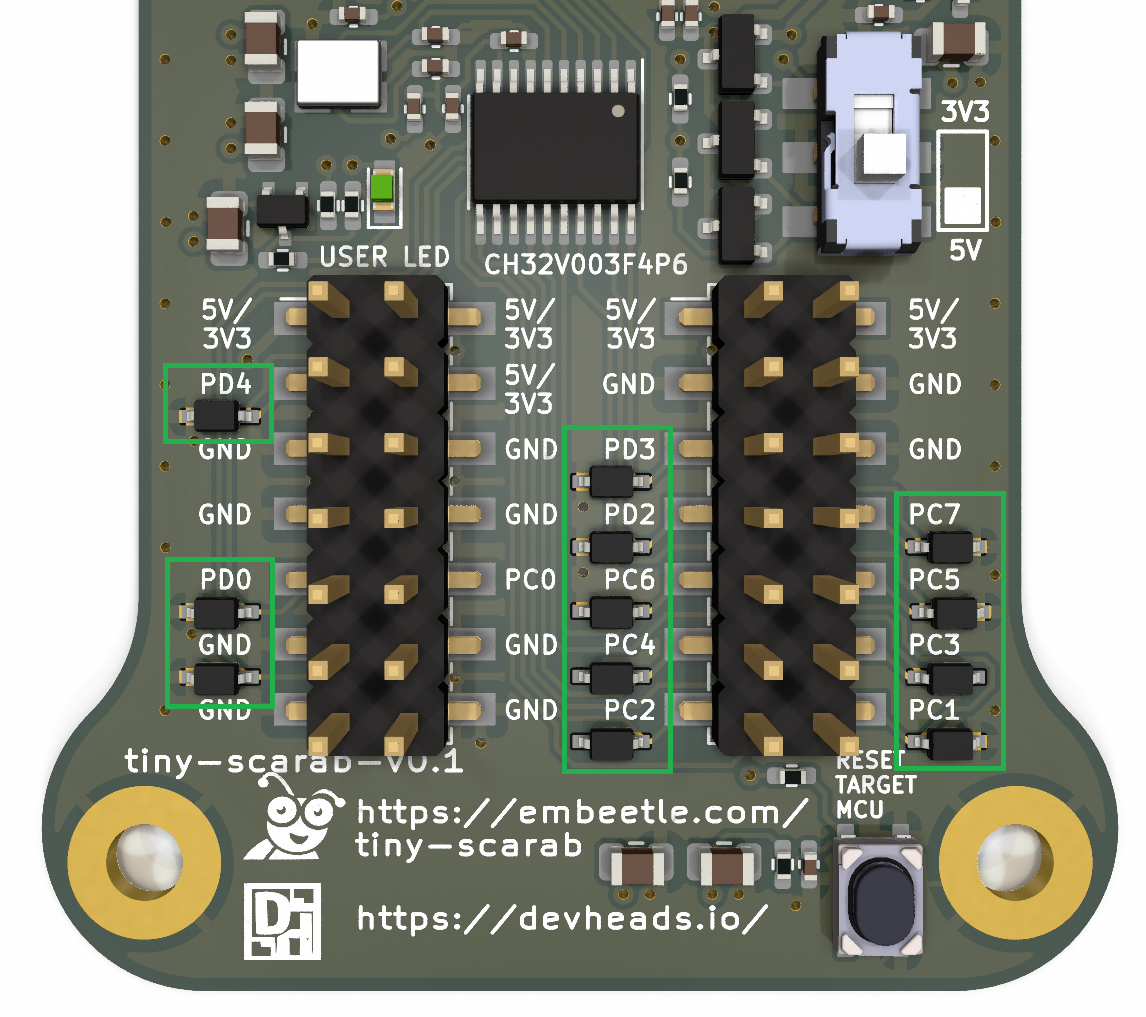 K
KI'm placing TVS diodes at all the IO pins
KFor example:
K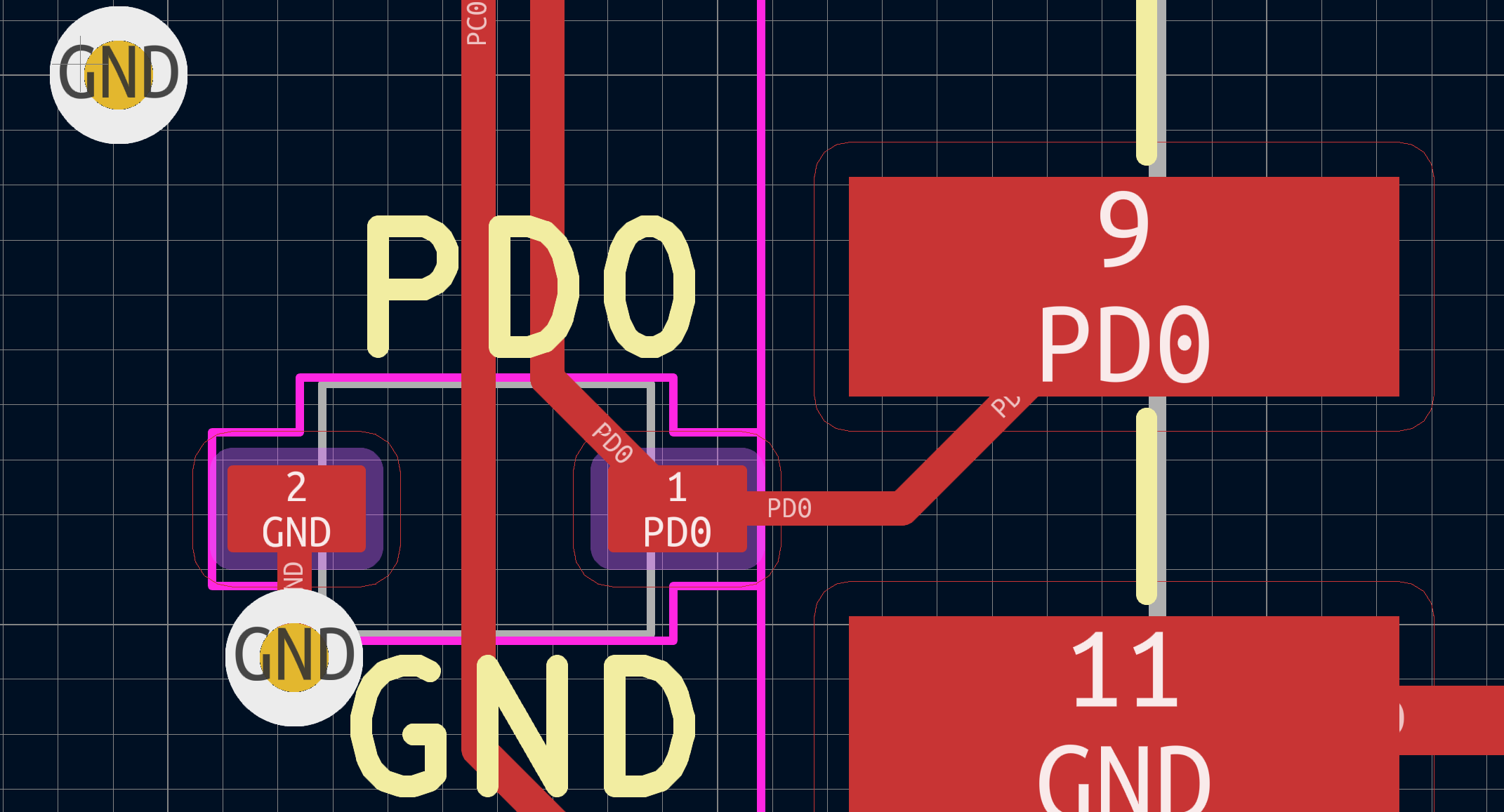 K
KI also installed plenty of 'security' at the USB port:
K K
K(1) TVS DATA LINES
TVS Diodes protect the USB data lines against voltage transients.
(2) TVS 5V POWER
A larger TVS diode is placed on the 5V power incoming from the USB connector to deflect voltage transients.
(3) ZENER 5V + (4) FUSE
A zener diode of 5V6 (I took a bit of margin) is connected to the 5V USB power line. A permanent overvoltage will short through this zener diode and burn the fuse. The rest of the circuit should be fine.
(5) PMIC 500mA
A chip lets only 500mA pass through from the incoming USB power to the rest of the board. In case of overcurrent it will shut down and lit the LED.
TVS Diodes protect the USB data lines against voltage transients.
(2) TVS 5V POWER
A larger TVS diode is placed on the 5V power incoming from the USB connector to deflect voltage transients.
(3) ZENER 5V + (4) FUSE
A zener diode of 5V6 (I took a bit of margin) is connected to the 5V USB power line. A permanent overvoltage will short through this zener diode and burn the fuse. The rest of the circuit should be fine.
(5) PMIC 500mA
A chip lets only 500mA pass through from the incoming USB power to the rest of the board. In case of overcurrent it will shut down and lit the LED.
FThat sounds wayyyy overkill for such a cheap microcontroller
FLike for me personally I think replacing the microcontroller itself would be cheaper
T@Wired & Wireless Networking folks, any suggestions on the best MQTT client software to use when testing MQTT topics during development? At least as far as ease of use and security are concerned..?
 A
Amqtt explorer is what i prefer for the ease of usage
 T
TNice! Thanks. I'm looking into it. Looks like it checks a lot of boxes around open source, platform support, and decent enough documentation, BUT...
Is it still being maintained?
https://mqtt-explorer.com/
Is it still being maintained?
https://mqtt-explorer.com/
TAlso, how and from where do I know Thomas Nordquist  ... I can't put my finger on it...
... I can't put my finger on it...UEven I use MQTTExplorer daily but when working with sensitive applications, especially for security where we need to upload files (.crt, private or public.pem etc). I prefer MQTTFx. For a mobile client, also recommend looking into the MyMQTT App if security is not a concern
 T
TCosts $$ 
UYes, unfortunately, *MQTTFx *costs $ starts at 49.90€. For free as Abhishek said MQTTExplorer is good to get the job done!
DCongrats @Deepak ! You've been Verified!
S@Deepak Welcome , Can you tell us a little about yourself and your technical background? What brings you to DevHeads? What are you working on currently?
DCongrats @topgun3237 ! You've been Verified!
S@topgun3237 Welcome! will be happy to know your technical background and what project you're working on these days.
KHi @fwen ,
I understand your point. However, all that protection is not so much to safeguard your "investment" in the 10-cent MCU. It's intended to safeguard your time investment. See, a Transient Voltage event (eg. ESD discharge) can damage the chip slightly, such that some of its IO pins no longer work. You might not immediately figure out why your project is failing and be troubleshooting for a whole day.
I understand your point. However, all that protection is not so much to safeguard your "investment" in the 10-cent MCU. It's intended to safeguard your time investment. See, a Transient Voltage event (eg. ESD discharge) can damage the chip slightly, such that some of its IO pins no longer work. You might not immediately figure out why your project is failing and be troubleshooting for a whole day.
Foh i thought when it's damage it just no longer work. i havent had any failed on me before. thanks for the clarification!
 G
GAesthetics 

 P
P@kmulier ESD diodes on IOs on a dev board is not really required.
KGlad you guys like the aesthetics.
Why are ESD diodes not required on IO from a dev board?
Why are ESD diodes not required on IO from a dev board?
Pwhy do we need ESD diodes?