The best way to receive LVDS signals depends on the specific requirements of your application and the capabilities of the receiving device. However, here are some general guidelines for receiving and managing LVDS signals:
1. Use Proper LVDS Receiver ICs: Choose LVDS receiver ICs that are suitable for your application and meet the required speed, voltage levels, and noise immunity. There are many LVDS receiver ICs available from various semiconductor manufacturers designed specifically for different applications. 2. Match Impedances: Ensure that the impedance of the transmission lines and the receiver inputs match to minimize signal reflections and maintain signal integrity. This typically involves using controlled impedance transmission lines and termination resistors at the receiver end. 3. Clock and Data Recovery (CDR): In high-speed applications, consider using a Clock and Data Recovery (CDR) circuitry to recover the clock signal and data from the incoming LVDS signals. This helps to ensure accurate data reception even in the presence of jitter and signal distortion. 4. Signal Conditioning: Depending on the specific requirements of your application and the characteristics of the LVDS signals, you may need to implement signal conditioning techniques such as equalization, pre-emphasis, or filtering to improve signal quality and reliability. 5. Power Supply Decoupling: Properly decouple the power supplies of the LVDS receiver ICs to minimize noise and interference. Use low-noise power supplies and bypass capacitors close to the ICs to filter out high-frequency noise. 6. Grounding: Pay attention to grounding techniques to minimize ground loops and reduce noise coupling into the LVDS signals. Ensure a solid and low-impedance ground connection for both the transmitter and receiver sides.
7. Error Detection and Correction: Implement error detection and correction mechanisms if necessary, especially in applications where data integrity is critical. This may involve using techniques such as CRC (Cyclic Redundancy Check) or FEC (Forward Error Correction).
@streetdogg Welcome,! We're happy to have you as a DevHead. Feel free to let us know what you're working on now and a bit about your technical background.
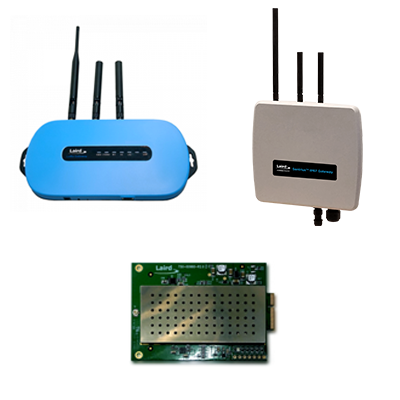
New: RG191 with LTE for operation in US (Wi-Fi / LoRa / Ethernet / LTE)The Sentrius™ RG1xx LoRaWAN-Enabled Gateway is the ultimate in secure, scalable, robust LoRaWAN solutions. Gather data from as...
You shouldn't have any compatibility issues. Most important is selecting the right frequency for your region. If your gateway is just used as a "packet forwarder" for low volume traffic, any will work fine. If you need to embed your LoRaWAN Network Server on the gateway then you'll need a higher end product. Also, some gateways have better range performance and better high traffic performance, but if you're just doing some small system testing that won't be an issue.
background mechatronics engineering, have worked in control engineering, signal processing, embedded software dev, did some fpga-development with vhdl, yeah... that sort of stuff.. currently working on an automated object tracking system for aerial objects
Wow, the gamut of disciplines. @Navadeep will be a friend.
Happy to have you aboard. If you have any suggestions/requests let us know in the #suggestion-box or just throw them in here. Also we have weekly events right now that we're going to increase in frequency soon and you're more than welcome to attend those as well.
I have another poll that's tech-adjacent. Since we're going to be opening up to the world soon, we'd like to know where do you guys get your engineering information/education? I'll post a poll on that soon.
I strongly condemn the use of http://www.libgen.is where people type in e.g. the title of a book or a general search term relating to book titles and http://sci-hub.hkvisa.net where people e.g. type in a papers DOI, these are grave copyright violations!
Sci-Hub,mg.scihub.ltd,sci-hub.tw,The project is supported by user donations. Imagine the world with free access to knowledge for everyone ‐ a world without any paywalls.
hello, in MQTT version 5 the Request/Response feature , Could you clarify whether is the publisher, after initiating a request, receives a response from the subscriber? and could you provide a basic code example for both the publisher and subscriber to test it and add it to my code
I'd suggest download python scripts from online sources like ChatGPT for publisher and subscriber and evaluate the feature. I never needed to implement. As it comes as a feature of MQTTv5
Hi all! My name ist Flo, 29 from Germany. Studied computer science and have been working as an embedded software developer for one year now. Mainly Yocto, RTOS, C/++, Python, ARM. I'm here to help where possible and LEARN. Also I'd really enjoy some funny, relaxed tech talks, as I sadyl cant do that IRL. :D
At the moment I am trying to build an armbian image for a very old and unknown tablet namely "Prestigio PMP5197DULTRA". It has an Allwinner A10. Sadly it does not use device tree files but fex files. So that's the problem right now. Also I never built/customized a Linux image from scratch. If anyone has some hints for me, they are greatly appreciated!
Thats what im practically learning at the moment and besides that im watching DevCon talks on YT and reading some eBooks. Also need to learn more about Yocto, RTOS and C++.
@umairahmed17 Welcome,! We're happy to have you as a DevHead. Feel free to let us know what you're working on now and a bit about your technical background.
I tried what you suggest, am not sure from chatgpt codes because I don't get the same output as it does! ( as i understand respond with data or notification or something like that...)
Within the Lwip library, what is the maximum send buffer size, is it variable based on the hardware for TCP transmission, and what are the recommended best practices for efficiently sending large data from a file?
@Saßì Hello and thanks for warm welcome, Currently working on Firmware Engine control Unit for propeller Engine , have degree in Computer Engineering and works in Embedded System Domain