
Yes, I am using @Cloudflare/next-on-pages with my project.
Yes, I am using @Cloudflare/next-on-pages with my project.
 H
H
 PHP
PHP R
R WRR
WRRMiniflareCoreError [ERR_FUTURE_COMPATIBILITY_DATE]: Compatibility date "2024-09-23" is in the future and unsupportednodejs_compat_V2nodejs_compat �
� HH�
HH� �
� R
Rnpm run preview
 HR
HR A
AtotalWaiting for server responsetotal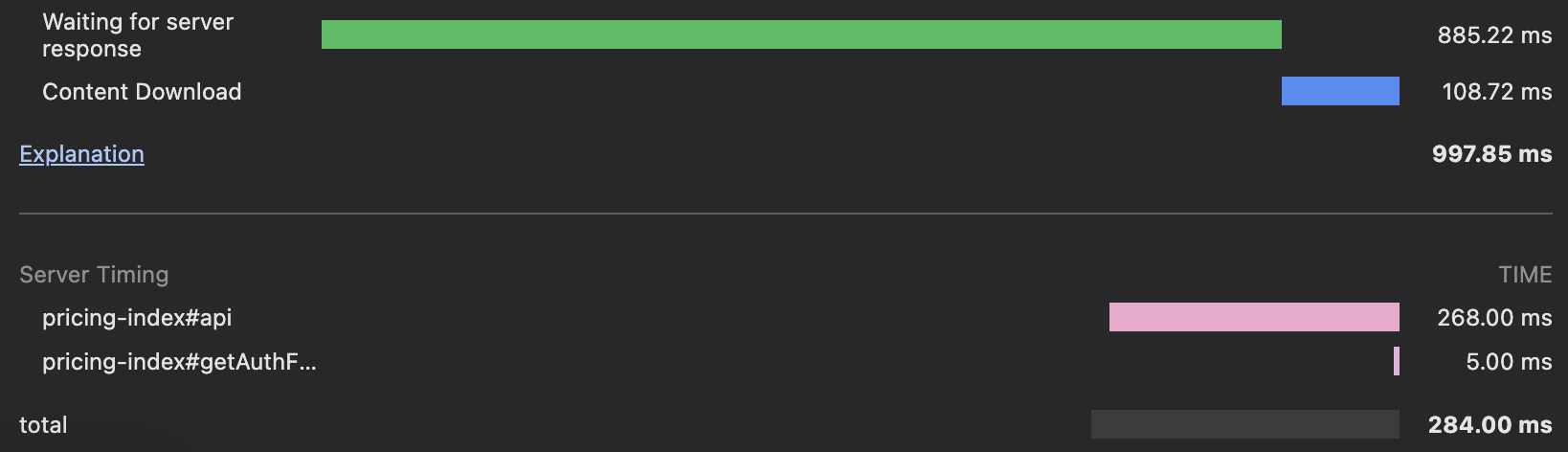
 N
N JA
JAFetch startedeventTimestamponRequest startonRequest endFetch finished = simply
= -
= -
You can see that the most amount of time is actually spent on the way from the worker to the client.

There could be a mistake where the measured Worker end time is not correct since the Date.now` only advances on I/O in workerd. I'll test this a bit later.
 AWWA
AWWA A
A O
Ofunctions/users/friends/index.ts/users/daniel/friendsfunctions/users/[[catchall]].tsfunctions/users/index.tsfunctions/users/[user].tsperformance.now() A
A JJO
JJO AR
AR T
T A
A SH
SHexport async function onRequest(
context: EventContext<unknown, string, unknown>,
) {
const start = performance.now()
const response = await createPagesFunctionHandler({ build, getLoadContext })(
context,
)
const end = performance.now()
response.headers.append("Server-Timing", `total;dur=${end - start}`)
return response
}
You can see that the most amount of time is actually spent on the way from the worker to the client.

There could be a mistake where the measured Worker end time is not correct since the export async function onRequest(
context: EventContext<unknown, string, unknown>,
) {
console.log("onRequest start", new Date().toISOString())
const response = await createPagesFunctionHandler({ build, getLoadContext })(
context,
)
await fetch("https://httpbin.org/get")
console.log("onRequest end", new Date().toISOString())
return response
}


