we could manage it, For high reliability, we’d need a sacalable cloud infrastructure to handle increased traffic during live coding sessions. AWS or DigitalOcean could be used for this.
costs will increase based on usage. More users or live events = higher costs for compute power, storage, and bandwidth. Estimation depends on traffic, might see costs start at $100–$500/month for small-scale usage and increase to $1000+ for higher traffic or events.
for ~50 concurrent users we'd still need servers with enough CPU and RAM to handle that specially if we’re running a web-based IDE it would be around $100–$300/month on AWS
I was just after punch cards - but we still had to submit jobs through the control. The jobs would be run at some point later and we could pick up the results the next day.
That is why we use AWS EC2 Instance to deploy client's IoT dashboards to handle higher traffic generated by iot devices (to save server from crash). They are very scalable. I'm not suggesting the use of EC2 for this case but just saying that the similarity between device-to-server and client-to-server communication!
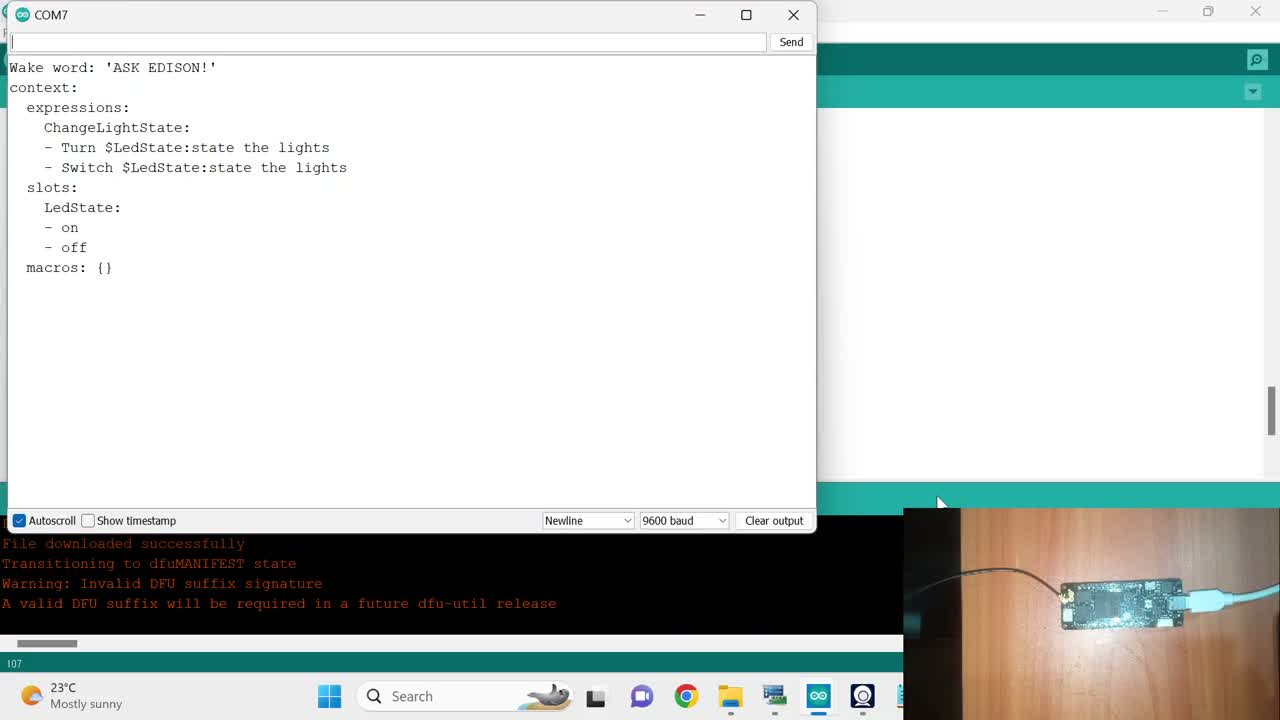
Hi tinyML would be a good place to start . Also, if you are looking at speech to text or something related to audio in AI, you can try Picovoice. For the two options, they have specific devices supported. I did a project using Portenta H7 on controlling things via voice commands.
If you haven't, start by Data manipulation using pandas and NumPy, understanding algorithms, and working with libraries like Scikit-learn, TensorFlow, and PyTorch. U can start by creating basic AI chat not till u understand the logic flow to move into complex projects
@techielew I was just reading the scroll back, this is quite interesting, it also sounds almost identical to a hardware in the loop ci setup with the key differences being we push from users instead of source control (I guess it would be encumbering for users to push git to flash the hardware?) And that users want to poke/shoogle/look at the hardware instead of automated tests.
I'd be interested to discuss further / help with this.
My gut feeling re the aws thing is I'm on the side of the $5 linode - I'm generally of the opinion that if the part talking to hardware needs to scale for users the architecture was built wrong - we usually run these things on something in the raspberry pi territory
P.s. - if you do use a PI, you get the gpios/busses so it's easy to hang off a couple of i2c/spi devices to stimulate various parts of the system, the linode would basically serve some rpc interface which should be very light and the "fancy web stuff" can be done client side - the linode is more there so that you arent exposing a pi in your house to the nasty world