oh it is. trust me i am also not that fond of FGPA due to the learning curve. but i keep myself informed and learnt a bare min. Plus AMD has OpenAMP support for its Zynq series which is quite helpful
when you build a custom dev board what things you guys consider share some knowledge with me please. For example I want to make a custom stm32 board with on board mpu6050 and can transceiver now as for powering up the mcu which is really staright forward due to st's application note but when it comes to providing power for the ADC where I struggle always I don't know what is the exact value of noise that my board can produce and what is the exact filtering components i should use for example: LRC, RC, RL, Ferrite bead filters
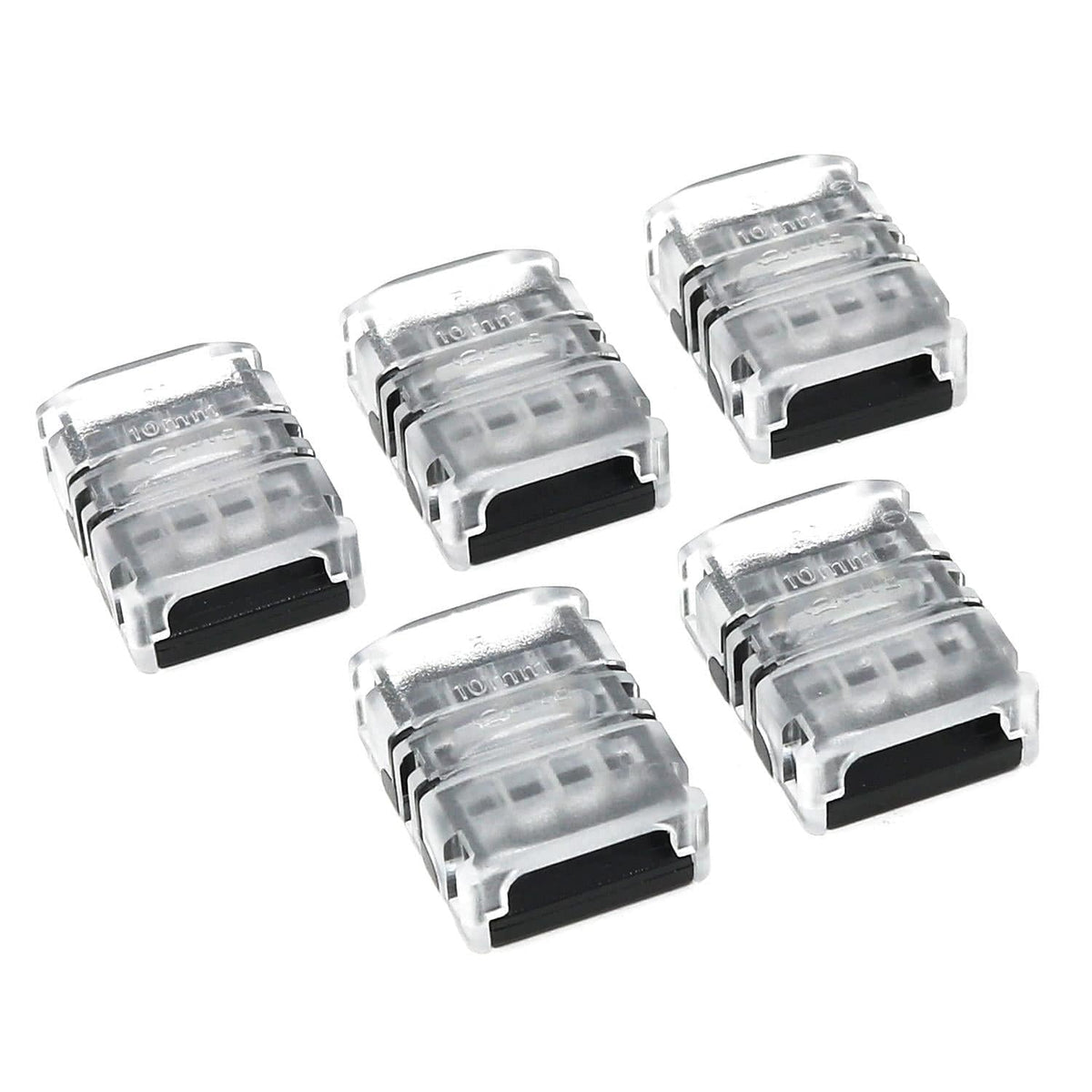
However I need to inject power about 1/2 way due to the voltage drop? Can anyone recommend a strip connector that would acccept the additional 2x wires? As I think if I start soldering in the addtional waires to the ones above they wont close or will break?
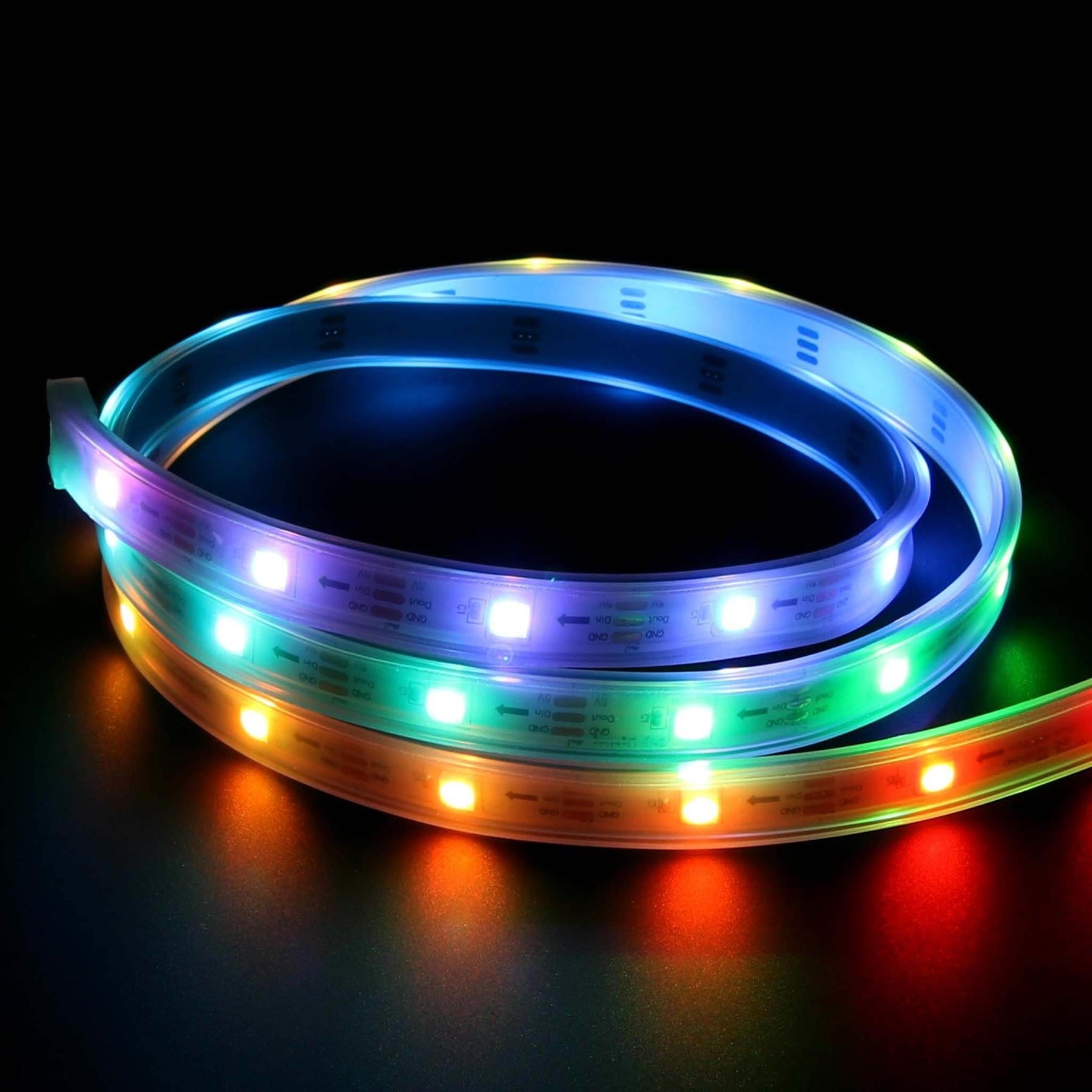
Part of our Illuminate range of LED strips and accessories, these flexible RGB LED strips have 30 RGB LEDs per metre giving you a good amount of blinky for your project! Great for advancing from basic LEDs, learning how to code, lighting projects, art and many many more uses. They use WS2812 LEDs which are the same typ
These 3-pin 'strip to strip' LED strip connectors provide a secure and solder-free way to join our Illuminate 3-pin WS2812 LED strips together for your project. Simply cut your strips at the metal connection section, place them into each end then snap the connector down. We also offer matching 3-pin connectors in a str
For dev board design, here are some of the points that come to mind
make sure you breakout all the pins of MCU on the header and label them clearly.
I'd also have multiple 5V and 3V3 pins for connecting various modules.
Must have a Reset button
One or more LED connected to a GPIO, add RGB if there are lot of GPIO on the MCU.
accessible programming interface, preffereable on edge of board rather then in middle
4x Mounting holes. I'm not sure of your board shape, 3 might do but 4 is better.
User button
Solder jumpers or normal ones for boot configuration.
Now when you ask for powering ADC, I assume you mean reference power supply for the STM's ADC. AFAIK there is an internal Vref. You could possible use that.
@here Hey guys what are your thoughts on the recent development growth in the industry.
BCIs have really advanced recently, especially with Neuralink working on implanting chips in animals and gearing up for human trials. This recent growth holds a lot of promise for helping people with disabilities regain mobility, speech, or sight which is a welcome development. But it also opens the door to some pretty unsettling possibilities, and it got me wondering: Could companies eventually access, manipulate, or even profit from our thoughts and memories?
And I'm left to ask, should BCIs like Neuralink be regulated to protect our minds and personal data, even if that means slowing down potential health benefits? Itβs a big bone to chew between innovation and safeguarding our privacy. @MCU, MPU & Firmware
With the technology in its current state - it is more about getting signals into the brain/control system rather than extracting data out - so I don't see much in the way of privacy issues at the moment
However with implantables, I would definitely worry about the security side:
Being able to disrupt those signals (potentially rendering them useless and the user disabled again)
Being able to alter those signals (giving spurious inputs to vision or motor control could be quite dangerous)
Overloading the input signals (what would happen to the brain if an implant produced too much current?)
Personally, I'm not too worried about people profiting from my thoughts as (a) I'm a consultant - I sell my thoughts all the time (b) If even I can't understand my own thoughts half the time, what hope would a third party have!
oh I see, you just spoke your mind from your point of view, selling your thoughts might be fine by you at the moment, but trust me, there will come a time where you thoughts would be harvested for personal gains without permission form you, and you profiting nothing from it. @Ming
I feel like the show Black Mirror gave us a blueprint of what exploitation of technology will look like in society. But I am not purely pessimistic on the subject I am excited about benefits they'll bring to humanity. Just scared some big pharma company will slap a subscription on my speech leaving me speechless from time to time for late payments.
Oh and when the time comes for data out... I imagine they'd train some interesting models.
@ZacckOsiemo @ke7c2mi @Phoenix β I'm back (been back) from Embedded World North America and I wanted to pick up the conversation about the remote kit/linux node.
As per me, Zephyr will be really helpful for OpenAMP specially. as many contributer are trying to sync the AMP SoC and boards dts between linux and zephyr to give a seemless flow while developing.
Potentially yes, I have some spare time for the next few weeks between jobs - I don't want to make a hard commitment in case I end up going feral into the hills for a couple of weeks, but I'm happy to help in principle
That's neat - on my never ending to do list is to make some basic zephyr app the exposes I2C/SPI/GPIO and a few other things and provides some USB / ethernet intertface so that any board supporting zephyr can become an instant lab tool
I keep thinking about it and doing nothing other than thinking I want it already .. I have a nucleo board on my desk that I wish I was 5 lines of python away from driving some QSPI data for another project
Consider it should be possible to make some abstract application against the HAL that does this, and it should be possible to essentially use the board descriptors to infer what you want there and have the build system spit out a self describing logic analyser / test device