
What does this mean? Is the workflow supposed to have the same name as the worker? What happens then
What does this mean? Is the workflow supposed to have the same name as the worker? What happens then if you want multiple workflows per worker?
 M
M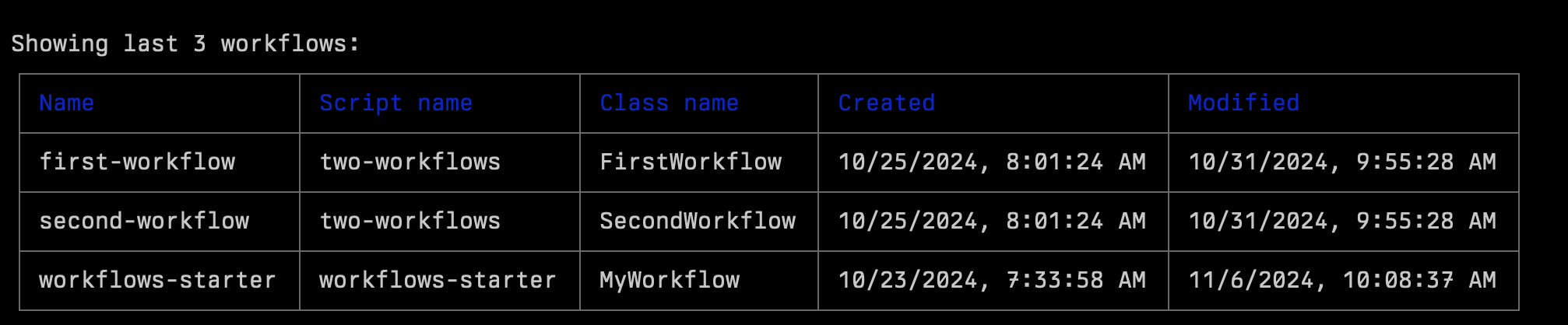 M
Mworkflows list TTT
TTTnpm create cloudflare@latest workflows-starter -- --template "cloudflare/workflows-starter"env.MY_WORKFLOW.create() Thanks Skye, Matt, Diogo Ferreira and sdr for trying to help me
 P
PWorkflow.create M
M A
A P
P D
D A
A K
Kwrangler dev --remote --env stage I
I
 森森M森MM
 森森森
森森森Promise<InstanceStatus>object[]objectworkflow.get(id).stop()terminate()terminate A
A SSA
SSA L
L.status()Maximum steps per Workflow 256WorkflowEvent<T>this.initEventrunWorkflowEvent<T>signalpayloadsignalshouldStopWorkflowStepConfigoverrideResultstep.sleep C
C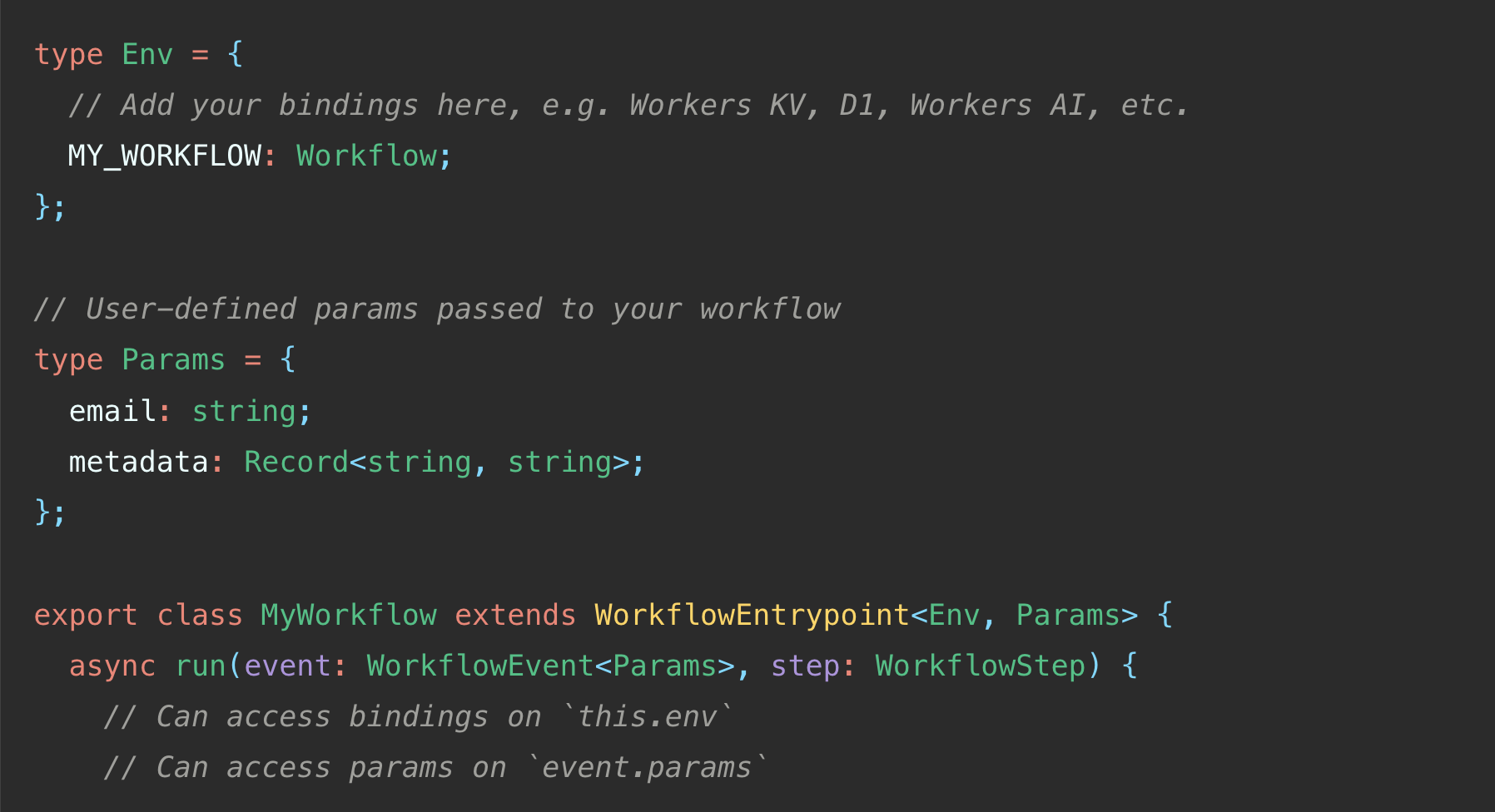
 DM
DMunknown#:schema node_modules/wrangler/config-schema.json
name = "my-app"
compatibility_date = "2024-10-22"
compatibility_flags = ["nodejs_compat"]
main = "dist/index.js"
minify = true
upload_source_maps = true
tail_consumers = [{ service = "my-app-tail" }]
[build]
command = "pnpm run build"
[observability]
enabled = true
[ai]
binding = "AI"
[[kv_namespaces]]
binding = "INCOMING_EMAILS_KV"
id = "<redacted>"
[[kv_namespaces]]
binding = "DLQ_KV"
id = "<redacted>"
[triggers]
crons = ["* * * * *", "*/30 * * * *"]
[[queues.consumers]]
queue = "account-emails"
dead_letter_queue = "dlq"
max_batch_size = 20
max_batch_timeout = 10
max_retries = 10
[[queues.consumers]]
queue = "incoming-emails"
dead_letter_queue = "dlq"
max_batch_size = 10
max_batch_timeout = 10
max_retries = 10
[[queues.consumers]]
queue = "dlq"
[[queues.producers]]
binding = "ACCOUNT_EMAILS_QUEUE"
queue = "account-emails"
[[queues.producers]]
binding = "INCOMING_EMAILS_QUEUE"
queue = "incoming-emails"
[[workflows]]
name = "process-incoming-emails"
binding = "PROCESS_INCOMING_EMAILS_WORKFLOW"
class_name = "ProcessIncomingEmailsWorkflow"


