

Welcome to the official Cloudflare Developers server. Here you can ask for help and stay updated with the latest news
83,498Members
View on DiscordResources
Similar Threads
Was this page helpful?
 L
L J
Jstorage.deleteAll() must be called and no SQLite tables can exist?storage.deleteAll(), and a new call comes in after that, it errors because the tables don't exist, and I don't know whether to re-create them or not. Is there a solution to this?LdeleteAll is called everything is deleted, including all your tables.I don't understand the question. If you decided to delete all the data for a DO, why would you want to handle a request to it and re-create the tables?
- [...] I don't know whether to re-create them or not. Is there a solution to this?
Jthis.#deleted = true and then reinitialize the database on future requests. If the DO goes out of memory, the constructor will run again and initialize it. If it hasn't gone out of memory yet, #deleted will be true. Should work.L J
J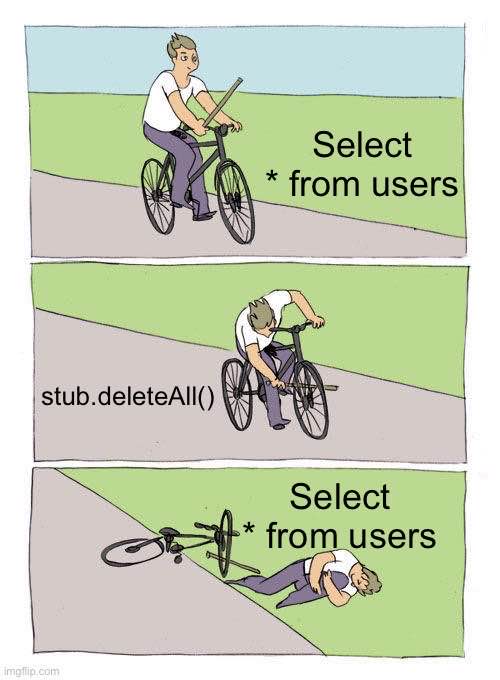
 CJJ
CJJthis.#deleted to track if the db needs to be re-created works great.J/documents/:id route to a SQLite DO that creates the schema in the constructor, then if a hacker were to spam my service with a bunch of GET /documents/XXXXX calls trying to find a valid document, that every one of those invalid GETs would create a new DO that wouldn't be deleted because the SQLite database would be created simply by the act of accessing it, even if it returns a 404. Is that right? 1J1J1J1Y
 HL
HLthen if a hacker were to spam my service with a bunch of GET /documents/XXXXX calls trying to find a valid document, that every one of those invalid GETs would create a new DO that wouldn't be deleted because the SQLite database would be created simply by the act of accessing it, even if it returns a 404. Is that right?My own solution to that is to only run the migrations when they are needed.
 OLOOOLJJLJLJL
 JLO
JLO MM
MM P1
P1 森森森森森
森森森森森Specifically for Durable Object classes with SQLite storage backend, KV operations which were previously asynchronous (for example, get, put, delete, deleteAll, list) are synchronous, even though they return promises. These methods will have completed their operations before they return the promise.
P1runDurableObjectAlarm() return true or a similar value?P1while (true) what about while (ran)? Declare ran as true before the first runPstorage.deleteAll()storage.deleteAll()deleteAllthis.#deleted = truethis.#deleted/documents/:idGET /documents/XXXXXimport { describe, it, beforeAll, afterAll, expect } from "@jest/globals"
import { unstable_dev } from "wrangler"
import type { UnstableDevWorker } from "wrangler"
describe("Worker", () => {
let worker: UnstableDevWorker
beforeAll(async () => {
worker = await unstable_dev("src/worker/index.ts", {
experimental: { disableExperimentalWarning: true },
})
})
afterAll(async () => {
await worker.stop()
})
it("should deny request for invalid paths", async () => {
const cases = {
failures: ["/", "/foo", "/foo/", "/%2F"],
}
for (const path of cases.failures) {
const resp = await worker.fetch(`http://localhost:3000${path}`)
console.log(resp)
expect(resp.status).toBe(404)
}
})
})Cannot apply --delete-class migration to class 'FirebaseCache' without also removing the binding that references it [code: 10061]When deleting a migration using npx wrangler deploy --delete-class <ClassName>, you may encounter this error: "Cannot apply --delete-class migration to class <ClassName> without also removing the binding that references it". You should remove the corresponding binding under [durable_objects] in wrangler.toml before attempting to apply --delete-class again.[[migrations]]
tag = "v1"
new_classes = ["Job"]
[[migrations]]
tag = "v2"
new_classes = ["FirebaseCache"]
[[migrations]]
tag = "v3"
deleted_classes = ["FirebaseCache"]
new_classes = ["RPCResource"]let ran = false;
ran = await runDurableObjectAlarm(stub) // ran = true
ran = await runDurableObjectAlarm(stub) // ran = true
ran = await runDurableObjectAlarm(stub) // ran = true
ran = await runDurableObjectAlarm(stub) // ran = true
ran = await runDurableObjectAlarm(stub) // ran = falsewhile (true) {
let ran = await runDurableObjectAlarm(stub)
if (!ran) {
break
};
}runDurableObjectAlarm()truewhile (true)while (ran)ranawait this.#_config.doStorage.put<number>(this.#_lastMigrationIDKeyName(), this.#_lastMigrationMonotonicId);


