
Any plan to increase the 1MB limit for step output and state? I would love to see at least 10MB ,may
Any plan to increase the 1MB limit for step output and state? I would love to see at least 10MB ,maybe even 100MB 
 D
D A
A AAA
AAA TTT
TTTbut we don't want to implement our logic twiceWhy don't you share the workflow logic by abstracting it into a function which can be called by either the Workflow or synchronous endpoint?
TAATAT S
S S
S
 F
Fwrangler dev --env dev --port 53769 --persist-to=../web-app/.wrangler/state C
C
 AA
AA
 IC
IC
 L
L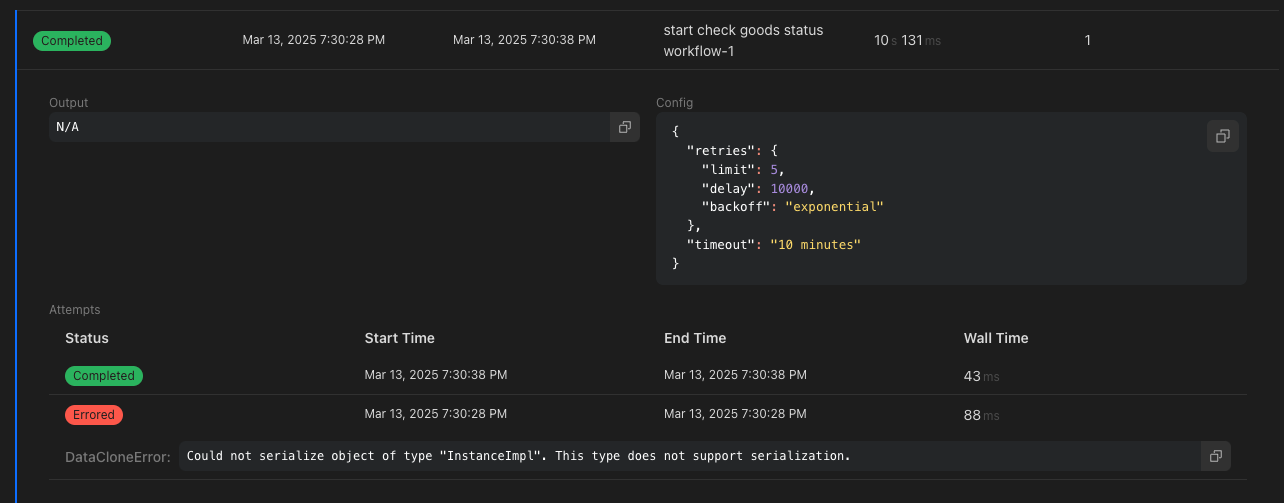
 M
MInstance object, which is not (it has methods). idid AAA
AAA@sentry/cloudflare, but from what I can tell it only provides high level wrappers for fetch requests and pages - I can't figure out how to make a cloudflare logger instance.Mobservability.enabled: true. Y
Y N
N MCMM
MCMMtoml like this:workflow B needs to have a binding in workflow A, where does that binding go? Just another [[workflows]] entry? If so, that seems to fail as it would expect the class_name reference to exist in workflow A's index.R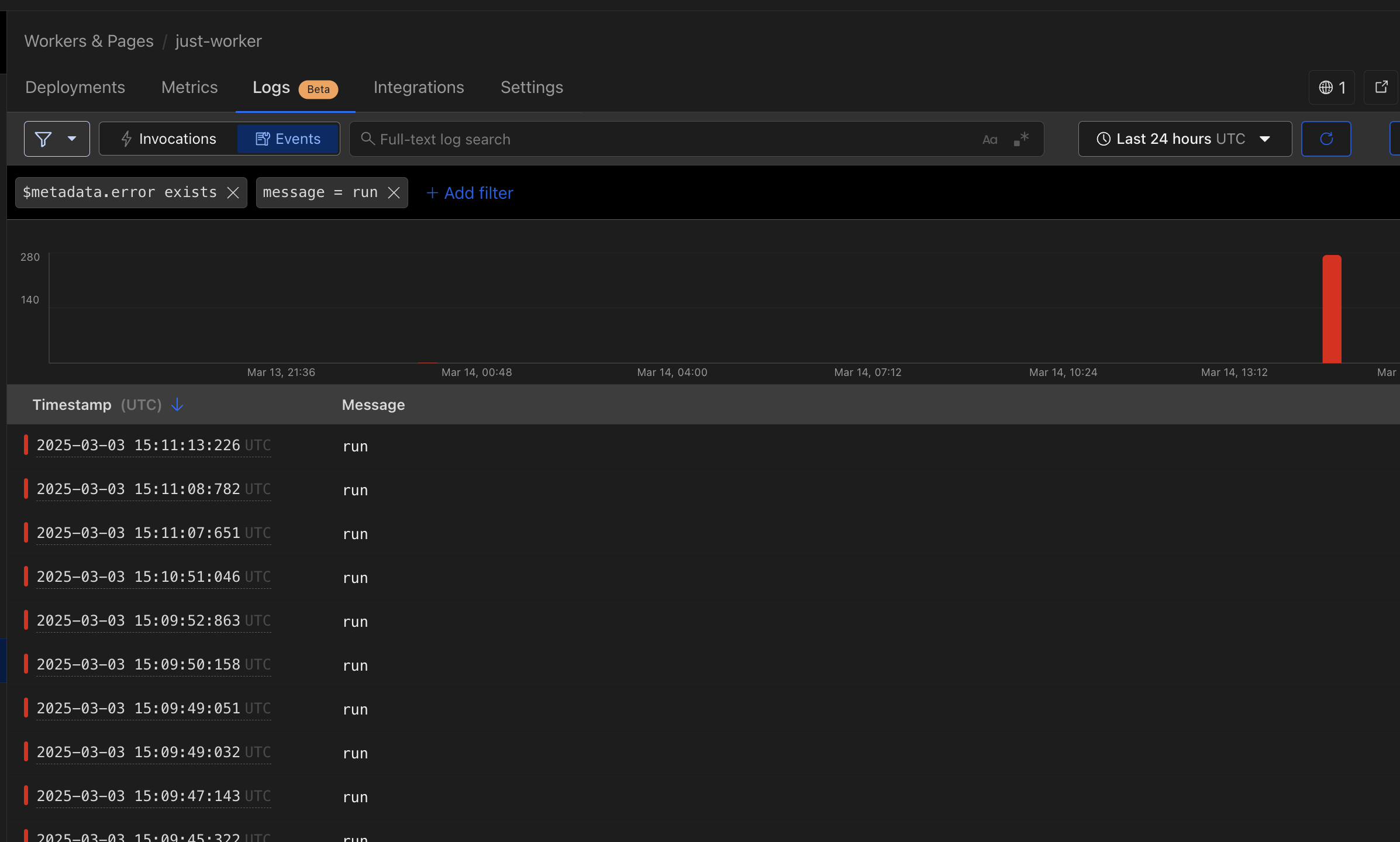 MFMMM
MFMMM✘ [ERROR] Worker "workflows:workflow-b"'s binding "USER_WORKFLOW" refers to a service "core:user:workflow-b", but no such service is defined.USER_WORKFLOW is not a string that exists in my codebase, at all. NOTE: Found a reference to USER_WORKFLOW in the workers-sdk codebase: https://github.com/cloudflare/workers-sdk/blob/99f802591e65a84f509a03a4071030eb0c6c11ba/packages/miniflare/src/plugins/workflows/index.ts#L77M A
A K
K

 CKCC
CKCC K
Kwrangler dev --env dev --port 53769 --persist-to=../web-app/.wrangler/stateDataCloneError:
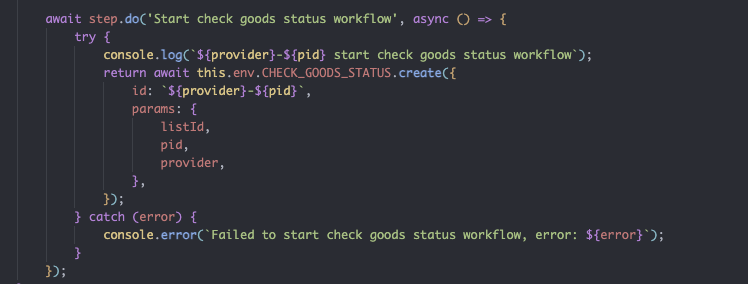
Could not serialize object of type "InstanceImpl". This type does not support serialization.Instance// Start workflows
c.env.COVE_WORKFLOW_VIDEO_UPLOAD_STREAM.create({
params: {
videoId: id,
},
});
c.env.COVE_WORKFLOW_VIDEO_TRANSCRIPT.create({
params: {
videoId: id,
},
});@sentry/cloudflareobservability.enabled: truefor (const lead of leads) {
const result = await Promise.all([step.do('Step 1', async () => {}), step.do('Step 2', async () => {})])
await step.do('callback', async () => { /* callback with a result */})
}toml[[workflows]]
name = "workflow-a"
binding = "WORKFLOW_A"
class_name = "WorkflowA"workflow Bworkflow Aworkflow A[[workflows]]class_name[[workflows]]
name = "workflow-a"
binding = "WORKFLOW_A"
class_name = "WorkflowA"
[[workflows]]
name = "workflow-b"
binding = "WORKFLOW_B"
class_name = "WorkflowB"
script_name = "workflow-b"[[workflows]]
name = "workflow-b"
binding = "WORKFLOW_B"
class_name = "WorkflowB"✘ [ERROR] Worker "workflows:workflow-b"'s binding "USER_WORKFLOW" refers to a service "core:user:workflow-b", but no such service is defined.USER_WORKFLOWUSER_WORKFLOWworkers-sdkconst a = await this.env.EXTENSION_HANDLER.get('id');
let state = await a.status();
while (state.status !== 'running') {
state = await a.status();
}export class HelloWorldWorkflow extends WorkflowEntrypoint {
async run(_: Readonly<WorkflowEvent<unknown>>, step: WorkflowStep) {
while (true) {
try {
await step.do('fetch data', async () => {
await fetch('data url')
})
await step.sleep('wait untill next data', '5 minutes')
} catch {
await step.sleep('handle too many subrequests', '15 minutes')
}
}
}
}for (const param of params) {
while (true) {
const response = await step.do('<random name>', { /* options to not retry */ }, ...)
if (response.status === 429) {
await step.sleep('ratelimit expires', Number(response.headers.get('X-RateLimit-Reset')) * 1000)
} else {
break
}
}
} CDCloudflare Developers / general-helpCDCloudflare Developers / general-helpCDCloudflare Developers / general-helpCDCloudflare Developers / workers-and-pages-help


