
I think that’s your account ID - the Containers application is a UUID that comes later
I think that’s your account ID - the Containers application is a UUID that comes later

 K
K CKK
CKKwriteFilewriteFileexecute"Failed to create session" A
A CCCCCCC
 A
A PAAPPP
 T
T
 KKK
KKKmax_instances20, 100sleepAftersleepAfterSIGTERMonActivityExpiredsleepAfteronActivityExpiredsleepAfter D
D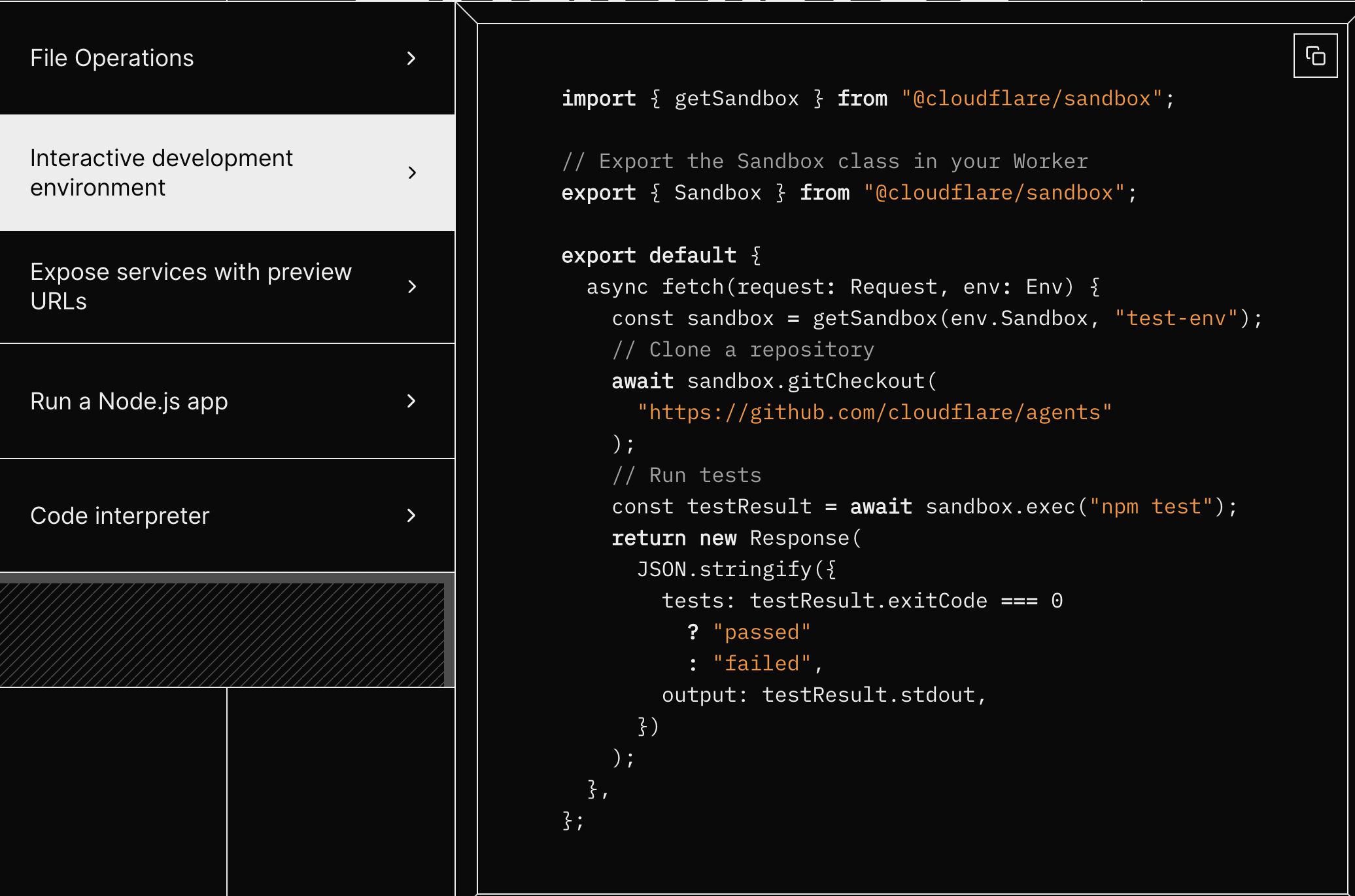 KKD
KKD NK
NKsleepAfter/**
* Manages isolated sessions for command execution.
* Each session maintains its own state (pwd, env vars, processes).
*/
export class SessionManager {
private sessions = new Map<string, Session>();
async createSession(options: SessionOptions): Promise<Session> {
// Validate cwd if provided - must be absolute path
if (options.cwd) {
if (!options.cwd.startsWith('/')) {
throw new Error(`cwd must be an absolute path starting with '/', got: ${options.cwd}`);
}
}
// Return existing session if it already exists
const existing = this.sessions.get(options.id);
if (existing) {
console.log(`[SessionManager] Returning existing session '${options.id}'`);
return existing;
}
// Create new session only if it doesn't exist
const session = new Session(options);
await session.initialize();
this.sessions.set(options.id, session);
console.log(`[SessionManager] Created new session '${options.id}'`);
return session;
}


