Opt your route into the edge runtime and it will be SSR'd
Opt your route into the edge runtime and it will be SSR'd
 L
Lstaging.mydomain.com)L JLJJLJ
@cloudflare/next-on-pages D
D D
D DJ
DJ BJDBB
BJDBB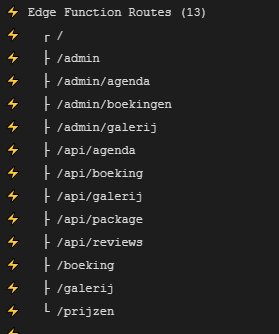 JBJ
JBJcache: 'no-store' SSJ
SSJ@cloudflare/next-on-pages_redirects MM
MM EEMMEM
 E
E M
M VSSV
VSSVimport { FunctionComponent } from "react";
import AgendaAdminPage from "./AgendaAdminPage";
import { Package } from "@/types/package";
import { Calendar } from "@/types/calendar";
const Agenda: FunctionComponent = async () => {
const dates = (await fetch(process.env.NEXT_PUBLIC_HOST + "/api/agenda", {
headers: {
"CF-Access-Client-Id": process.env.CF_ACCESS_CLIENT_ID,
"CF-Access-Client-Secret": process.env.CF_ACCESS_CLIENT_SECRET,
} as HeadersInit,
})
.then((res) => res.json())
.catch((err) => console.log(err))) as Calendar[];
console.log(dates);
const packages = (await fetch(process.env.NEXT_PUBLIC_HOST + "/api/package", {
headers: {
"CF-Access-Client-Id": process.env.CF_ACCESS_CLIENT_ID,
"CF-Access-Client-Secret": process.env.CF_ACCESS_CLIENT_SECRET,
} as HeadersInit,
})
.then((res) => res.json())
.catch((err) => console.log(err))) as Package[];
console.log(packages);
return <AgendaAdminPage dates={dates} packages={packages} />;
};
export default Agenda;staging.mydomain.com