
are you calling the `getRequestContext` utility in the edge runtime?
are you calling the
getRequestContext utility in the edge runtime?getRequestContext C
Cprocess.env and it worked actuallyC D
Dprocess.env works getRequestContext C
Cexport const runtime = "edge";Cprocess.env worked without it somehowD DCD
DCDprocess.env you had used the same variable name for something else?  C
C.envprocess.envD C
C.env
 XD , hopefully this can help avoid developers confusion/frustration: https://github.com/cloudflare/next-on-pages/issues/674CD
 DD
DD CC
CC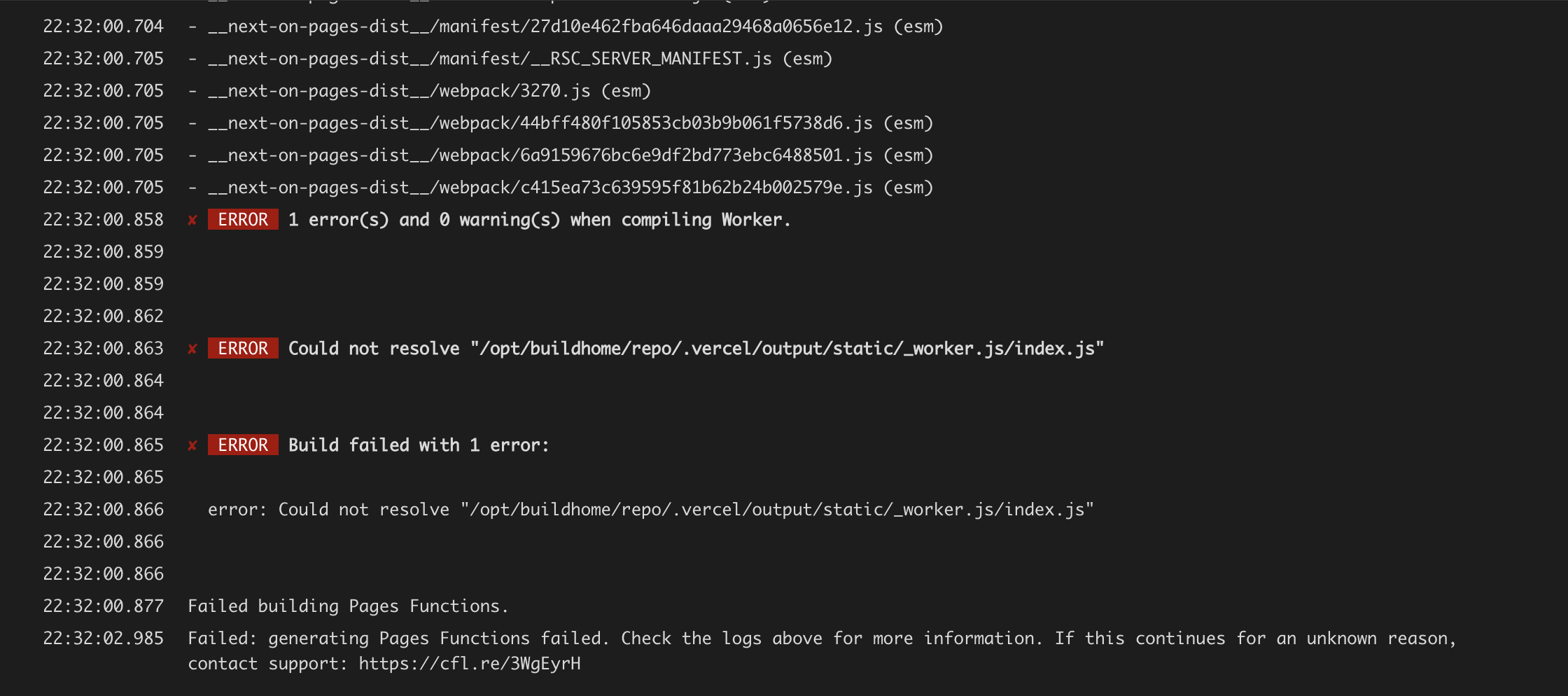 C
C BB
BB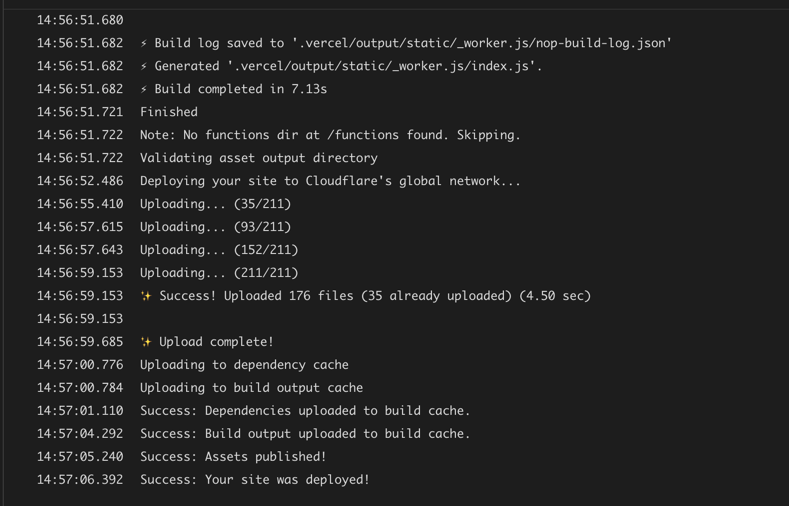 BB
BB❯ yarn wrangler deploy .vercel/output/static/_worker.js/index.js --dry-run --compatibility-date 2024-02-22 --name test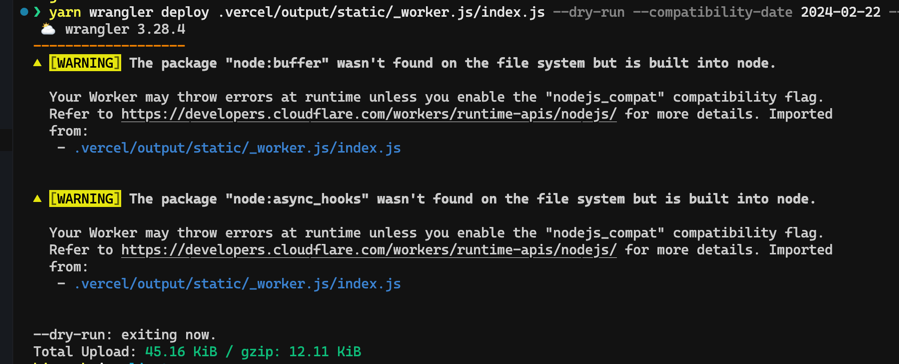
 BBD
BBDwrangler pages deploywrangler deploy, can you try that? BBB D
Dnode:async_hooks one), it's likely due to using the wrong commandDwrangler deploy somewhere?  if so please let me know as that needs amending!
  BB
BB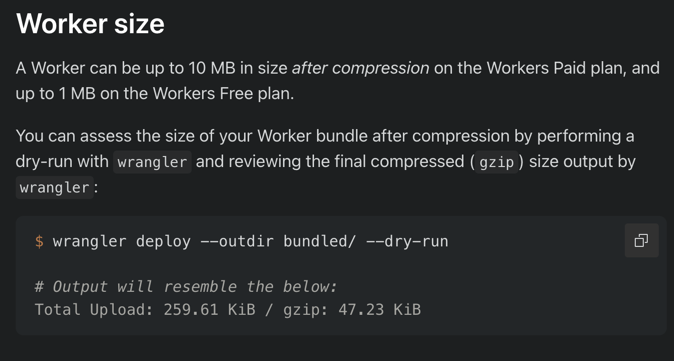 D
DWorkers documentation, not Pages documentation....Pages documentation  BBD
BBDwrangler pages deploy@cloudflare/next-on-pages.vercel/output/static/_worker.js manually gzip it and check the gzip's output size  BBDBD
BBDBDHow do you get the env in a non request?all your source code is run inside a Cloudflare worker request handler, so you're basically always handling a request (i.e. you should always be able to run
getRequestContextdrizzle from working Bprocess.envprocess.envprocess.envprocess.envprocess.envexport const runtime = "edge";❯ yarn wrangler deploy .vercel/output/static/_worker.js/index.js --dry-run --compatibility-date 2024-02-22 --name testwrangler deploywrangler deploynode:async_hooksWorkersPagesPages.vercel/output/static/_worker.jsdrizzleimport { getRequestContext } from "@cloudflare/next-on-pages";
import { drizzle } from "drizzle-orm/d1";
export const runtime = 'edge';
const { env } = getRequestContext();
const db = drizzle(env.DB);
export { db };


