Produced by NYC Media, this half hour show features inspiring stories from successful women who transformed an idea into a thriving business in New York City.
“Her Big Idea,” the hit show profiling successful women entrepreneurs in New York City, returns for a second season on November 6 a...
Hi @everyone, on today's OH Meetup we're going to be discussing "How to Get a Customer"! We'll touch on:
Identifying market need and value
Understanding your target market and customer
Understanding what you are selling
Spec'ing out your product or service
Staying on track
Finding and approaching target clients
Handling special requests (staying on track, part 2)
Getting paid (contracts, etc.)
Open discussion
What's your big idea and where are you experiencing painpoints in this process?
We've been going down the technology business track for a while so after this session we'll be getting back into nuts and bolts for a bit. If you've got that entrepreneurial spirit, we want to hear from you and about what you're working on
PLEASE JOIN AS A SPEAKER IF YOU WANT TO PARTICIPATE IN THE DISCUSSION!Join DevHeads' weekly Office Hours, Mondays at 3 PM (1500) GMT to meet other DevHeads and riff on a variety of topics for...
I read 'The ideal PS/PL relation is 650 MHz/150 MHz = 4.33'. So it should in that rate. The AXI Interconnect communicates between PL and PS and nothing else should be a showstopper. http://www.splconf.org/spl19/pdf/Papers/2/presentation.pdf
the purpose is to receive a signal in lvds form and forward it in etherenet, all this thing have been made and tested and working good, the data is passed trough etherenet but i'm having a loss not all the data re saved, but when i only record witout ethernet i have no loss,
Hiii everyone, I'm interested in the capabilities of my electrochemical gas sensor MQ2 . Could you elaborate on the types of gases it can detect and maybe delve into how it discriminates between different gases?
Before this day ends On the occasion of International Women's Day, get to know the first female programmer in history On December 10, 1815, the first female programmer in history, named Ada Lovelace, was born. She is a British writer and mathematician. She lived between 1815 and 1852. Ada lived a somewhat difficult childhood due to illness and family problems. Her father died when she was nine years old. She was interested in mathematics and science, and at the age of adolescence, this is what led her to a relationship with... He worked with the scientist Charles Babbage. She is mainly known for her work on the Analytical Engine, which was the first computer in history, designed by Charles Babbage. Ada Lovelace was the first to realize that the machine had applications beyond simple arithmetic, and published the first algorithm that this machine could perform, so it is sometimes considered The first to know the full capabilities of the “calculator” and the first computer programmer.
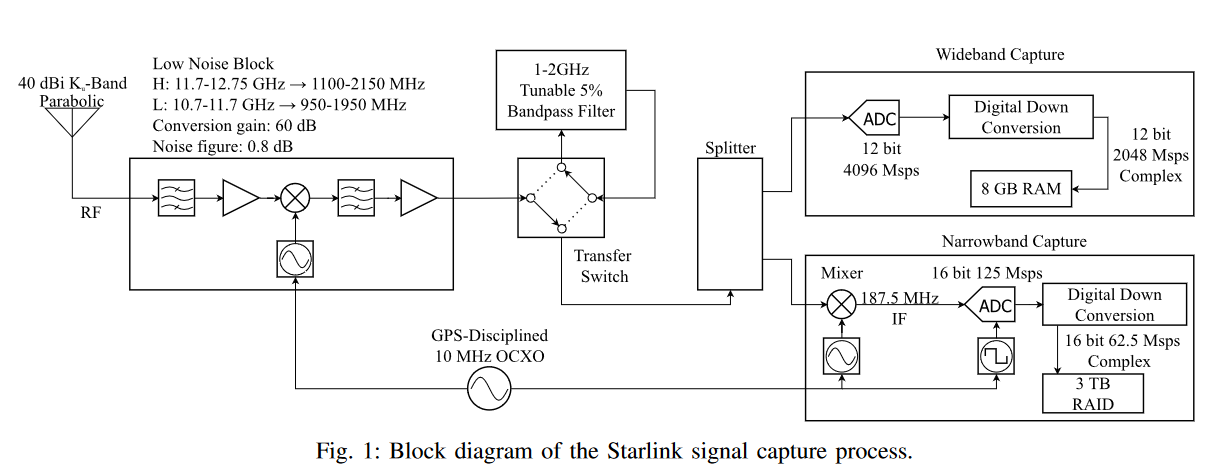
One thing I'd think is really cool.. So, Starlink registered space to earth (downlink) frequency range is e.g. 10.7 to 12.7 GHz (also some more) A research institute in Germany managed to create a passive radar using starlink as the source, it is pretty great as it is available everywhere on earth, you can discover objects you normally can't by shadowing, so you don't have the normal issues with artificially reduced radar cross sections when you use the shadowing, and it's high bandwidth, which is very favorable for radar pulses. Would be pretty cool to do passive radar SDR with the appropriate frontend
I—for one—was referring to a video tutorial @Joseph Ogbonna @Petr Dvořák I think the idea here is to have a PCB design tutorial in KiCad or similar that addresses "the RF critical path from the PHY-Chip to a PCB antenna". That's just one design req of this theoretical demo project/system (unless we're building John's Starlink SDR, haha)
@lupa2802 Welcome! Can you let us know a bit about your technical background, what brings you to DevHeads, and what you're looking to learn/contribute?!
@joyalsiby @Jay Welcome! Can you let us know a bit about your technical background, what brings you to DevHeads, and what you're looking to learn/contribute?!
Such an RF path can be designed easily. The issue is such an RF path must be evaluated with expensive RF instruments later. The task is simple. You need two impedance-matching networks (one at the transceiver output and the second at the antenna feeder) and a transmission line. For both networks, there are recommended designs by the transceiver manufacturers. For the transmission line, there are calculators on the Internet. To design such an RF path is not rocket science. Making it correctly involves prototype evaluation and measurement. The tutorial would be a longer format than a 3-5 minute demo.
@anniekeerdekens Welcome! Can you let us know a bit about your technical background, what brings you to DevHeads, and what you're looking to learn/contribute?!