Lora and in particular lorawan is meant for small data packets every few minutes or so. But you can have thousands of them on a wide range. Anything with needing wide band or critical response time is probably better using other means of communication.
I would embed a tiny computer system in a pair of sneakers that analyzes your running form, tracks distance and pace, and even coaches you in real-time to improve your stride efficiency and prevent injuries! It could connect to a smartphone app for detailed data analysis and personalized training plans.
@Enthernet Code seems you are a fitness enthusiast, this would be cool. A potential for embedded systems to better athletic performance and personal well-being of athletes
@StrongStreamer @Jão @santosh09238569444@gmail.com Welcome to the community! We're eager to learn more about you. Can you introduce yourself and tell us about your professional life?
Hey @Daradrio Great! if you're looking to get your hands dirty with embedded protocols like Serial UART, I2C, and SPI with 32-bit MCU like STM32 Cortex-M4 (backed by live project and use cases). I invite you to join this Sunday's Engineering Hour. I'm sure you'll find these upcoming events helpful. Have a good day!
Hi everyone, I would like to recommend this youtube channel, it has a lot of courses and fun videos about electronics and engineering, specially hardware side, tell me if you like it too
hello, i want to ask when i try to install libjasper-dev package on debian 12 (bookworm) i get this error "-- Could not find Jasper (missing: JASPER_LIBRARIES JASPER_INCLUDE_DIR) "
We've got a special guest joining us for this one. A friend of mine, Iain Menzies-Runciman (https://www.linkedin.com/in/iainmr/), will be joining to share his experience with Linux, which spans supercomputers, resource-constrained embedded devices, and even trainings and courses. Join us to trade Linux war stories @Event Pings
Does anyone worked on SIM800L module with ESP32 using ESP-IDF framework?
I tried the basic pppos_client esp-idf example, but it's not working for me
I'm getting tthe following errors E (10484) esp-modem: esp_modem_dte_send_cmd(256): process command timeout E (10484) dce_service: esp_modem_dce_sync(225): send command failed E (10484) sim800: sim800_init(159): sync failed
Yes, the low data rates enable the very long range. It's also important to note that, if you follow the specification, that the data rate isn't under your control, it adapts to the RF conditions. You can force certain data rates to fit your application, but then you will have range trade-offs and may give up full interoperability with other LoRaWAN devices (which may or may not be important to you).
hello @iamnarendrans Have you tried using a serial terminal program to communicate directly with the SIM800L using AT commands? just to know whether the problem lies with the communication between the ESP32 and SIM800L (hardware or software configuration)
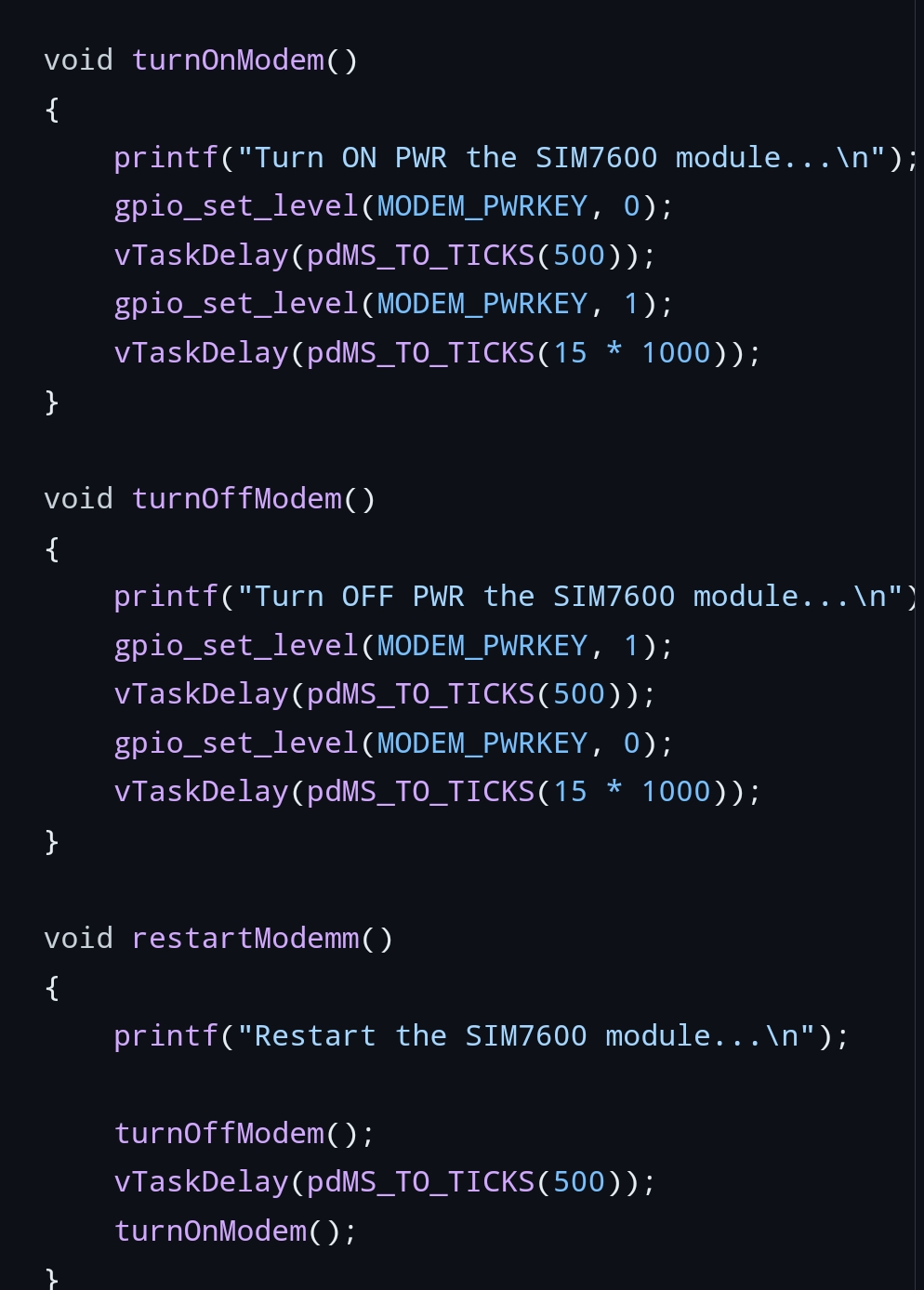
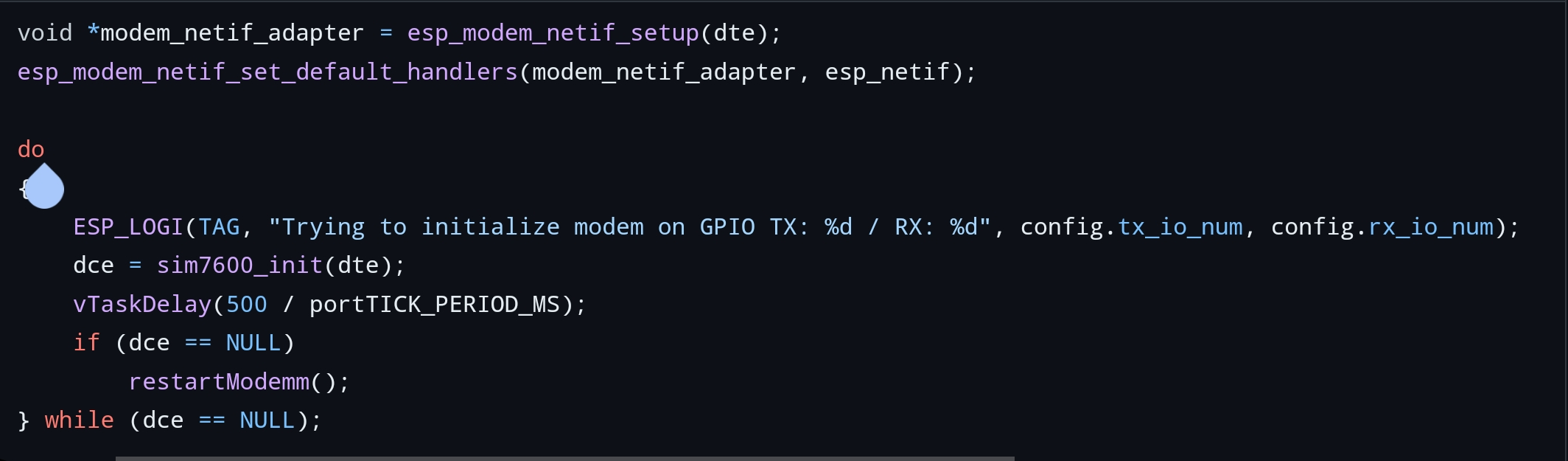
I have worked pppos with sim7600 i take to much time to make it work and not 100%, the issue is in the synchronization in the init, the pppos send At command and wait for feed back, meanwhile the sim module is not ready yet that causes timeout
Is it possible to manage a global-scale IoT deployment in a no-code/low-code manner?
By global-scale IoT deployment, I mean an Internet of Things system consisting of thousands of devices and tens of applications. Effective maintenance of this complexity requires automation.
Traditionally, we used code to automate tasks, reduce support costs, and enable scalability. Is there a better way?
Can you recommend a no-code/low-code IoT platform that effectively supports global-scale deployments?
Your insights and suggestions are highly valued. Please share your recommendations!
Hi all,I'm working with the ESP32-CAM for recognizing QR codes. Everything worked perfectly, and I was able to recognize QR codes until I used SoftSerial to transmit the SBUS signal. I can receive the SBUS signal via RX2, but in my project, I need to transmit it to the flight controller.
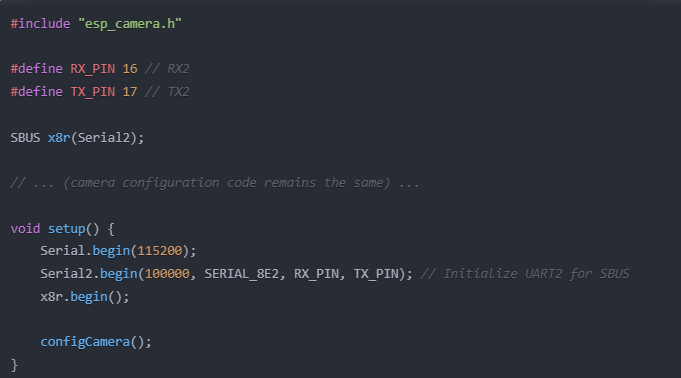
the issue appears to be caused by the use of Software Serial library,Use (UART) instead of Software Serial, Here's an example of the configuration on how you could use hardware UART for transmitting the SBUS signal
// Initialize the camera esp_err_t err = esp_camera_init(&config); if (err != ESP_OK) { Serial.printf("Camera init failed with error 0x%x", err); return; }
// QR Code recognition setup // ... }
void loop() { // QR Code recognition logic // ...
// SBUS communication logic if (MySerial.available()) { // Read and transmit SBUS data while (MySerial.available()) { int incomingByte = MySerial.read(); // Process SBUS data } }
// Attach your code logic here }
This only works if you use the hardware esp32 ports instead of the software
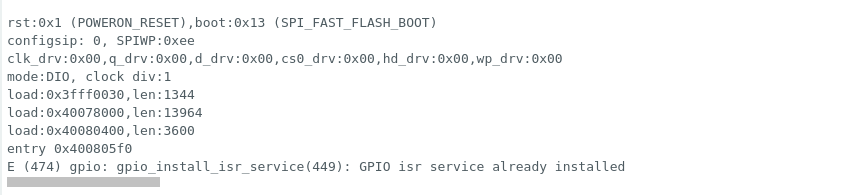
With both codes, I can only receive an SBUS signal via RX2 (pin 16). However, I need to send the same SBUS signal via TX, which is not available on the ESP32-CAM. That's why I created a softSerial. The problem is that when I use the camera, everything works perfectly except the camera itself, which gives the error (GPIO is already installed)
I'm using two ESP32-CAMs. One ESP32-CAM sends frames to a laptop and receives x, y, z coordinates via WiFi. These values are then sent to the other ESP32 via I2C. The ESP32 generates a PWM signal based on these values and generates an SBUS signal. However, this is not an optimal solution
Hey Linux lovers, @1158820847566471281 and @1158822820860674098, don't forget that tomorrow morning at 15:00 GMT we're going to be diving into the world of embedded linux, supercomputers, and open source with Iain Runciman. Learn how Linux has evolved and how you can evolve with it through shared experience.
PLEASE JOIN AS A SPEAKER IF YOU WANT TO PARTICIPATE IN THE DISCUSSION!Join DevHeads' weekly Office Hours, Fridays at 3 PM (1500) GMT to meet other DevHeads and riff on a variety of topics for...
Quick Hi to all. I'm Ming (Iain Menzies-Runciman). I have been working with Unix/Linux for over 30 years ranging from high-end supercomputers through to the Embedded Linux systems that I currently specialise on. I spend my days building Yocto systems, integrating OTA Updates with Mender and interfacing IoT systems with cloud-based services. I have just presented on the weekly office hours - so for anyone who missed it, go catch the replay!