Is it possible to manage a global-scale IoT deployment in a no-code/low-code manner?
By global-scale IoT deployment, I mean an Internet of Things system consisting of thousands of devices and tens of applications. Effective maintenance of this complexity requires automation.
Traditionally, we used code to automate tasks, reduce support costs, and enable scalability. Is there a better way?
Can you recommend a no-code/low-code IoT platform that effectively supports global-scale deployments?
Your insights and suggestions are highly valued. Please share your recommendations!
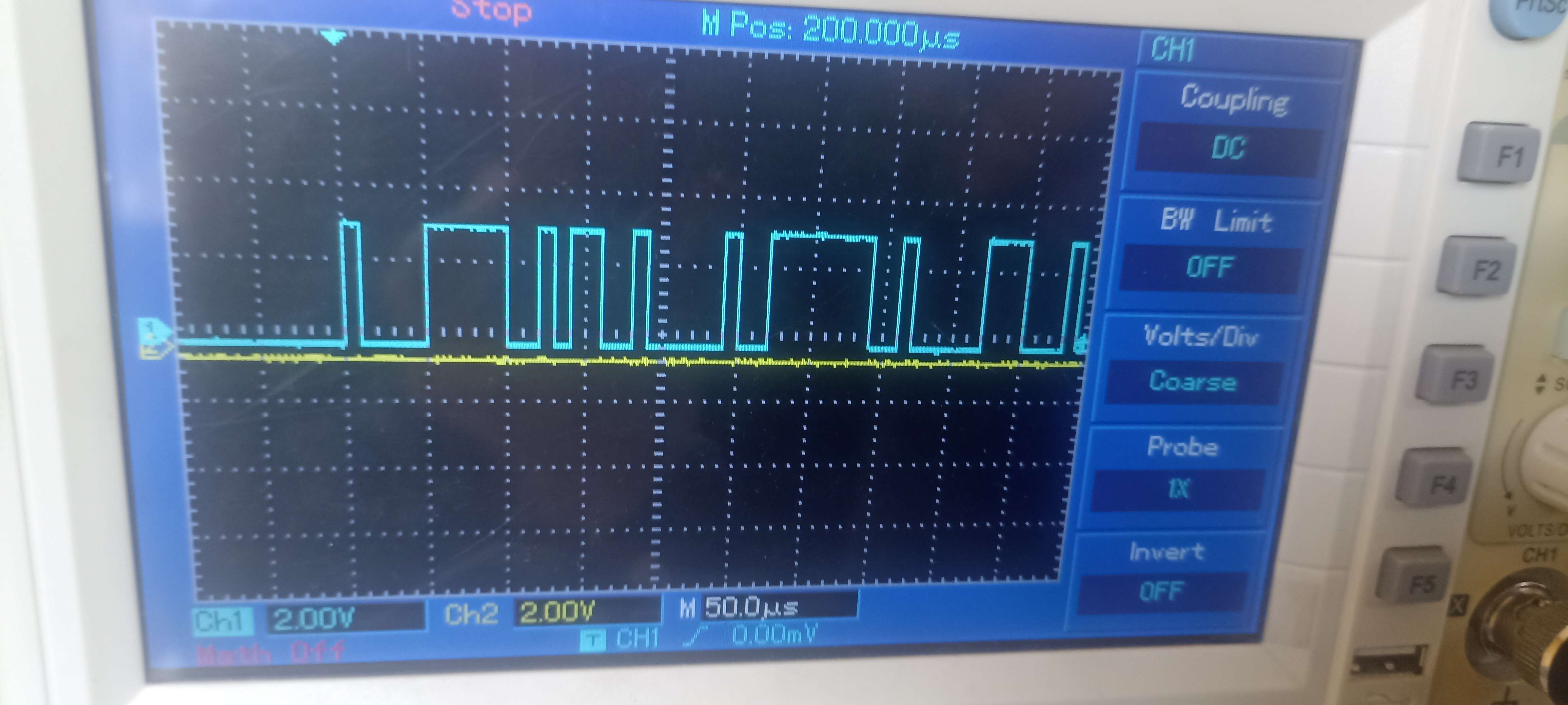
Hi all,I'm working with the ESP32-CAM for recognizing QR codes. Everything worked perfectly, and I was able to recognize QR codes until I used SoftSerial to transmit the SBUS signal. I can receive the SBUS signal via RX2, but in my project, I need to transmit it to the flight controller.
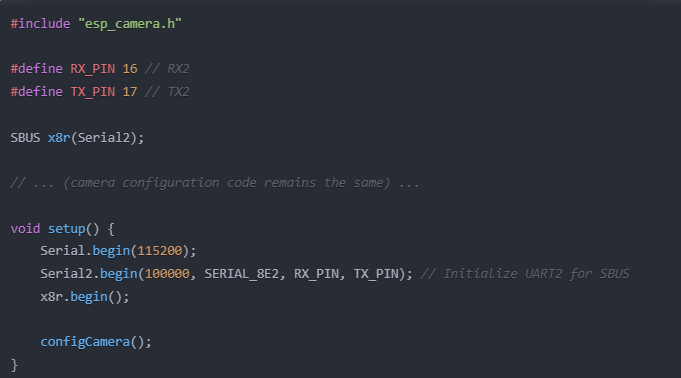
the issue appears to be caused by the use of Software Serial library,Use (UART) instead of Software Serial, Here's an example of the configuration on how you could use hardware UART for transmitting the SBUS signal
// Initialize the camera esp_err_t err = esp_camera_init(&config); if (err != ESP_OK) { Serial.printf("Camera init failed with error 0x%x", err); return; }
// QR Code recognition setup // ... }
void loop() { // QR Code recognition logic // ...
// SBUS communication logic if (MySerial.available()) { // Read and transmit SBUS data while (MySerial.available()) { int incomingByte = MySerial.read(); // Process SBUS data } }
// Attach your code logic here }
This only works if you use the hardware esp32 ports instead of the software
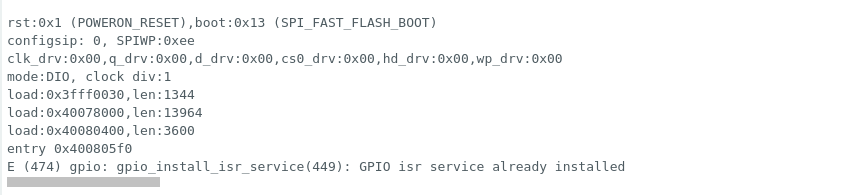
With both codes, I can only receive an SBUS signal via RX2 (pin 16). However, I need to send the same SBUS signal via TX, which is not available on the ESP32-CAM. That's why I created a softSerial. The problem is that when I use the camera, everything works perfectly except the camera itself, which gives the error (GPIO is already installed)
I'm using two ESP32-CAMs. One ESP32-CAM sends frames to a laptop and receives x, y, z coordinates via WiFi. These values are then sent to the other ESP32 via I2C. The ESP32 generates a PWM signal based on these values and generates an SBUS signal. However, this is not an optimal solution
Hey Linux lovers, @1158820847566471281 and @1158822820860674098, don't forget that tomorrow morning at 15:00 GMT we're going to be diving into the world of embedded linux, supercomputers, and open source with Iain Runciman. Learn how Linux has evolved and how you can evolve with it through shared experience.
PLEASE JOIN AS A SPEAKER IF YOU WANT TO PARTICIPATE IN THE DISCUSSION!Join DevHeads' weekly Office Hours, Fridays at 3 PM (1500) GMT to meet other DevHeads and riff on a variety of topics for...
Quick Hi to all. I'm Ming (Iain Menzies-Runciman). I have been working with Unix/Linux for over 30 years ranging from high-end supercomputers through to the Embedded Linux systems that I currently specialise on. I spend my days building Yocto systems, integrating OTA Updates with Mender and interfacing IoT systems with cloud-based services. I have just presented on the weekly office hours - so for anyone who missed it, go catch the replay!
Guys, I'm trying to connect an ESP32-CAM to an ESP32 using the I2C protocol. Which pins on the ESP32-CAM should I use? I used pins 14 and 15, but it is not working.
Hi everyone, I'm looking for a sensor to use as body heat sensor for medical project, I'm trying to use LM35 with esp32 and IOT system but my problem is that I don't find it suitable (casing) So any suggestions on what to use, and thank you in advance
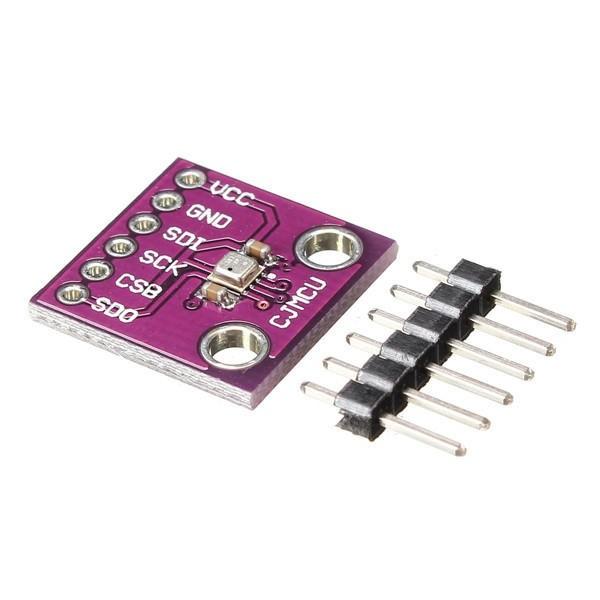
Description: GY-BME280 is a Breakout Board featuring a Bosch Sensortec ME280 Temperature, Humidity & Pressure Sensor. The board has selectable I2C address jumper (solder link GS2), I2C pull-up resistors, 7 pin header 2.54mm, and two mounting holes 3.5mm. Default setting of the board; single power rail Vdd=Vdd_IO (s
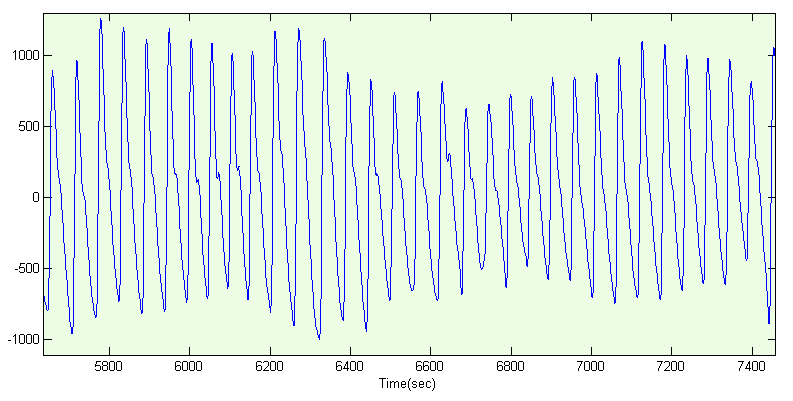
A photoplethysmogram (PPG) is an optically obtained plethysmogram that can be used to detect blood volume changes in the microvascular bed of tissue. A PPG is often obtained by using a pulse oximeter which illuminates the skin and measures changes in light absorption. A conventional pulse oximeter monitors the perfusion of blood to the dermis an...
Photoplethysmography (PPG) is an uncomplicated and inexpensive optical measurement method that is often used for heart rate monitoring purposes. PPG is a non-invasive technology that uses a light source and a photodetector at the surface of skin to measure ...
Hi @Event Pings, Trouble connecting a target MCU to your development PC? Let's explore UART driver development tomorrow with @Umesh Lokhande at 15:00 GMT.
I wanted to share something exciting I’ve been learning about recently Edge AI and its impact on embedded systems and IoT. Edge AI is the practice of running AI algorithms locally on embedded devices, rather than relying on cloud processing... Have any of you worked with Edge AI? What tools or applications have you used?
Hey Wafa ! Good weekend everyone. Your post about Edge AI caught my attention it's such an exciting field! I've been diving into it too, playing around with tools like TensorFlow Lite.
A while back Navadeep referenced SensiML. They've got a pretty handy SDK that walks you through the model development and selection process. More here: https://sensiml.com/
SensiML is the pioneer of software tools for compact AI processing on IoT endpoints. Build product worthy TinyML code for your IoT sensor app with SensiML.