
I think hyperdrive uses smart routing/argo?
I think hyperdrive uses smart routing/argo?

 C
C PPPP
PPPP J
Jexport default {
async fetch(request, env, ctx) {
const url = new URL(request.url);
if (url.pathname === ENDPOINT) {
handle(request, url);
}
}
}addEventListener("fetch", event => {
const url = new URL(event.request.url);
if (url.pathname === ENDPOINT) {
event.respondWith(handle(event, url));
}
});J K
K KK
KK J
J PPP
PPPLastly, if you work at a startup, your company may run automated services that haven’t reached the scale we require. But you still need a way to allowlist these services.I crawl sites to generate page previews in response to user action, and I've been getting a lot of titles back as "Just a moment..."
P R
RBest practice
Configure a single consumer per queue. This both logically separates your queues, and ensures that errors (failures) in processing messages from one queue do not impact your other queues.
PP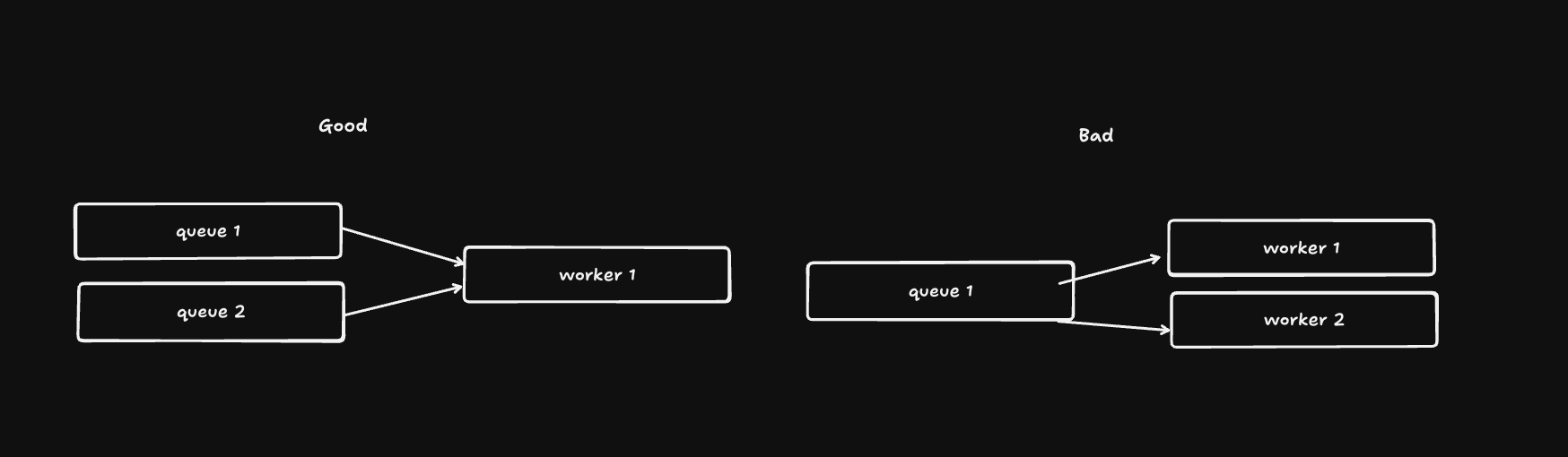
 AA
AA B
B D
D I
I IICIICICCIIICIICIIIJ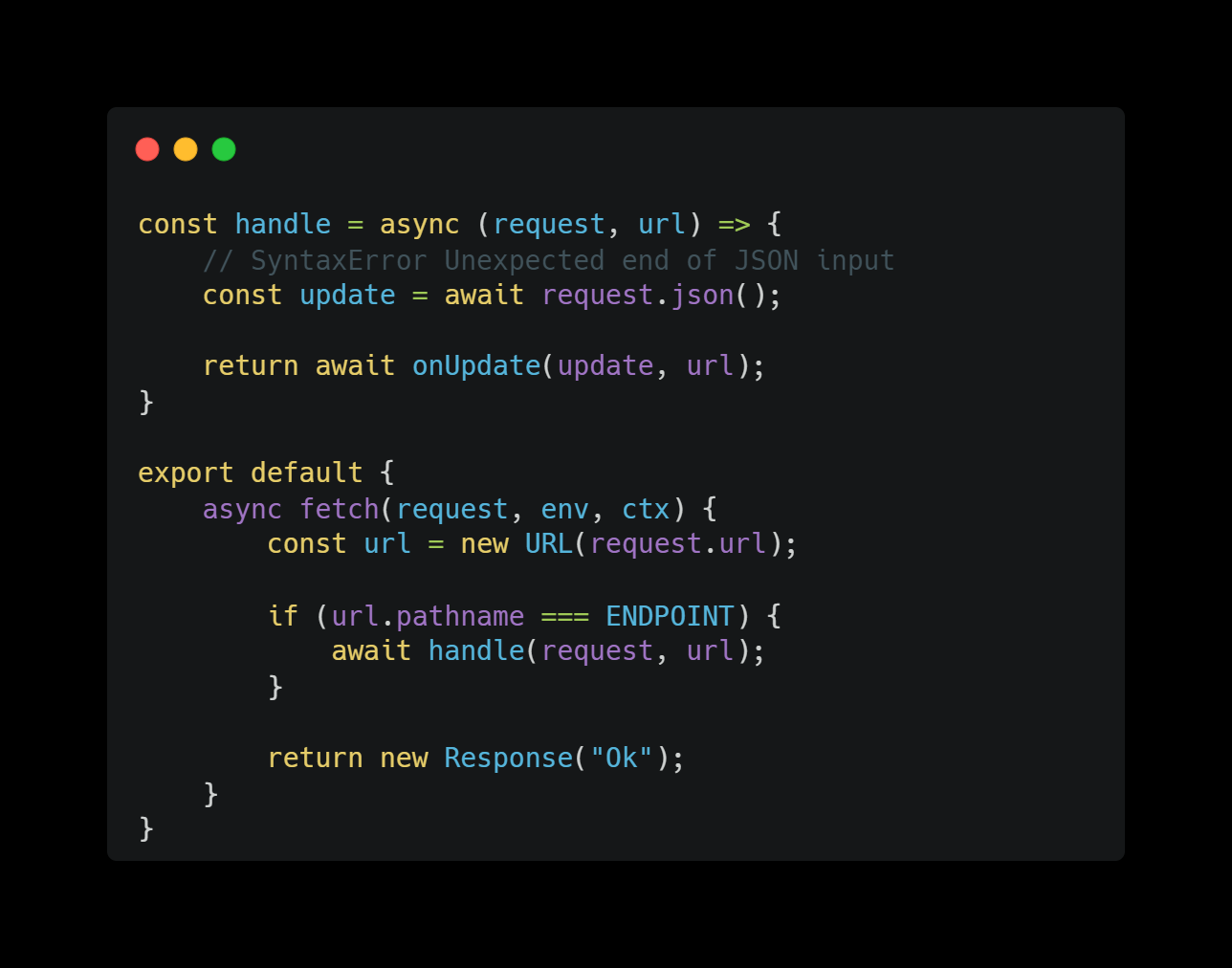
 I
I F
F H
H B
Bnoble-hashes. That library provides an async implementation which just uses promise callbacks (microtask queue) to break up the calculation: https://github.com/paulmillr/noble-hashes/blob/ae060daa6252f3ff2aa2f84e887de0aab491281d/src/utils.ts#L103-L119.KBnoble-hashes versions then, just the significant overhead of enqueueing/dequeueing the stack onto the microtask queue.export default {
async fetch(request, env, ctx) {
const url = new URL(request.url);
if (url.pathname === ENDPOINT) {
handle(request, url);
}
}
}addEventListener("fetch", event => {
const url = new URL(event.request.url);
if (url.pathname === ENDPOINT) {
event.respondWith(handle(event, url));
}
});noble-hashesnoble-hashes CDCloudflare Developers / general-helpCDCloudflare Developers / workers-and-pages-helpCDCloudflare Developers / general-helpCDCloudflare Developers / general-help


