Yeah, setting up the software and tuning in all parameters can be a bit overwhelming in the beginning. But once it clicks, the software (including TelemFFB) is pure gold.
My prior career was an avionics guy in the military, and now Im a software guy as well as a pilot (just for fun). I enjoy tuning these types of things as long as its not an every day thing
What Kind of Powersupply is the best Choice? I think Notebook Powerbricks are to Weak.... So a bigger Meanwell is needed? I only have 48V Power Supply here that we need for our Motion Platforms....
Keep in mind, that the amps specs for the motor are not equivalent with the amps drawn from the PSU. Those amps are only applied momentarily per coil by the motor controller. So a 40A PSU is a bit overkill, even for the big motors. I don't what the maximum amps need to be, but I would estimate a third at most.
I started by using the old PSU from a 3D-printer. It had a fan that would instantly respond to any change in load. Pulling more G = more fan noise. Quite irritating. I then got the Meanwell 350/24 - it is dead silent since then.
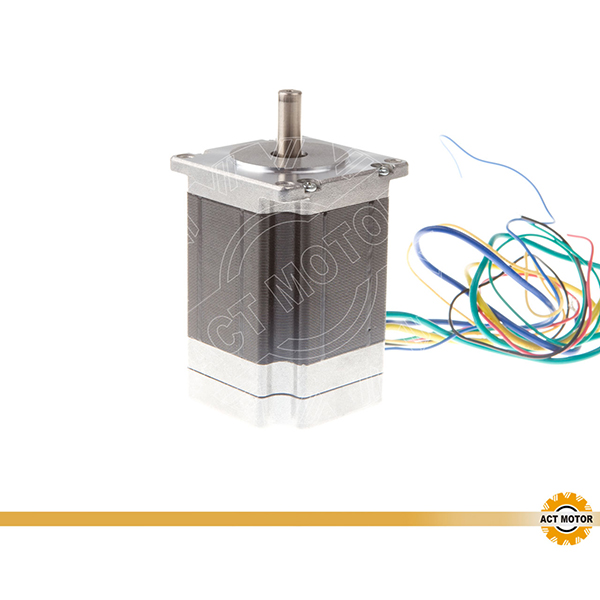
The voltage rating is KV in essence i.e. how fast it spins per volt, the less KV the more torque per amp. The 86BLF is rated 3000RPM @ 48V for example. The voltage, at standstill @ max torque, in the windings is something like 3V. So the 48V etc rating is useless if motor is not used for spinning applications.
Does the Rhino work in old space combat games such as Descent Freespace 1 and 2 that had force feedback support? I know they were just simple haptic effects such as when firing guns, missiles, or applying after burner, but just curious. Thanks.
does the rhino ship with a power supply or I need to supply my own? I have a meanwell UHP 1000w 24V PS that I could use, overkill I know, but silent and I could run both the pedals, the ffb base, and some other stuff off of a single supply I guess.
that question (throw limiter) opens up some questions for me that I'e been wanting to ask... Let's suppose (for discussion) that I'm trying to replicate the throw of an f18 stick. I think I want to replicate the angular distances that the real f18 stick covers not necessarily replicate the angle that it travels. This is because distance traveled will vary based on the length of the stick to cover the angle. My theory is therefore that the angular distance is more appropriate to replicate than the angle. Using a little math based on real f18 stick specs and the actual length of my own stick I can then replicate the actual throw distance in my simpit by using the appropriate angle throw limiters. Is this the right approach?
so back to the f18 example, if the actual aircraft has 3" of travel in each roll direction and my stick is 18" from the pivot to the trigger, then using theta = arc length / radius gives me theta = 3 / 18 (*180/pi to go from radians to degrees) I get 9.5 degrees in each direction as the appropriate roll throw.
Your approach is the most practical and would be the one i would use based on those constraints (length of stick vs real length of stick). Just be aware that there will still be differences as it ultimately comes down to rotational precision at the gimble. so if your stick has less angular displacement for the same linear throw you will have less precision at the gimble aka it will be more sensitive. and vice versa if you have a greater angular displacement
@buzzbomb I think part of what you are saying is that if i limit the travel of the stick too much I lose a lot of resolution in the stick position sensor?
typically that problem would be more likely to occur the longer the stick is... I think mine will be mounted without any extension, so unless the travel of the actual stick is really small (like the f16 is) I should be ok? My guess is that you want to use at least half of the available rhino throw, but I'm open for other opinions on that.
it really depends on the geometry and the aircraft. The F16 is an outlier as its a force sensing stick and displacement doesnt really play into the input to the FLCS. Its just there for the pilot's 'feel'
agreed, probably bad example in this case. I think the question is how much can you limit the throw of the rhino for a particular aircraft until you lose so much sensor resolution that you've made the aircraft hard to control and/or begin to lose the "feel" of the aircraft
im sure there is an objective limit to the rotational sensitivy of the sensor but i cant tell you if you will hate the fell before you reach that limit or not
unfortunately most of the RW aircraft i have flown regularly with a stick have non-standard setups. The stick is geometry is essentially the same as a yoke. But The Rv-12, and 7 are normal but also really light on the controls. They will be a good comparison test in terms of angular sensitivity