The axis settings (curve and saturation) **do** affect the rhino.. just in a negative way. There's
The axis settings (curve and saturation) do affect the rhino.. just in a negative way. There's no correlation in the game between the axis scaling and the FFB output so when you enable a curve or saturation setting, the "axis position" and "ffb position" are out of sync.
Now, that said, DCS doesn't support FFB rudders natively and the FFB is handled by TelemFFB. You might actually get away with setting a saturation in the axis settings in DCS. I haven't tried it but I think it should work OK.
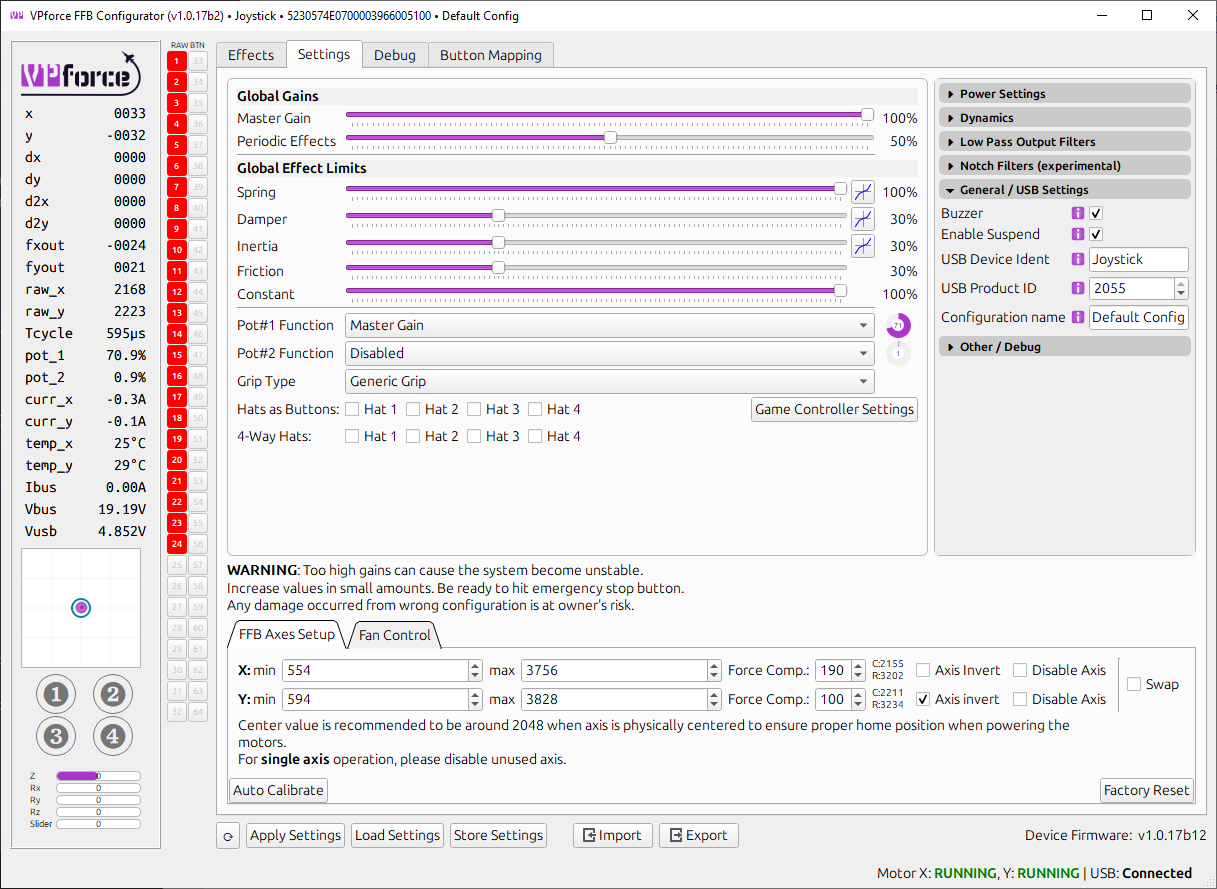
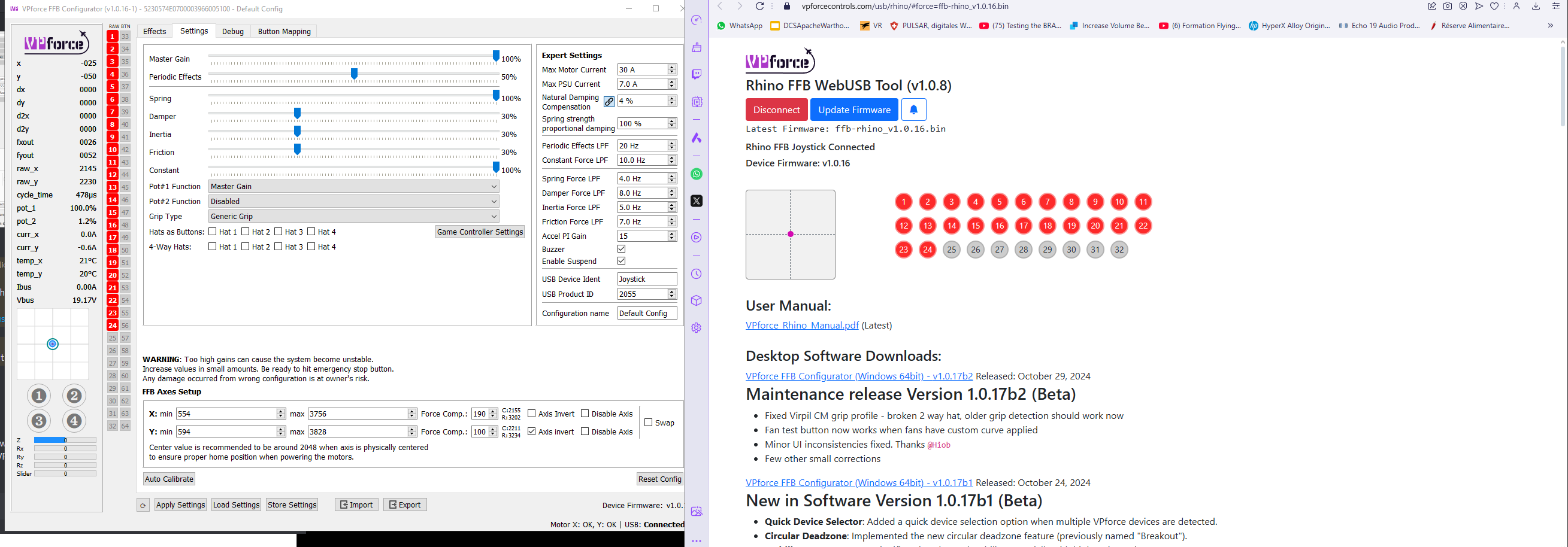
The alternative would be to set up a configurator proifle and manually edit the calibrated range max and min values. For example, if your calibrated range is 1275 to 3003, simply subtract/add an equal amount from both ends. 1075 and 3203 as an example. This will cause the full physical deflection of the axis to only amount to a partial excursion in the game , which is exactly what the saturation does for reducing sensitivity.
Now, that said, DCS doesn't support FFB rudders natively and the FFB is handled by TelemFFB. You might actually get away with setting a saturation in the axis settings in DCS. I haven't tried it but I think it should work OK.
The alternative would be to set up a configurator proifle and manually edit the calibrated range max and min values. For example, if your calibrated range is 1275 to 3003, simply subtract/add an equal amount from both ends. 1075 and 3203 as an example. This will cause the full physical deflection of the axis to only amount to a partial excursion in the game , which is exactly what the saturation does for reducing sensitivity.