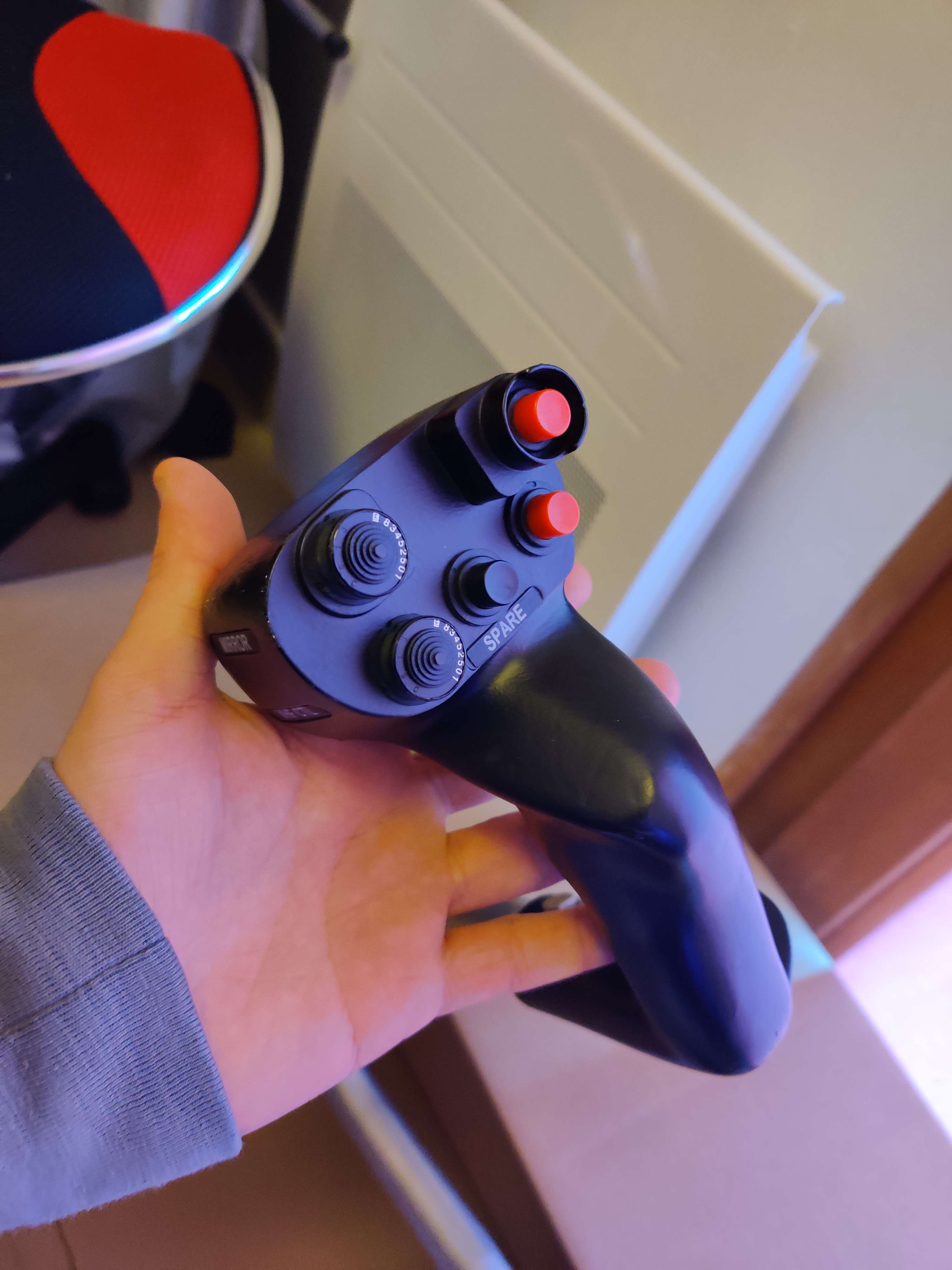
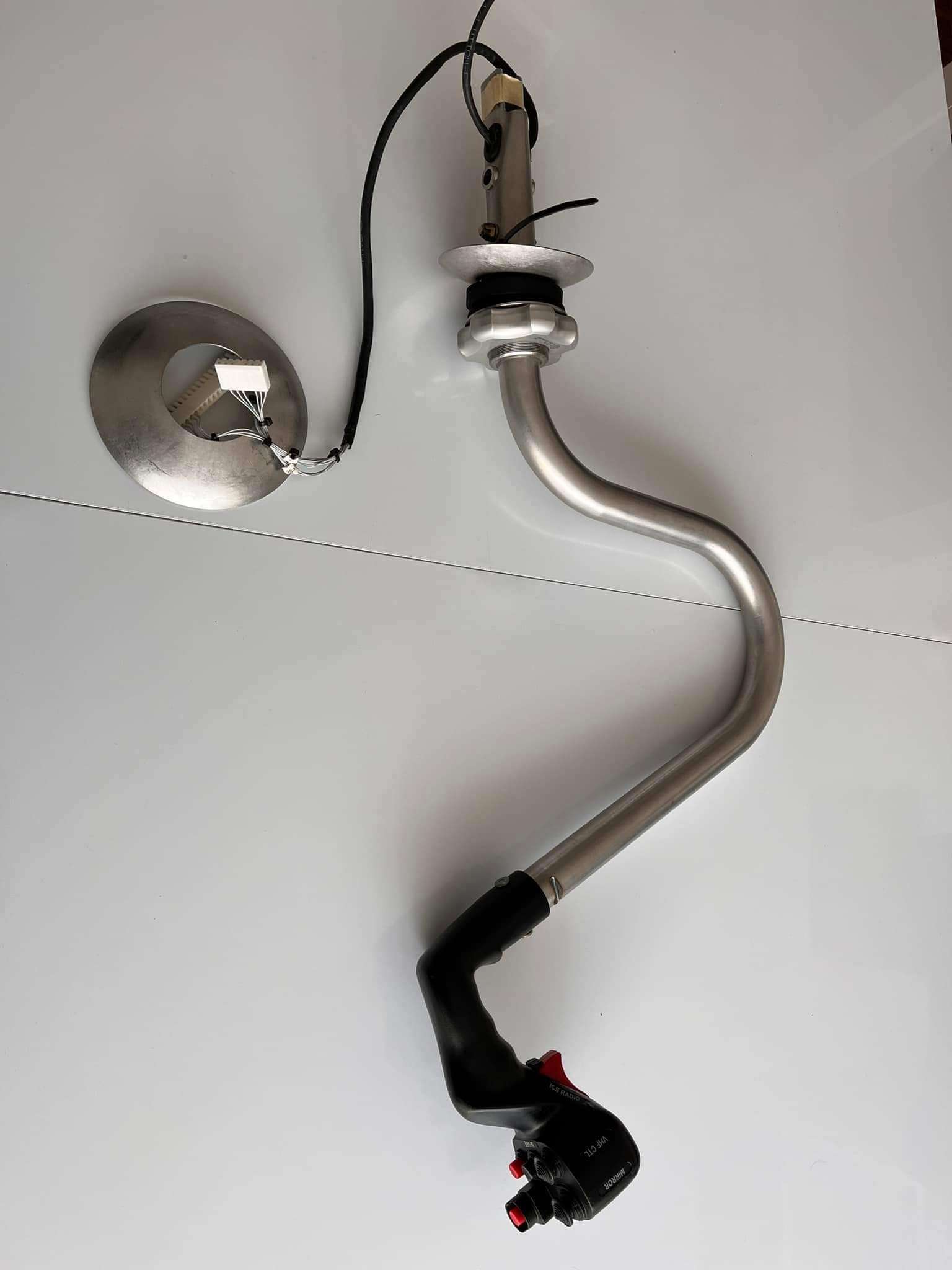
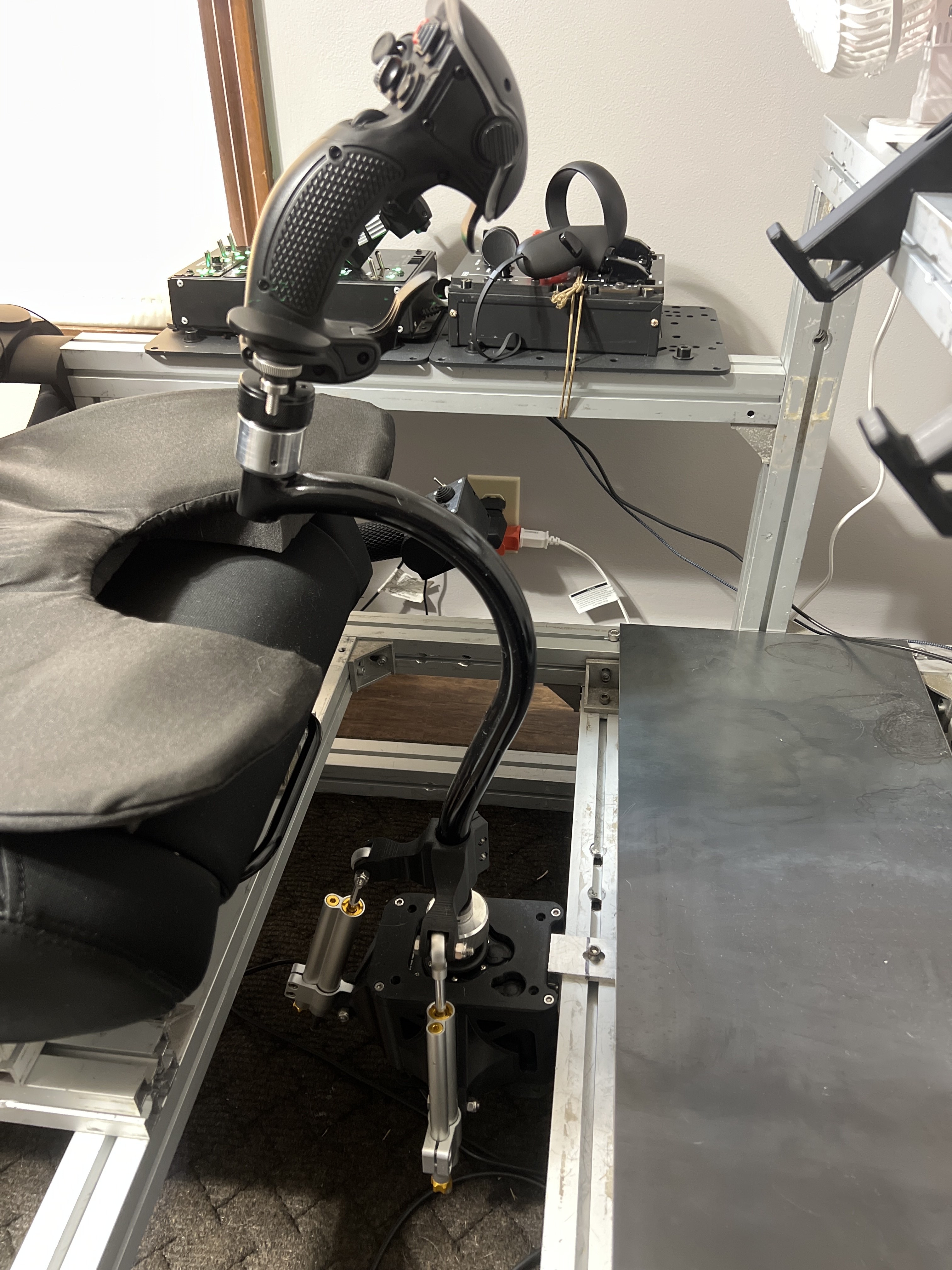
depending on the weight of your grip that's going to be a lot of leverage, I have the VKB MCGU on the 200mm curved extension & I don't think you'd want to go any higher with the same sort of weight.
With the vkb 200mm extension the RHINO feels really nice still, with the less heavy KG12 grip on it's definitely a noticeable difference in feel but I can adjust this in the VPforce settings, I use the grips in different planes too so the settings are different.
Have you decided where you'll mount the RHINO? it's a fair bit larger than other bases, you may only need a 200mm extension if the RHINO end up higher when it's mounted
Walmis, your policy on not taking payment until you gave all parts in stock is great. I wonder though, would it help you scale up production if you asked for payment earlier, even if just for a partial amount as a deposit? I for one would be willing to pay all or part of the cost of my order much earlier, if it would help you to build up your business and increase production rate. I know this might not be possible or practical for every customer, but I would bet many of us would support this model given your proven ability to deliver on your commitments.
I think thats the path to stress and anxiety for walmis. Even if he hires more people they are not as likely to be effective ( he has to train them) and he makes less money (he has to pay them)
As I understand it adding on more people will take time and would not result in an immediate increase in production. He has mentioned previously he does have plans for increasing production over time, so perhaps we'll see some of that come into place later this year.
Indeed, you may be right, and my comment was intended more as an offer than as a suggestion, as I'm sure Walmis knows best how he wants to run his business.
Yes, and for that you can jumpstart the project by modding an MSFFII, which already has the architecture. Changing current sensing circuit and adding caps/diodes/mosfets you can get it up to respectable torque ranges.
Brushed motors are definitely inferior to brushless though, and unless you have a cheap source of skewed armature motors you aren't really going to save much money. Brushless motors are anti-cogged with software, brushed motors need to natively have minimal cogging hence helical armatures.
You can save a lot of time and hassle to make something much superior with one of walmis's kits.. besides being BLDC there are tons of quality of life features and the components reduced to amazing simplicity
I don't' think talking about the same motors here lol. With brushed DC for force feedback you need exotic skewed armature types to minimize magnetic cogging vs brushless which can be compensated digitally.
This puts them into a whole different category than generic cheapos on Amazon. Pittman Lo-Cog, Glentec servos are a few I know of offhand. Apparently electric power steering units use some kind as well, though hard to find specs on and specs are needed before you can tailor drives for them. Acquiring suitable motors is the only easy part of a project like this.
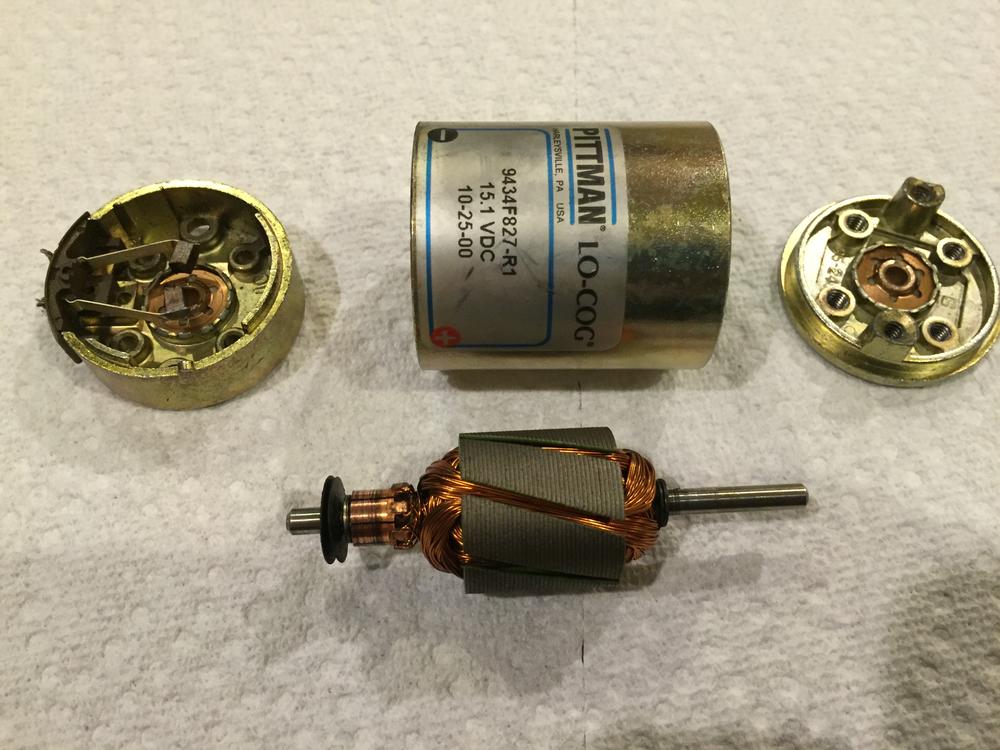
Here's what my Pittman motors look like inside. New they are over $200 apiece, smaller ones aren't much cheaper and it's just as much work to make a weak stick as a strong one, cause and the hardware only half the story. I was lucky to find used ones south of $50 ea which are in the voltage/amperage range to use to hotrod MSFFII following Roland van Roy's mod, a project I've abandoned because in the end is a ton of work for comparitively mediocre results. Here's a link to his page if you're really serious about this. Even the best MSFFII hack or full diy roll your own will be a cumbersome dinosaur compared to what you can much more easily make with current brushless options
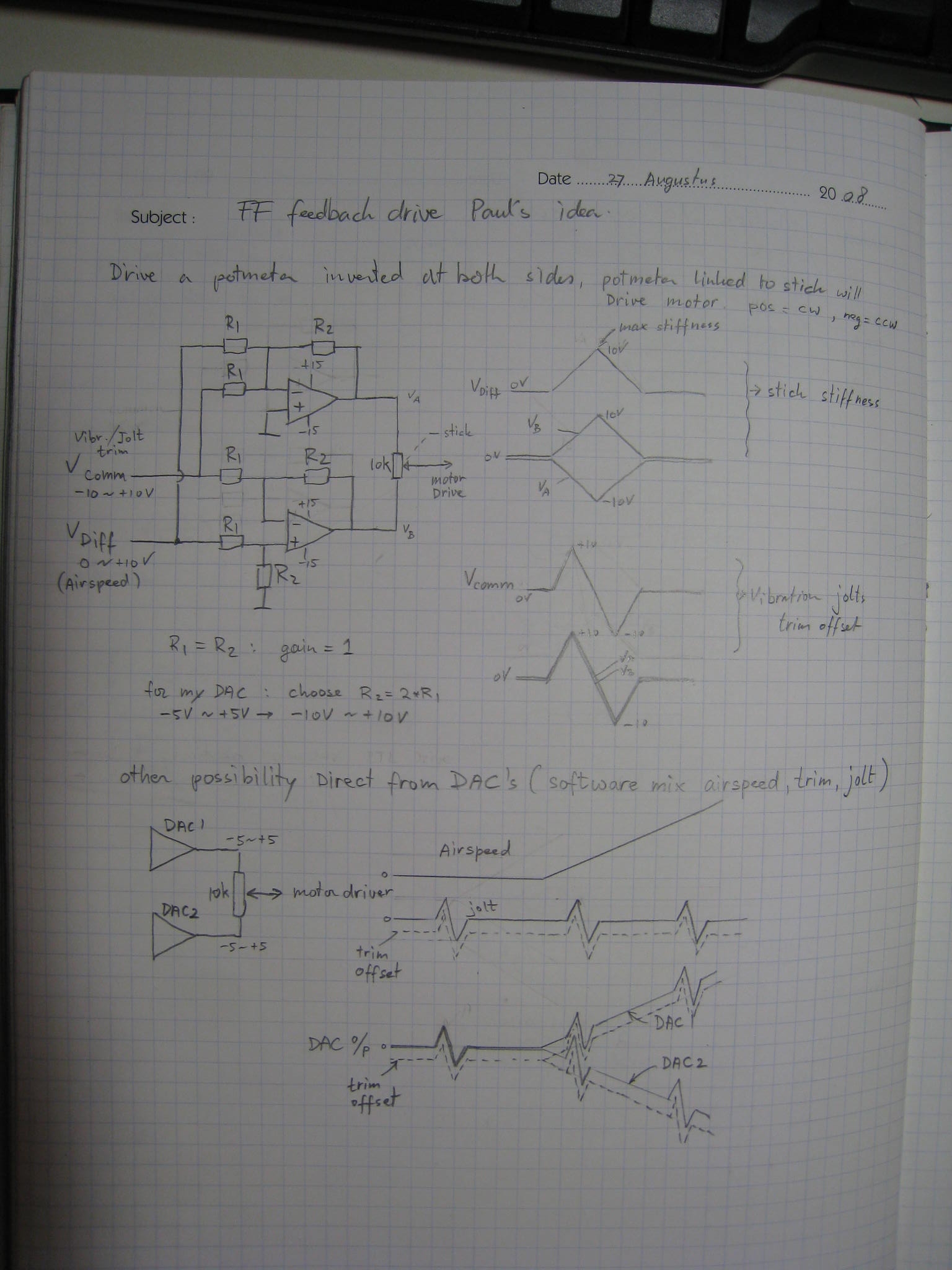
..here's a functional digital/analog circuit I came up with for force feedback effects based on telemetry, Roland tested it and I think used it to replace all his LED/LDR circuits that performed a similar function
Others have already spent thousands of dollars and hours solving a lot of problems over the years that anyone coming fresh to this has yet to even discover are a problem yet. That's more what I meant by you aren't gonna save money this route, even if your time is worth nothing to you. If it were as easy as just buying a couple motors on amazon there would have been lots of great diy additions over the years but success in this space is limited to a select few that really knew their stuff and stayed on target.
Finally, it is time to introduce my FFB joystick prototype! I spent a lot of time and learned a lot of new stuff when work on it. So here what is already implemented: - Works as standard USB FFB device, understands standard FFB protocol. No drivers. No plugins. - Supports spring, constant, ramp a...
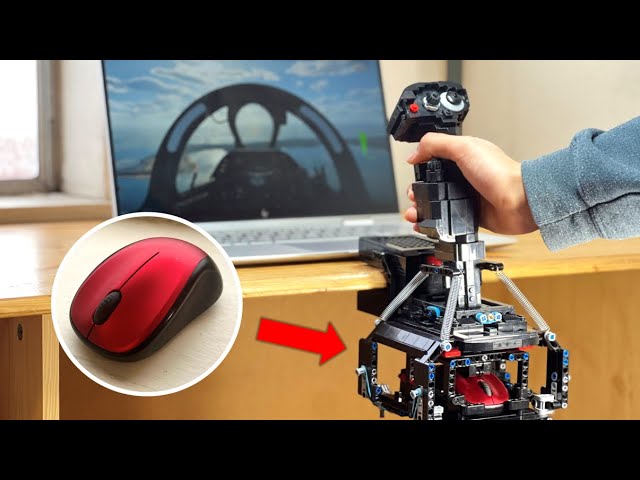
In this video I made a working Lego flight stick using a mechanism that moves my mouse.
The flight stick was designed to look like the F-18 stick, just like in Top Gun Maverick. I ended up using the flight stick to play War Thunder, and it worked flawlessly.
Timestamps: 0:00 Intro 0:24 Designing the Mechanism 3:41 Adding the Trigger 4:54 Epic ...
It depends on the module you're flying or how you have it setup in the app. It's not like a regular spring stick where it can be sloppy, if it's sloppy its because the game is telling it to be sloppy (like a slow flying warbird). I think that is what you're asking?
Sorry then maybe someone else can jump in, I'm not really familiar with backlash. There isn't really any 'play' though, again unless the module wants there to be.