... yocto is a bit more complicated when compared to builroot .. .. so like if one would start their journey ...i would suggest to start from buildroot environment ... understanding the basics of build process ... majour things are menuconfig there so can start fast and get their hands dirty ... where yocto would require a good learning curve in comparison ... at the end if you have a specific application and have selected the soc for it ..then check upon the vendor build documentation to understand the depth of details provided ...sometime they will tell you the preferred build environment ...and following that would be a good option... if you consider the build time ... buildroot might give you quicker results ... but it may start taking time upon further devlopements ...where as yocto would take a good amounts of time for initial builds but then for further build the build time reduces significantly ... for the beginning explore buildroot ... once you feel comfortable with the environment ..you may shift to yocto ...
its more specific to the board .. so lets say you have build for a board using buildroot and not you want to build the same for another board .. it would again take all the resources where as in a yocto project its more portable .. you can switch easily
What's up, @tahenan. Welcome! Check out the #jobs channel and feel free to ping @Marcweb. Do you have any specific industries or roles you're looking to fill? Leave your deets here: jobsLooking for Work? Comment Here...
Thanks, I'm assuming you've implemented both in commercial projects, correct?
The general sentiment I've been getting from those I talk to is buildroot is common for more resource-constrained consumer electronics-type devices and Yocto is for bigger, more feature rich platforms.
Would be interested to hear from you or anyone else who has experience with either
so apparently i havent got the commercial projects upon buildroot or yocto .. i have done one where i had build packages from scratch and complie then to make embedded linux ..busybox based environment ...
... also like one can think buildroot and yocto like how we have kicad and altium ... i mean both of them does the job ... one is just a bit more on the professional side ...and more resources ...
Thank you @Phoenix I have done internship at some startup which is based in Bengaluru, Karnataka, India. Interested in Embedded system development (From requirement gathering till product delivery). Currently looking for an opportunity to learn and grow.
Ive worked with basys 3 artix 7 dev board and mini lattice board......just got my self started with fpga's......sure would love to share my work here and will join the office hours........thanks for the invite
How do you decide whether to use synchronous or asynchronous finite-state machines in the context of FPGA? Is it true that hybrid approaches that combine synchronous and asynchronous are possible?@Navadeep and other FPGA users. Any thoughts or input?
With synchronous FSM you have to be careful of time delay for the clock speed.....in asynchronous there is no clock there are no boundaries or restrictions
I suppose by synchronous youre referring to syncing with the clock signal. If so, it's all about the clock.
Do you want the event to happen at definite clock cycle intervals? - go woty synchronous
If the requirement is to have an external input form the user, an event occurrence in the process itself like or a flag or interrupt and control the state machine transition based on these, then you have asynchronous.
If time sensitive events, asynchronous can be faster as there is no need to wait for the next clock edge to come. It should be feasible to implement hybrid. I am curious now - will try it out. One way is to have synchronous FSM running along with async to override it. I am quite fuzzy about time delay and how to healthily override.
I have very little experience so far and that too with interfacing memory controllers (RAM, Flash) with FPGA. So thinking in that context. I'd be happy to explore more from you on the hybrid approach
Buy ESP32 S3 8MB Flash 2.4GHz WiFi 802.11a/b/g/n Bluetooth v5.0 ADC, GPIO, I²C, I²S, SPI, PWM, UART, USB avaliable at the lowest price from Espressif Systems Distributor in India | Campus Component.
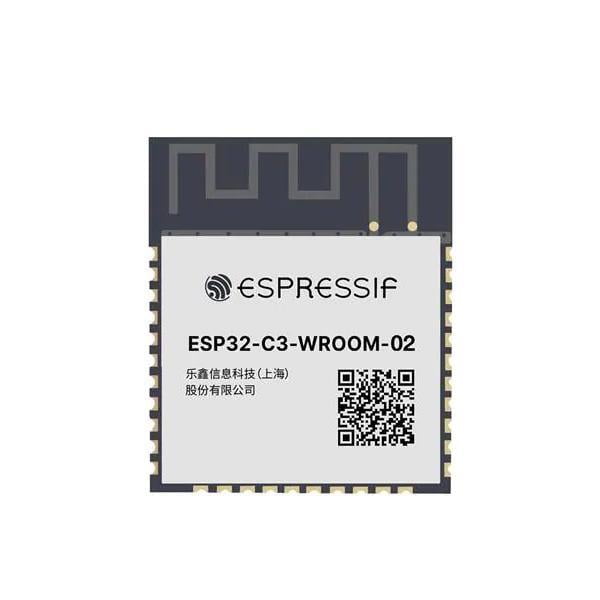
Buy ESP32 S3 WiFi 802.11a/b/g/n Bluetooth v5.0 ADC, GPIO, I²C, I²S, SPI, PWM, UART, USB 40 MHz crystal oscillator avaliable at the lowest price from Espressif Systems Distributor in India | Campus Component.
Yes @techielew I develop software solutions for battery management systems. And currently during my time pursuing masters in germany. I'm looking for oppurtunities as work student..
Jim Cantrell, CEO at Phantom Space, agreed to be a guest on my podcast. We will discuss satellites as advanced IoT devices. Let me know if you have any questions regarding satellites and the space industry - I will include them in our conversation.

 T
T A
A A
A T
T
 A
A P
P H
H G
G
 N
N J
J S
S U
U A
A P
P
 P
P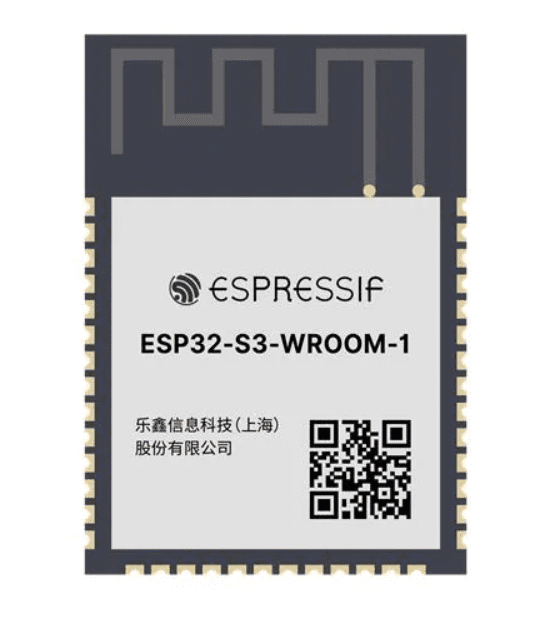
 S
S R
R N
N L
L


