Ive worked with basys 3 artix 7 dev board and mini lattice board......just got my self started with fpga's......sure would love to share my work here and will join the office hours........thanks for the invite
How do you decide whether to use synchronous or asynchronous finite-state machines in the context of FPGA? Is it true that hybrid approaches that combine synchronous and asynchronous are possible?@Navadeep and other FPGA users. Any thoughts or input?
With synchronous FSM you have to be careful of time delay for the clock speed.....in asynchronous there is no clock there are no boundaries or restrictions
I suppose by synchronous youre referring to syncing with the clock signal. If so, it's all about the clock.
Do you want the event to happen at definite clock cycle intervals? - go woty synchronous
If the requirement is to have an external input form the user, an event occurrence in the process itself like or a flag or interrupt and control the state machine transition based on these, then you have asynchronous.
If time sensitive events, asynchronous can be faster as there is no need to wait for the next clock edge to come. It should be feasible to implement hybrid. I am curious now - will try it out. One way is to have synchronous FSM running along with async to override it. I am quite fuzzy about time delay and how to healthily override.
I have very little experience so far and that too with interfacing memory controllers (RAM, Flash) with FPGA. So thinking in that context. I'd be happy to explore more from you on the hybrid approach
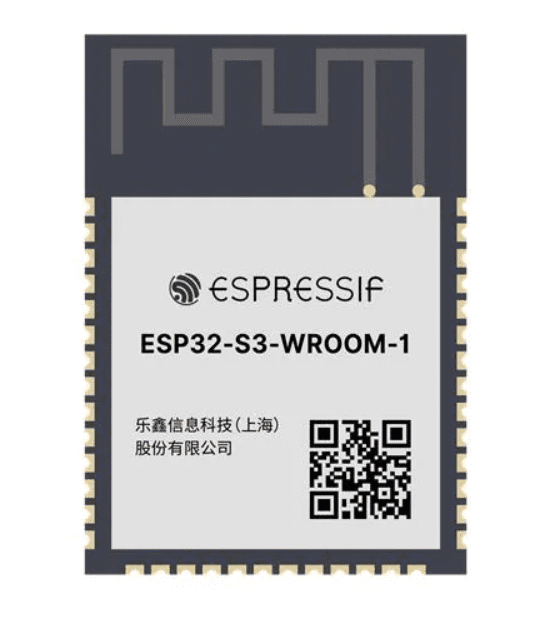
Buy ESP32 S3 8MB Flash 2.4GHz WiFi 802.11a/b/g/n Bluetooth v5.0 ADC, GPIO, I²C, I²S, SPI, PWM, UART, USB avaliable at the lowest price from Espressif Systems Distributor in India | Campus Component.
Buy ESP32 S3 WiFi 802.11a/b/g/n Bluetooth v5.0 ADC, GPIO, I²C, I²S, SPI, PWM, UART, USB 40 MHz crystal oscillator avaliable at the lowest price from Espressif Systems Distributor in India | Campus Component.
Yes @techielew I develop software solutions for battery management systems. And currently during my time pursuing masters in germany. I'm looking for oppurtunities as work student..
Jim Cantrell, CEO at Phantom Space, agreed to be a guest on my podcast. We will discuss satellites as advanced IoT devices. Let me know if you have any questions regarding satellites and the space industry - I will include them in our conversation.
Cantrell created the concept of a software-defined satellite. We will compare that with the Digital Twin approach. I will also ask him about the hardware and software components of modern satellites.
Hehehe, I'd love to travel to space myself The video will be available in three weeks at the earliest. I've got two other recorded episodes waiting to be published (one of them is my conversation with Marcello Majonchi, Chief Product Officer at Arduino).
@LMtx Please ask how development of space electronics different? What are the typical development steps involved? What do they do different or extra in validation stage, vs say industrial electronics
Do you still use them in your hardware development efforts? Can you explain how you'd use a Smith chart to determine something like load input impedance?
Curious if @pallavaggarwal @Joseph Ogbonna @Aditya thakekar or others use these methods as well and when/where they apply them.
my last design i did using Nordic nRF52840 which had a BLE on it. Wanted to use the smith chart, but found it a little bit difficult, but was recommended to use VNA device instead for my antenna tuning it get my desired value. So i dont actually use them in my design, but its helpful to a certain point.
@techielew Well, the Smith chart is not a calculator. It is a special format of logmag chart in a round form. The Smith chart gives you information how the impedance varies with frequency. For the given frequency, the Smith chart can help you with finding a corrective matching network for your antenna feed point or transmitter output. The Smith chart can help us designing a matching network. It can help to design a matching network for all load impedance values because the Smith chart is designed for a normalized values. Our equipment use 50 Ohm or 75 Ohm. The Smith chart can be used to display the impedance characteristics measured by the given instrument and the given component, transmission line, impedance etc.
Basically, Smith chart is built by considering impedance, it can be used to analyze resistance and reactance parameters in both the series and parallel.
Are there any current applications merged with IoT being used in space industry?
What are the security standards used in space tech, especially with growing number of drones in military applications? Where camera is used to scan areas running in low altitudes.
In this video, discover how the STM32 operates internally while executing a printf statement. The internal workings are broken down step by step for a clear understanding.