Cantrell created the concept of a software-defined satellite. We will compare that with the Digital Twin approach. I will also ask him about the hardware and software components of modern satellites.
Hehehe, I'd love to travel to space myself The video will be available in three weeks at the earliest. I've got two other recorded episodes waiting to be published (one of them is my conversation with Marcello Majonchi, Chief Product Officer at Arduino).
@LMtx Please ask how development of space electronics different? What are the typical development steps involved? What do they do different or extra in validation stage, vs say industrial electronics
Do you still use them in your hardware development efforts? Can you explain how you'd use a Smith chart to determine something like load input impedance?
Curious if @pallavaggarwal @Joseph Ogbonna @Aditya thakekar or others use these methods as well and when/where they apply them.
my last design i did using Nordic nRF52840 which had a BLE on it. Wanted to use the smith chart, but found it a little bit difficult, but was recommended to use VNA device instead for my antenna tuning it get my desired value. So i dont actually use them in my design, but its helpful to a certain point.
@techielew Well, the Smith chart is not a calculator. It is a special format of logmag chart in a round form. The Smith chart gives you information how the impedance varies with frequency. For the given frequency, the Smith chart can help you with finding a corrective matching network for your antenna feed point or transmitter output. The Smith chart can help us designing a matching network. It can help to design a matching network for all load impedance values because the Smith chart is designed for a normalized values. Our equipment use 50 Ohm or 75 Ohm. The Smith chart can be used to display the impedance characteristics measured by the given instrument and the given component, transmission line, impedance etc.
Basically, Smith chart is built by considering impedance, it can be used to analyze resistance and reactance parameters in both the series and parallel.
Are there any current applications merged with IoT being used in space industry?
What are the security standards used in space tech, especially with growing number of drones in military applications? Where camera is used to scan areas running in low altitudes.
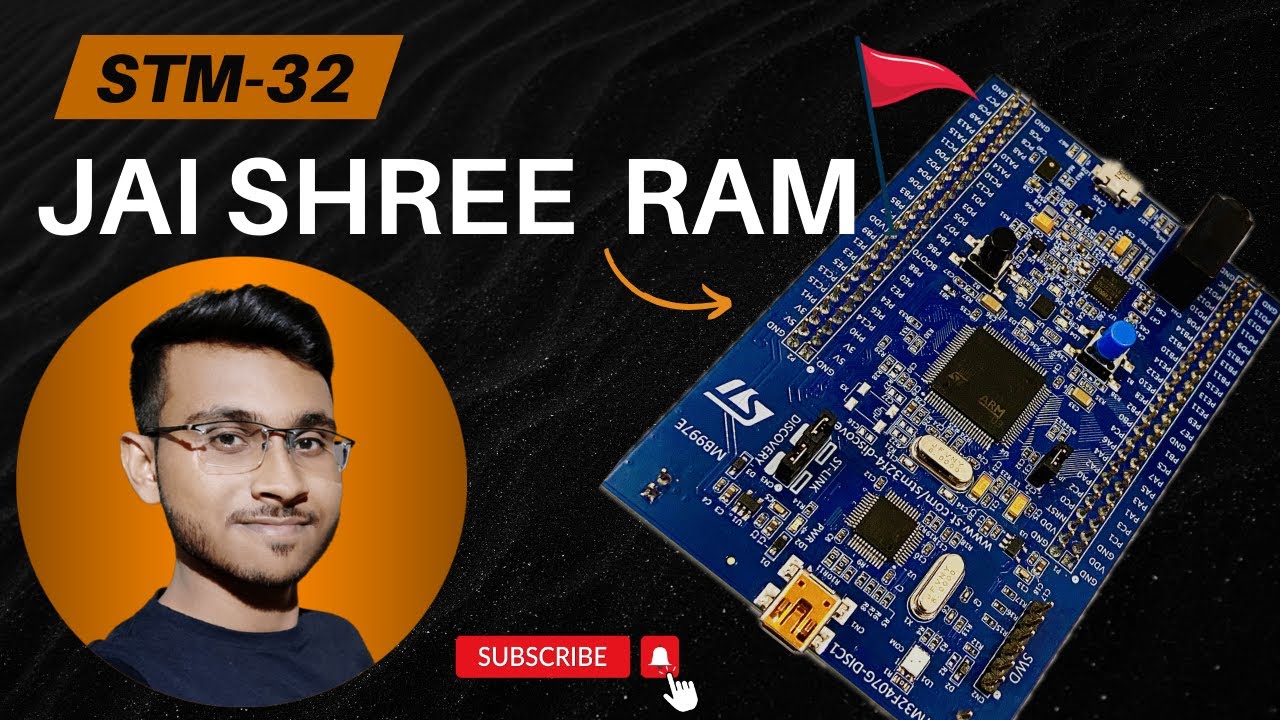
In this video, discover how the STM32 operates internally while executing a printf statement. The internal workings are broken down step by step for a clear understanding.
Welcome y'all newcomers from 1/17/24! We're so happy to have you here as DevHeads!
Can you all let us know a little bit more about your technical background, what brings you to the DH Server, and any projects you're currently working on? This will help us help you and help you help others!
Welcome @Abhishek Hipparagi! Can you tell us a little about yourself and your technical background? What brings you to DevHeads? What are you working on currently?
Hello, I'm Abhishek, an undergraduate student actively seeking job opportunities while immersing myself in the world of embedded systems. I have two years of experience as an intern, working with AVR/Arduino, STM32, and ESP series microcontrollers, as well as PCB designing using KiCAD. Additionally, I've gained experience with Pixhawk and DJI-based drones. Currently, I'm focused on expanding my knowledge and skills in this exciting field. Excited to connect and learn within the DevHeads community!
Thanks dude! Happy to have you here! The best resources for you are likely the @HW-Lead and @Computing Lead roles.
Do you have any images/examples of your drone work you can share with us here or in the #projects-and-self-promotion channel? We'd love to have a look.
Protect your python script, encrypt it as .pye and decrypt when import it - GitHub - Falldog/pyconcrete: Protect your python script, encrypt it as .pye and decrypt when import it
@Sachin K Welcome , Can you tell us a little about yourself and your technical background? What brings you to DevHeads? What are you working on currently?
Why 10-bit I2C Slave Addressing is not widely used in device libraries and example codes? Even, I often use a 7-bit slave address. It seems to me that either 10-bit addressing is only for special cases or it's a bit of a challenge to implement in code. Appreciate any perspective, experience @abhishek awasthi @Navadeep @ShreeshaN @Aditya thakekar
Hi @techielew , encrypt the .py source code or .pyc compiled code and decrypt them on the fly so the Python interpreter could run it. I was curious about the best practices in doing so. Thanks
My guess is that use of 8-bit or 10-bit slave address will add a byte more in every communication packet of data and considering slow speed of I2C, devices using 8-bit or 10-bit are not popular and adding extra implementation of addressing will increase I2C device library for small microcontrollers.
I'm a cybersecurity student at National University, and previously was an intern at tinyvision.ai inc. (the company that made the Upduino v3 ice40 FPGA dev board)
I agree though. Not sure who will love this 10-bit addressing and implementation. I wonder even for MPU users are there enough bus drivers support for 10-bit I2C addresses in user space packages
Is this for a commercial project? How imperative is it that either the source or the binary are encrypted? What are you concerned about protecting against? IP theft/cloning? Vulnerabilities? Something else?
There are commercial products like IAR Embedded Trust that provide application encryption and other security measures. And other services that encrypt binaries. Of course, those aren't FOSS..