To implement your DIY flight's gyroscope with Arduino, you need to find code that works with your gyroscope model. Look for libraries online that match your sensor. There's no one-size-fits-all solution, but you can try different libraries and tweak them until the gyroscope behaves correctly for your flight system. It might take some trial and error, but you'll get there on the run
So I heard about this watchdog timer thing, with lots of processes, it's kinda confusing. How do I make use of watchdog timer properly in my RTOS? Maybe having each task send a little signal with its own special ID?
guys need a solution like if i have a application were if the led strips of a road side led strip stops working it will send alert how can we detect if one or more strips of leds breaks down in a single street light
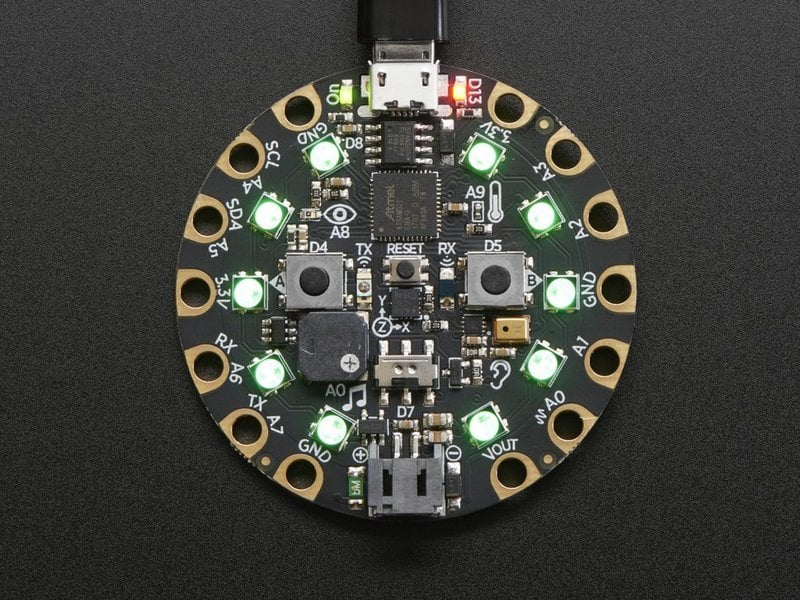
Anyone used one of these before? Definitely meant for beginners, but wow it has an amazing amount of stuff built in.
'm working on a project where I'd like people to be able to duplicate it. Something like this seems like a really good way to let people do that, even if using a soldering iron and other things that we take for granted would be a challenge.
You mean the street lamps or in-road lighting? If you're looking for street lights are you talking about a sensor node or the whole end-to-end system? If just the node I'd look for a small, low-power based LoRa platform (provided the municipality has a gateway or there's one available to use that meets security/data requriements) and we can talk about additional design requirement from there. LMK.
Generally speaking, if I'm interested in learning about drivers/ABIs/interoperability or even cross-compiling between systems/devices/apps, what's a good resource to start?
(Sorry if the question doesn't make sense, I'm trying my best)
@Al Aqel Welcome! Can you let us know a bit about your technical background, what brings you to DevHeads, and what you're looking to learn/contribute?!
@Hieumanity Welcome! Can you let us know a bit about your technical background, what brings you to DevHeads, and what you're looking to learn/contribute?!
Hi Al Aqel, welcome! Great to learn your interests! Well I’m not sure how extensive your experience is but the GCC compiler will handle a lot of cross compilation for microcontroller firmware development.
There are hardware abstraction layers (HALs) for higher level programming (like applications). A good place to start might be explaining more specifically something you’re trying to build/do/learn so we can point you in directions for that area.
I am using esp32-s3 as main controller to interface a flow sensor to get the volume and need to display it via a spi display interface the GUI middleware is LVGL and need to some data to send to the server using rest API(wifi) and also need to interface a sd card for data logging and need to use bluetooth also and OTA to update the firmware may i know any example code or project using esp-idf frawmework for me to refences ?
Or How about building a smart plant disease detection system using STM32, You could integrate image processing capabilities into the STM32 microcontroller using a lightweight AI model, such as a convolutional neural network (CNN). The system could be equipped with a camera to capture images of plant leaves, and the STM32 would analyze these images in real-time to detect signs of diseases or pests. Depending on the detected issues, the system could trigger alerts, provide recommendations for treatment, or even autonomously administer treatments such as spraying pesticides or applying fertilizers. This project combines the power of AI for image recognition with the real-time processing capabilities of the STM32 microcontroller to aid in crop protection and management
you can start with this sample programme of lvgl, you'll find LVGL and Freertos combined, I usggest that you start with this ti get fammilar with esp-idf and lvgl: https://github.com/lvgl/lv_port_esp32/tree/master
In an RTOS, use the watchdog timer to monitor tasks' execution. Each task should periodically reset the watchdog timer to prevent it from timing out. If a task fails to reset the timer within its allotted time, it indicates a fault, triggering appropriate error handling. Sending signals with task IDs could aid in identifying which task caused the watchdog timeout, improving debugging.
Morning everyone I am trying to control a set of relays with the GPIO of an esp8266. I have installed espeasy, and I can control the GPIO with an HTTP command. I would like to be able to do this with MQTT. My broker is a Raspberry Pi, and the test signals are passing well with the protocol. Now, I would like to achieve this with espeasy without using Jeedom or other home automation assistants. Has anyone tried this before????Because I can’t find any tuto similar to my project.
Yes, I agree with @boualleg sabrina. If RPi is running MQTT broker s/w and acting as an IoT Server. Then connect your home devices as a client and control them. This way you can avoid all third-party services. The only limitation is you won't have access from outside of your home network. There is a way out but I'd not recommend RPi to make it public access for security reasons.
Hi , actually i am done port the esp32 to lvgl but i am not familiar how to display the flow sensor reading to display concurrently need to handle lvgl. The flow sensor is sending the hex code it interface with esp32-s3 via modbus how can i handle the reading and display it on the tft display ?
Is there any good and robust alternatives to relays ? I am trying to deploy and system in a Harsh environment but my replay are stoping after certain time cause of rusting and many other factors can anyone suggest an alternative?