While each effect can be individually adjusted in TelemFFB, all of the default effects settings are developed with the periodic effects slider set at %50... If your slider is higher, most of the effects will feel too strong.
The "jet engine" effect which plays in tandem with the rotor rumble is actually a stack of 4 separate effects with slightly offset and ever changing phases, this is what results in the random warbling vs a static hum that you get with many base shaker type effects.
I never really notice it with the default settings because it is only a undertone to the more prevalent rotor rumble.. but if you turn the gain up, you can feel when the phases overlap in an odd way occasionally.
I'll look to see if I can extend the period at which the phase offset changes to reduce the abrupt nature of the change
I put periodic effects and rotor rumble to 50% in a heli. It's still quite noticeable. Let me know if you need me to provide debug data. I tried to record the sound with my smartphone, but had no luck so far due to the low frequency.
I'm certainly not intending to criticise your work - but do you think that offset periodic effects are a good idea? An offset will inevitable lead to up and down swelling resonances, which - at least for me - are quite annoying. This is why I tend to reduce the gain on those effects to almost zero.
no need. It happens for the reason I explained.. sometimes the phases align in a constructive way that amplifies the effect. There are no user controls to change the phases. You can adjust the master frequency of the effect, but that will just change the primary frequency of the effect (default is 45hz I believe).
Like I said, I'll see if I can tame down the transitions.
Personally I find holding on to a single frequency vibrator far more annoying than something which constantly oscillates and occasionally produces undesirable combinations of frequencies. But I will look to see if I can tone down the phasing a little.
I think, what he was suggesting is - instead of a fixed offset for the overlapping frequecies (which INEVITABLE leads to regular up and down-swelling resonances) try to make the offset somehow variable and random. I have no idea if that can be achieved, but it could be appropriate to reduce the problem.
Has anyone else had issues with the Rhino and the F-14B where the Rhino all of a sudden will have uncontrolled left input by itself? It's pretty significant and I usually have to reslot to get rid of it. Has happened in all sorts of regimes, on Saturday it occured while climbing to altitude from the boat, and last night while lifting back off from a touch and go on CVN-71
I’m a brand new and (so far) happy Rhino owner. I’ve browsed read the official Rhino manual and read various threads here on the Discord server and I think I have most things set up the way I want. I play only DCS and mostly fly the Apache. One thing I’m still unsure about is curvature, saturation, and dead zone of the “control output” (not the ffb itself). From what I can gather here on the forum, I’m not supposed to set any of those in DCS as they will interfere with the trim of the Apache. On the other hand I can’t find any way to adjust saturation, curvature, or dead zone in neither the VPforce Configurator nor the TelemFFB software. Is it correctly understood that there is no way of adjusting those, or have I simply missed something obvious?
ok because in both situations are you describing things that can happen when a flap gets stuck after takeoff / wave off / touch and go on the turkey without retracting them soon enough
While the rhino firmware does not support curves as amadeus said, this is purely a DCS thing. Call it a bug or a limitation or whatever, but FFB is just not compatible with curves and/or saturation adjustments. The FFB "spring center offset" is linear, so when the axis logical position is thrown off by a curve, bad things happen because the physical location on the linear FFB line does not match the logical position on the curved axis line. This infographic walmis created also shows why it doesn't make sense to move the center position on the curve. 📃general It might be possible to move the center of the curve itself but that would be... hard. But its important (for me) that you understand its a DCS thing since it is in control of the FFB center offset.
I've never been a fan of curves and always preferred saturation/scaling. Expecially in helicopters where you rarely if ever use full stick deflection. Unfortunately that does not work will in DCS either.
What you can do (I've suggested a specific feature/setting in configurator for this) is artificially increase the calibrated range beyond the stops in configurator.
For example, if your calibrated range is 1275 to 3003, simply subtract/add an equal amount from both ends. 1075 and 3203 as an example. This will cause the full physical deflection of the stick to only amount to a partial excursion of the in-game stick, which is exactly what the saturation does for reducing sensitivity.
Thanks for the thorough explanation. Highly appreciated! I agree that curves are not optimal but saturation would be nice as you suggest. In the meantime I’ve tried the “workaround” with the calibration axis that you suggested and that seems to work quite well for achieving the roughly 80% saturation that I was looking for. Great tip. Thanks
I fly the Apache without an extension as well and it works well most of the time but for the hovering it would still be nice to have saturation, curves, or dead zone, mostly the former. But I’m still adjusting my muscle memory from my previous spring-based stick setup so maybe I just need a bit more practice
Between using the adaptive recentering feature, and spring forces at 100% with a telemffb setting of like 20% damping, I find it quite manageable. Like all changes, there is an adjustment period, but I’ve become quite fond of this setup
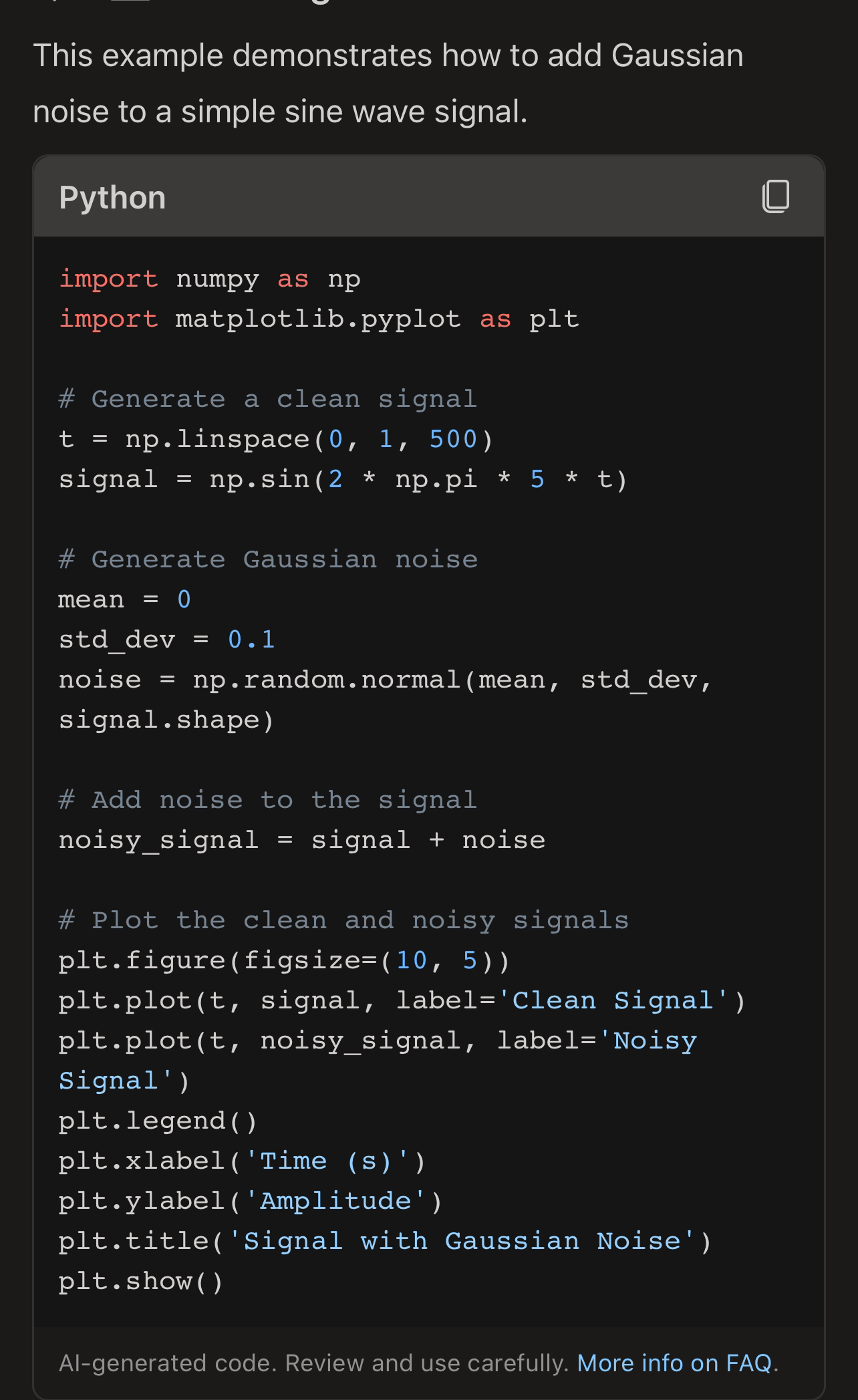
Except that we dont generate "a signal". At every simulation frame we have the opportunity to start/stop/modify one or more periodic effects. Those effects have an - intensity (amplitude) - direction (0-359) - Frequency (Hz) - Phase offset - Shape (sine, square, triangle, sawtooth).
You cant "add noise" to a effect At any point in time it is what it is based on the agruments above.
You can create additional effects with offset values that will create an oscillation/warbling when they are played simultaneously based on the interference of the signals.
@walmis did we discuss increasing the adaptive centering force or allowing us to adjust up to, say 25% of master setting, to get a snappier return or more consistent return with those using longer extensions and if its a viable request?