VNE is definitely ias as it’s the redline on the speed indicator which measures indicated airspeed , military ones also convert this to mach numbers as speed gets close to mach as mach is based on density altitude as well as true airspeed
I know what the redline on my airspeed indicator means and I also know that only applies to standard atmospheric conditions. The higher I go the more math is involved to figure out what my current IAS should read to keep from exceeding VNE. Many planes have a placard to remind pilots to take density altitude into account for this reason
I recently read the POH for a M20V, the advertising for this aircraft states that the top speed is 242 KIAS. The POH gives the Vne at 196/195 KCAL/KIAS. I have found a similar discrepancy, the Vl3 ...
Yeah. it dawns on me. What is so irritating to me is, that it is stated that the Vne needs to reduce with altitude. Which is exactly what IAS does inherently, but the key seems to be that Vne decreases more than IAS and therefore the Vne(ias) has to decrease even more than that…… my head is starting to hurt…..
V speeds are aways given in KIAS aka indicated. Cruise speed is not a "V" speed per se and will often be expressed in Indicated or True depending on its intended use. You fly Indicated airspeed but you flight plan with true airspeed. If you look at the power charts for the King Air you will see torque, rpm, fuel flow, KIAS and KTAS for different pressure altitudes and temperatures. Now how VNE is determined depends on how the aircraft is certificated as high altitude and high airspeed aircraft use different formulas to determine it. This can lead to some strange results. Take the Duke and the turbine Duke for example. The VNE on the Turbine Duke is lower than the Piston Duke since it flies higher and was certificated under different standards requiring a different formula for VNE determination. essentially once you get over 25k VMO/MMO become dominate. I read the exact details how this is done a long time ago but cannot find the reference
I have never heard of Vne being dependent on altitude/TAS. It is a structural speed that depends on IAS. Your airplane will only be affected by the TAS when getting close to Mach 1, where the air stops being compressible. I don't think flutter characteristics change significantly with TAS/Altitude to warrant a different Vne. What is coffins corner is where you can't go faster in an airliner due to mach buffet , but can't go slower due to your AOA, minimum stall speed. That's where any turbulence will force you to dive down, which is not a good thing
The cruise speeds are in TAS to advertise how fast you can get from A to B in an aircraft. This is confusing, because your optimum IAS when flying the thing will be lower.
"I don't think flutter characteristics change significantly with TAS/Altitude to warrant a different Vne" .. It depends on the type of aircraft and how its certificated. for most light GA its essentially not an issue. BUT even a light GA aircraft that is Turbo-normalized that equation changes. For example a SR-22t can operate up to FL250. It has a fixed VNE (205KIAS) up to 17500 and a linearly decreasing one that is reduced to 175KIAS at FL250. This isnt a direct result of structural loads but is a result of reduced flutter/aeroelastic margin due to higher TAS at a given indicated airspeed in the flight levels.
The only reason it’s not an issue with most light (powered) ga is their engines service ceiling are too low to matter. In gliders it’s a serious consideration though for high altitude/wave flying where you can get to fl400 and beyond. Perlman 1’s (Perlman Project, high alt glider research) coffin corner is about 60k ft as it’s just a modified DG505m. Perlman 2 which is purpose built for this can safely reach fl900, higher than the U2.
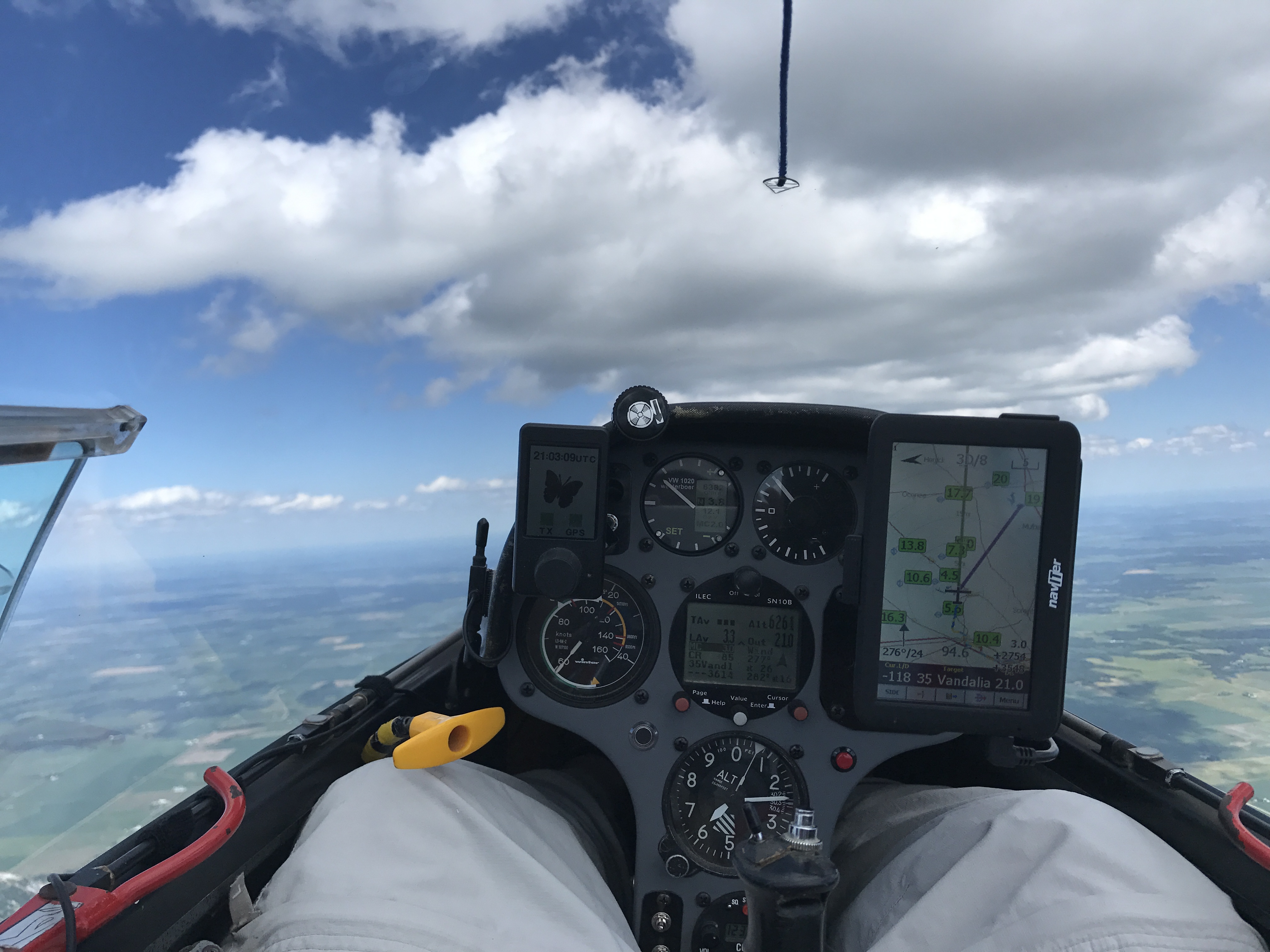
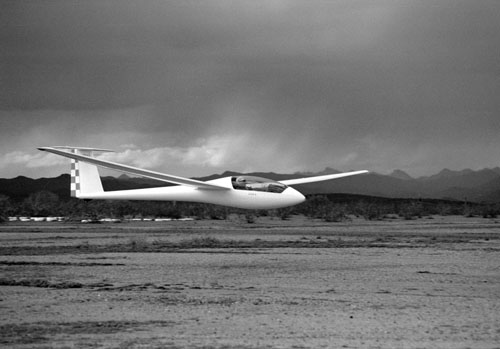
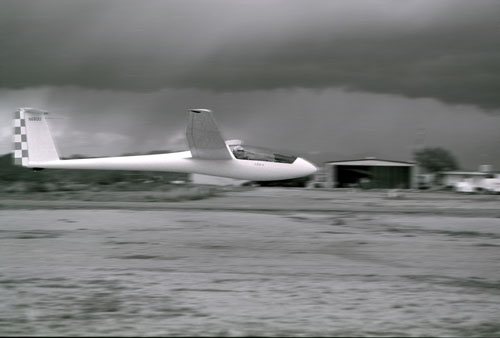
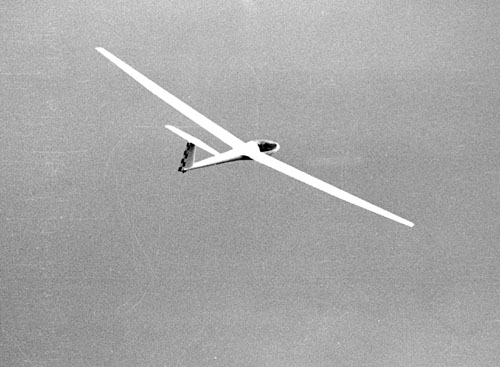
V speeds are in IAS, but at higher altitudes there are often speeds that are TAS limited (often due to flutter or mach effects). For example, even in my LS6 glider, Vne decreases with altitude, and this is shown on the airspeed indicator with several red lines below the Vne mark, with an altitude next to it.
If you zoom in, you can see that at 19700', Vne is down to 118 KIAS. Trust me, an LS6 can hit 118 KIAS easily cruising under a western clould street - BTDT over the Grand Canyon at 17999' a few times. So you have to keep that in mind when blasting along fat, dumb, and happy; because if you get sucked into a Cu, getting out by diving may not be an option, and opening the spoilers at VNE is not a really good idea...and without gyros, well, you know what happens next.
For those of you not familiar with racing gliders - you can get to redline with an easy push on the stick and about a 5 degree dive for less than a thousand feet. Back when low passes were common, a normal pattern was a wormburning Vne pass across the field dumping water ballast then pitching up to a closed pattern. Or sometimes a second Vne pass...not that I would EVER do anything that fun
its a tricky subject that is overtly colored by ones [often limited] experiences. Even in most pilot forums talking about VNE triggers a ton of discord
certainly, it is much more satisfying to stay up there by skill rather than by fuel. In europe, gliding tends to be cheaper than powered flying due to winch launching and clubs sharing the investment.
yeah i already checked it out..need to make some measurements and then ill print one. I have the 11 to try first but im sure i want less aileron deflection than pitch
Hi all, I am pretty my question was already discussed somewhere but i have no idea how to find it. The question is: why does the stick stiffen under Gs and not under dynamic pressure (airspeed) in Il2GB? Does IL2 not provide speed as telemetry?
IL2 does have dynamic spring as part of its FFB implementation. Thats about all it has. Theres a few haptic effects like gunfire and stall buffeting but they arent very well done.
TelemFFB adds a bunch of other types of effects, but the native support is what I wrote above.
Right in the input settings where you would enable/disable FFB. There are two sliders. One for shaking, that controls the haptic feedback I previously mentioned. One for "feedback power" that is the master gain control for the dynamic spring based effects.
The only reason it is recommended to set the shaking value to 0 is that (in my opinion) the TelemFFB effects for Buffeting, Runway Rumble and Weapons Effects are just better than the built-in ones. This is what the Duplicate Shake Effects section in the manual is talking about.
If you enable the "IL2 Shake Master" setting in TelemFFB, you should disable the shake effects in IL2 so they are not both trying to play at the same time.