
No, out of the box we don't do that name conversion for you with the current D1 binding.
No, out of the box we don't do that name conversion for you with the current D1 binding.
 M
M B
B N
N I
I X
X G
G
 S
S VVII
VVII M
M LM
LM S
S
 B
BEach D1 database can store up to 10 GB of data, and you can create up to thousands of separate D1 databases. This allows you to split a single monolithic database into multiple, smaller databases, thereby isolating application data by user, customer, or tenant
BB K wth is happening here?
DATETIMEtimestamp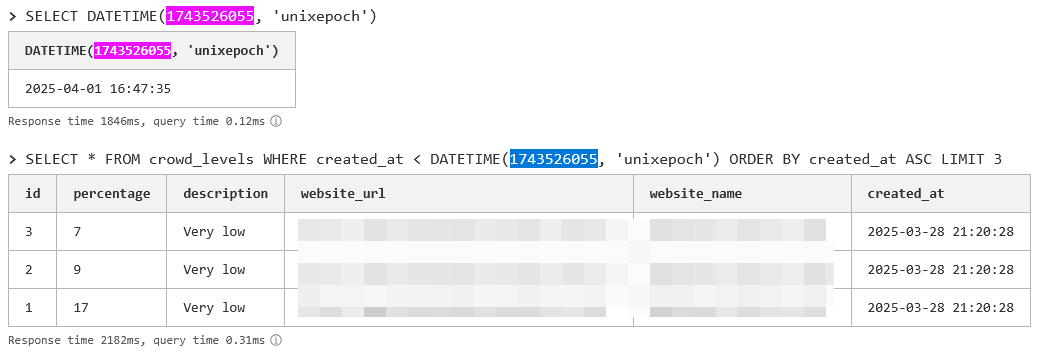 B
B HHBKBBBHHKHK
<> S
S A
A B
B KLSLSLS
 AAB
AABidFromName you can pass something specific to the tenant you want. Each unique iduser_1 to be any of my users and I'd be routed to their specific DO instance.AL
 C
CSELECT * FROM crowd_levels WHERE DATETIME(created_at, 'unixepoch') < DATETIME(1743526055, 'unixepoch') ORDER BY created_at ASC LIMIT 3
This query returned no data.idFromNamelet id = env.MY_DURABLE_OBJECT.idFromName('user_1');
let stub = env.MY_DURABLE_OBJECT.get(id);
return stub.fetch(request);user_1


