
Why do the docs say there is a 30 Retention limit for completed Workflow state.. but then also say i
Why do the docs say there is a 30 Retention limit for completed Workflow state.. but then also say it's stored for 7 days?
 J
J A
Awrangler typeswrangler.toml OJ
OJ CC
CCrestart() M
M DCDC
DCDC A
A M
M T
T GGG
GGG A
A FAA
FAA P
P O
O NJJ
NJJ KJKKJK
 i have an idea, i have been working with workflows and one thing that i keep thinking is how great it would be to have a tab called "Logs" inside workflow instance that displays
 console.log`
export abstract class AbstractWorkflow<T, R> extends WorkflowEntrypoint<Env, T> {
protected abstract getName(): string;
protected abstract validateInput(input: T): void;
protected abstract runStep(event: WorkflowEvent<T>, step: WorkflowStep): Promise<R>;
async run(event: WorkflowEvent<T>, step: WorkflowStep): Promise<unknown> {
console.log({
message: `${this.getName()} started.`,
level: "info",
event,
});
try {
this.validateInput(event.payload);
const output = await this.runStep(event, step);
console.log({
message: `${this.getName()} completed.`,
level: "info",
event,
output,
});
return output;
} catch (error) {
console.log({
message: `${this.getName()} failed.`,
level: "error",
event,
error,
});
throw error;
}
}
}
A Already implemented some Kind of workaround on my own to get around those Limits, but currently I‘m just waiting for Container compatibility because it‘s solving so much additional Problems I‘m having with workflows right know IMHO
  KJJ
KJJ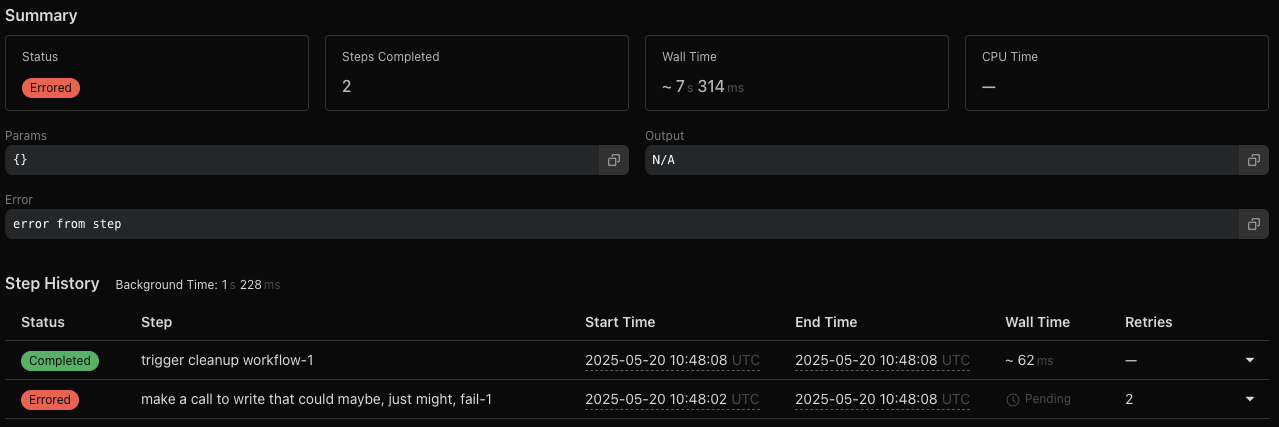
 B
BwaitForEventsendEventsendEventsendEventwaitForEventwaitForEvent C
C`
export abstract class AbstractWorkflow<T, R> extends WorkflowEntrypoint<Env, T> {
protected abstract getName(): string;
protected abstract validateInput(input: T): void;
protected abstract runStep(event: WorkflowEvent<T>, step: WorkflowStep): Promise<R>;
async run(event: WorkflowEvent<T>, step: WorkflowStep): Promise<unknown> {
console.log({
message: `${this.getName()} started.`,
level: "info",
event,
});
try {
this.validateInput(event.payload);
const output = await this.runStep(event, step);
console.log({
message: `${this.getName()} completed.`,
level: "info",
event,
output,
});
return output;
} catch (error) {
console.log({
message: `${this.getName()} failed.`,
level: "error",
event,
error,
});
throw error;
}
}
}


