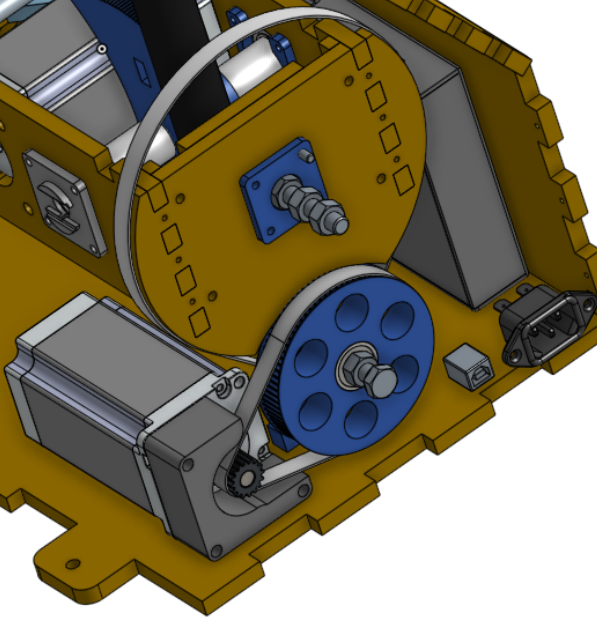
Of course directly connecting the motors to the gimbal would be a little overkill. About a 10:1 reduction seems like the most you're going to easily fit in a single stage on a reasonably sized gimbal.
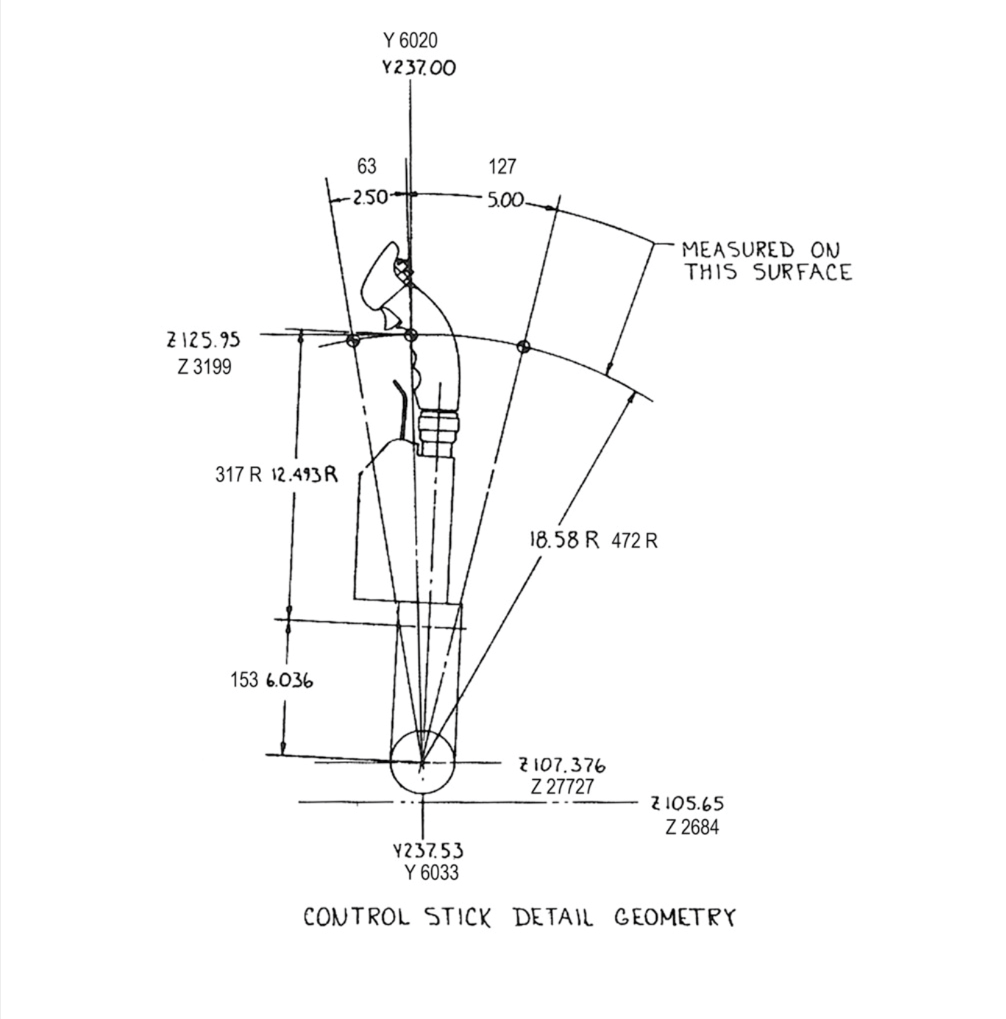
I also ran into some ergonomic issues with the wrist, because it was a short stick the angular deflection was much higher than something in a real aircraft. If it was a full size stick I suspect it would be a lot more manageable
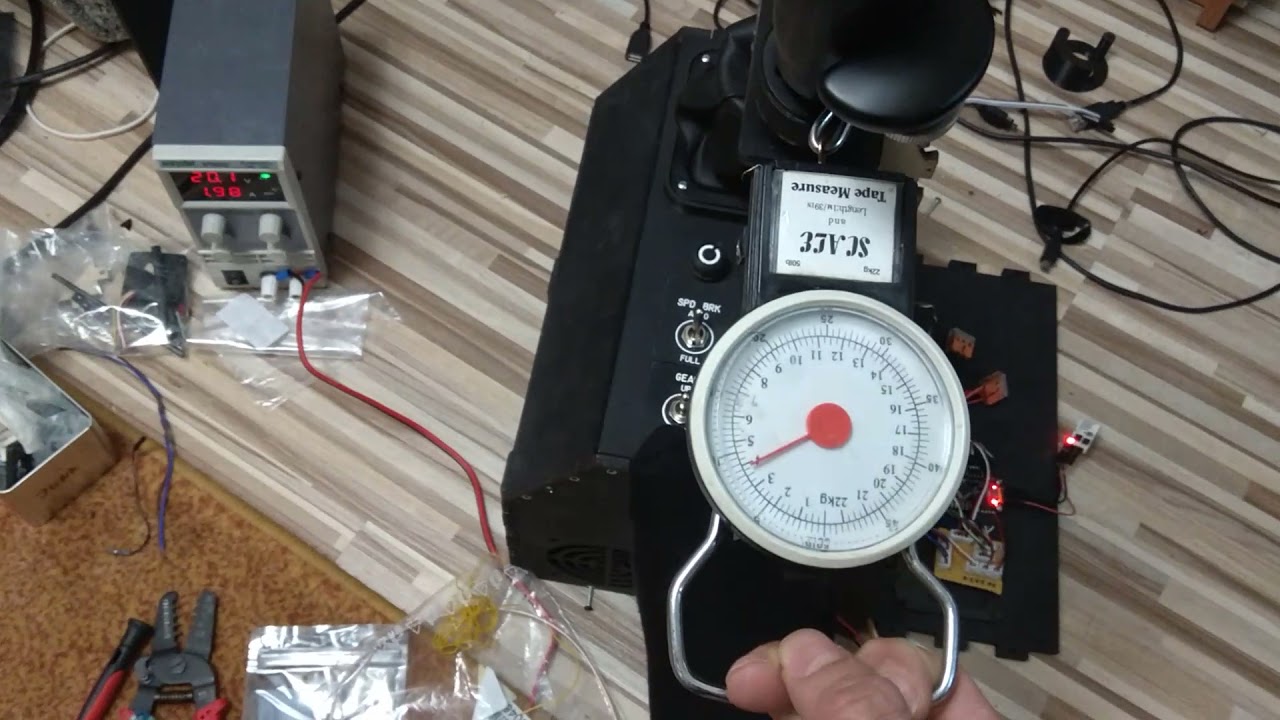
Had to go measure it, about 20cm radius from the base to the stick reference point, middle finger under the trigger. It turned it into more of a wrist action to pull rather than arm.
still remember my first hours with the G940, had it simply standing on the desk, testing ffb effects... it is very light, compared against the rhino, much weaker power but still wanted to hop from the desk
Interesting discussion here I'll chime in. So yeah there are couple of design decisions and compromises for the Rhino. I wanted to make a more accessible base and to keep the weight down while having decent forces. If it beats a Brunner offering then it's a win for me. And the shipping costs worldwide go exponentially with weight So material selection was based on that idea also. So I consider the Rhino as the 'advanced' entry level FFB device and once this project grows, I'll have more resources to start offering more PRO solutions.
Very impressive as always! I can definitely see the reasoning behind the design decisions with the rhino aimed at advanced entry level, looks like you've got a really nice niche.
I do have one question regarding the motor specs. According to the data from the manufacturer you posted above the 86BLF04 has a continuous torque rating of 1.4 Nm, and a peak rating of 4.2. How much do the motors heat up when running at peak current? Is it a significant factor?
well, leaving them running at 30A will heat them up in 5 minutes or so, but they have so much thermal mass, that with active cooling that's no problem.
I see, as long as the average current is below the maximum the cooling can handle, it should be mostly fine? (within limits of course) I'm sure the inrunner design helps with heat dissipation. Lots of easy thermal access to the stator windings.
I read a good book about the early days of flight simulation with NACA and NASA. They sometimes used hydraulic FFB sticks and the test pilots absolutely hated them and a few were borderline nervous around them. The analogue computers driving the hydraulics would sometimes do weird and unexpected things, causing the sticks to bite them in painful areas of their anatomy....
When I worked in flight simulation they had just transitioned from analogue to digital control loading. It was an absolute marvel of engineering. The basic hardware was the same (hydraulics and strain gauges); but the software that controlled it was written in microcode (into a special modified processor that had writable control store) so it could run at 500hz. That's right - the CPU was modified so that they could write software in microcode.
There was a big emphasis on safety and if anything was out by a very small margin then the controls would disengage. What you have to realise is that when the controls were disengaged (from the hydraulics) the stick would move freely.
Quite often during development (and sometimes during training) you'd be flying along and suddenly the controls would disengage. The noise was very distinctive as the hydraulic pressure was rapidly dumped.
Once when I was working on the Swiss Hawk the controls guy had got his signs inverted; so it was effectively a positive feedback loop. So as he pulled back the force was inverted which moved the stick forwards which increased the force being applied. Net result was being pulled into the HUD assembly. Normally as a force was measured on the strain gauge the software would move the stick in the appropriate direction and it would feel as though you were moving the stick when in fact it was the software that moved the stick.