
 F
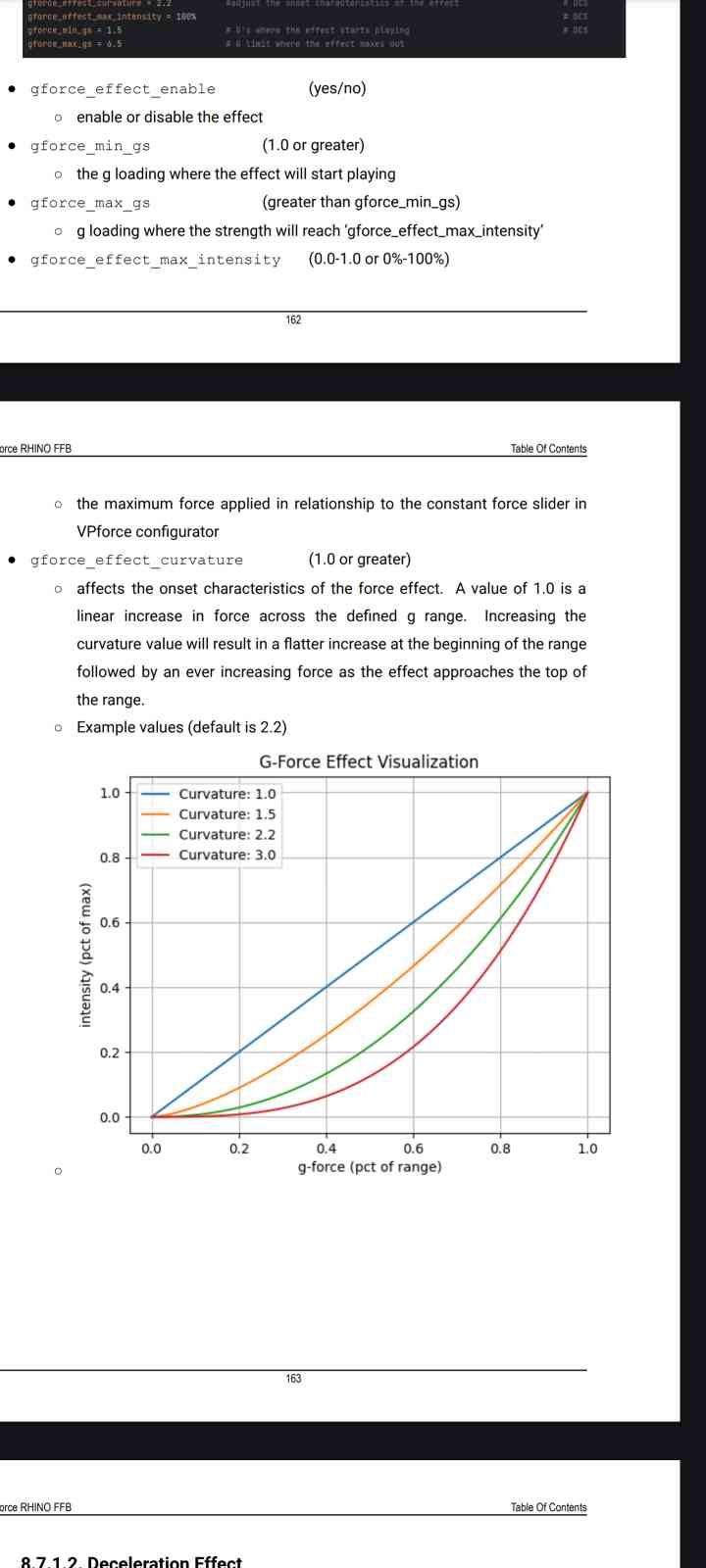
FYes you can change the curvature as explained in the manual
 N
NAh I see you use the Legacy G-Effect hence why I haven't seen this curvature option before as I have only enabled the "NEW" effect so far.

 N
NThe legacy g effect will provide consistent force at a given G loading because the applied force is a direct calculation of the G force and its point on the curve, but it can lead to a bouncy feeling on some aircraft because the controls are so sensitive it leads to large g-force swings with small control inputs. Most notably at low G's with a linear curve, or, where the curve ramps sharply with an exponential curve value
The new effect calculates the force the same way (using a linear scaling from min-max g), but it applies a further factor using the deflection of the stick from spring center. It solves the "bouncy" problem, but does not provide consistent force since at different airspeeds the "stick pull" to achieve a given G loading will be different.
Tough problem to solve external to the sim.
The new effect calculates the force the same way (using a linear scaling from min-max g), but it applies a further factor using the deflection of the stick from spring center. It solves the "bouncy" problem, but does not provide consistent force since at different airspeeds the "stick pull" to achieve a given G loading will be different.
Tough problem to solve external to the sim.

 R
RSeems good so far

 H
HJust though about it, inspired by this explanation. Considering the old approach, what if you use more smoothing (moving average) and/or hysteresis to fight the bouncing. That would lead to a delayed response of course, but perhaps that isn‘t all that noticeable (compared to the bounce/oscillating)?
FI tried the new G force effect and while I like the lack of bouncing it just doesn't give me the G force feel the legacy one does with a curvature of 1 since it gives me a precise indication of G forces. If there was a way to keep the feel of the legacy and somehow dampen the bouncing when going back to center it would be perfect! For me at least haha. Also it would be nice if it had an option for negative G forces like the new one does. For now I'm sticking to the legacy one and try to dampen the bouncing with my hand and dampening settings in the configurator.
FIn my testing the F-14 isn't as bouncy as the F-18 in DCS so the legacy G force logic plus some dampening works great with the tomcat. But this is only true if the trim has the stick forward. If I trim it to have the stick centered it's just as bouncy.
 B
BAh, I missed that too. Thanks, never noticed that on the previous versions.
 I
IRhino got disconnected during flight in DCS and wont re connect, any ideas?
IAlrady re started PC
IIt does not show on wndows game controllers either
I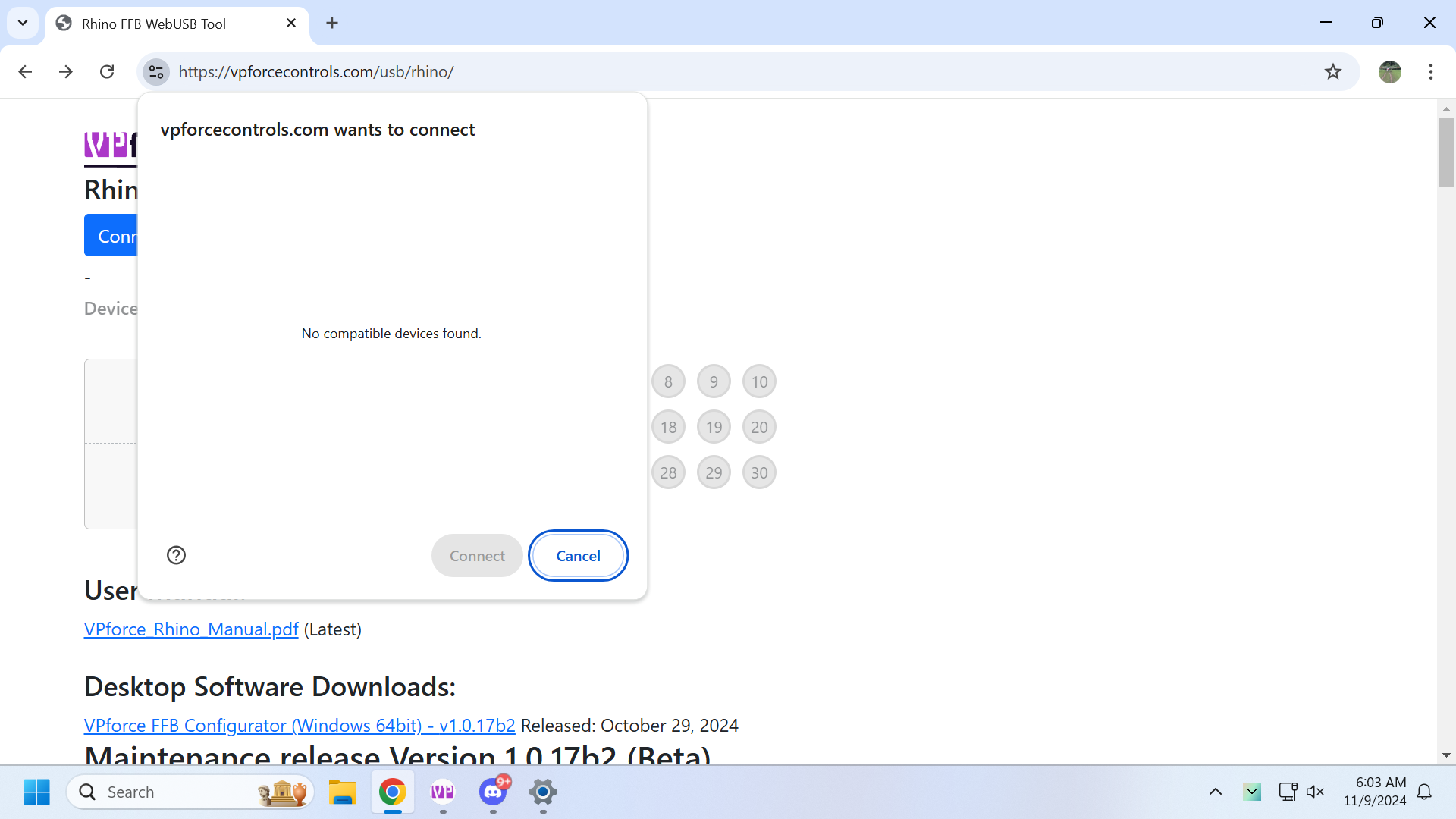 I
INo compatible device found message
IChanging to a different uSB por solved the problem, but why did this happened?

 D
DI've had this in the past, and since everything is plugged into quality hubs and always on the same ports, no more problems. That said, the vagaries of computing are really bizarre at times...
 C
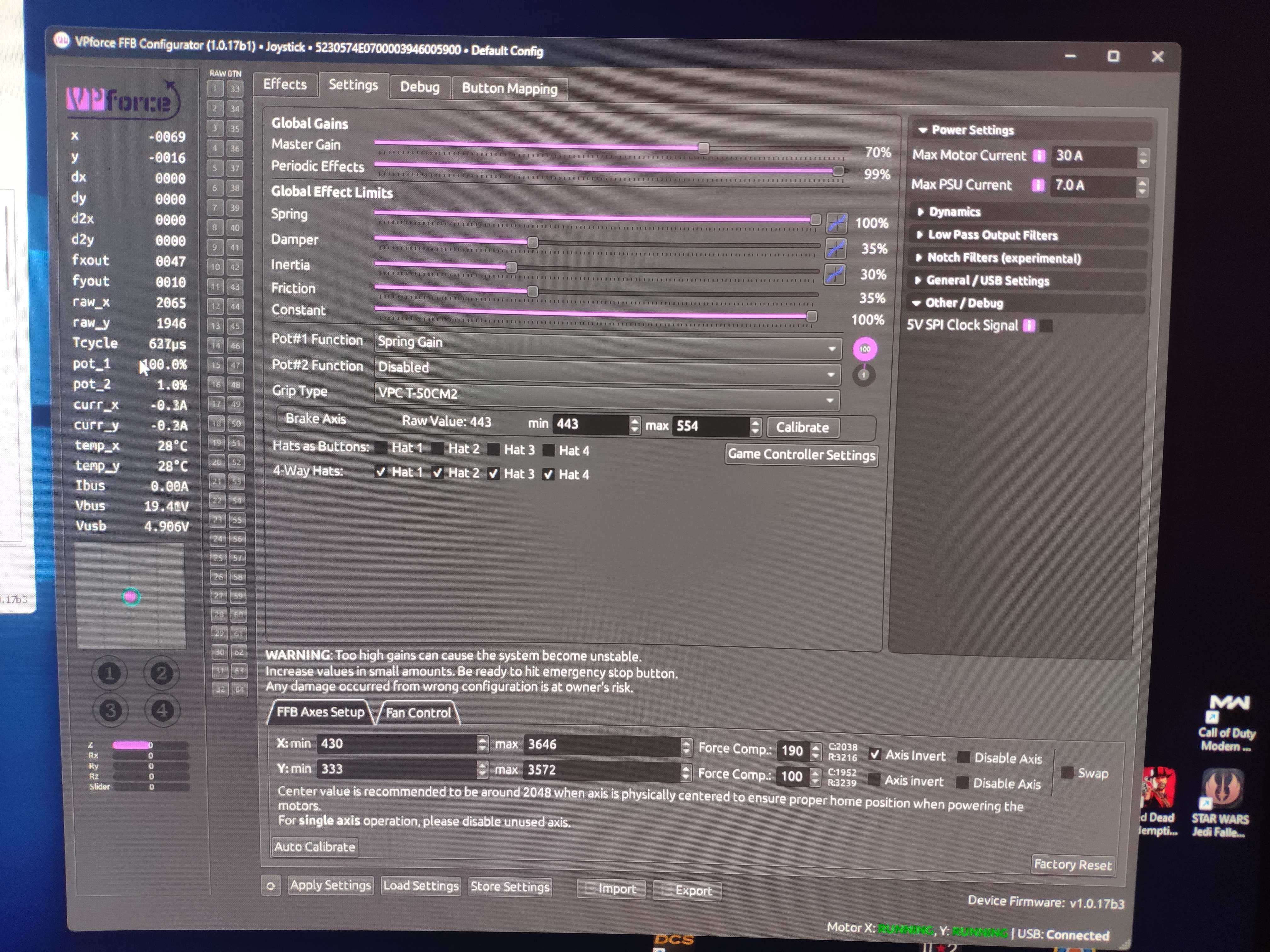
Chello, I have the message "Motor Y Status: FAULT_ISENSE_SATURATION" and my motor is disabling itself when it is occuring. what should I change in the configuration ?
 S
SI've got an issue in DCS with Friction effect generating persistent oscillation. I've loaded and stored the Factory firmware default in Configurator. Any ideas?


 T
TI've found issues with the Rhino on hubs that seem to be due to other devices on the same hub having too many endponts, even though they haven't maxed out the available ones for that hub. Usually removing one of those devices to give a little more headroom has gotten the Rhino back to working. Using USBLogView and UsbTreeView to look at what was going on.
TWhat flight scenarios leave the F14 without much pitch range after trimming? Starting out the F14 moves the stick center way forward, so for me usually trimming leaves the F14 stick pretty well centered.
 W
WDoes anyone have an idea what could be causing the joystick to tip forward in the H160?
Both running on Default TelemFFB presets, H145 B500, H160 B83, same settings, same control preset in MSFS
It doesnt occur with APs OFF
VPForce Rhino FFB Stick
h160: https://streamable.com/mky6lr
h145: https://streamable.com/jqc0d8
Both running on Default TelemFFB presets, H145 B500, H160 B83, same settings, same control preset in MSFS
It doesnt occur with APs OFF
VPForce Rhino FFB Stick
h160: https://streamable.com/mky6lr
h145: https://streamable.com/jqc0d8
Streamable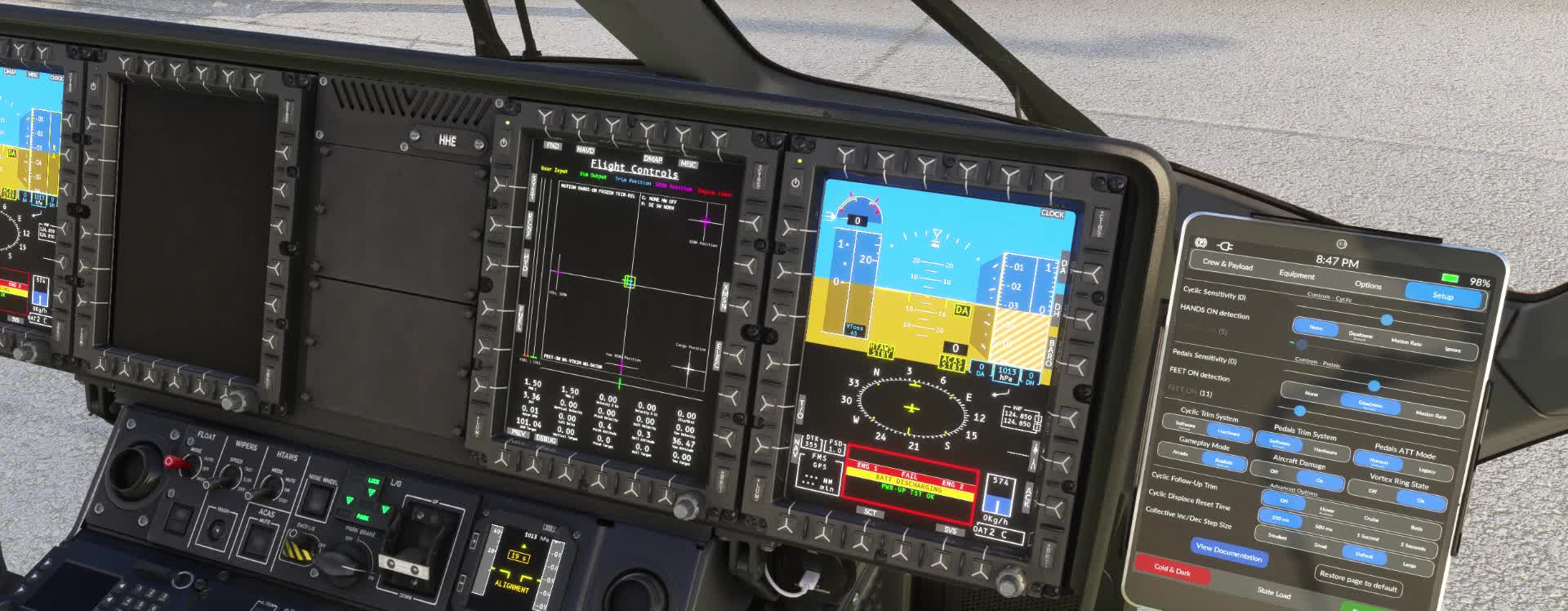
Watch "Microsoft Flight Simulator - 1.38.2.0 2024-11-09 20-47-16" on Streamable.
Streamable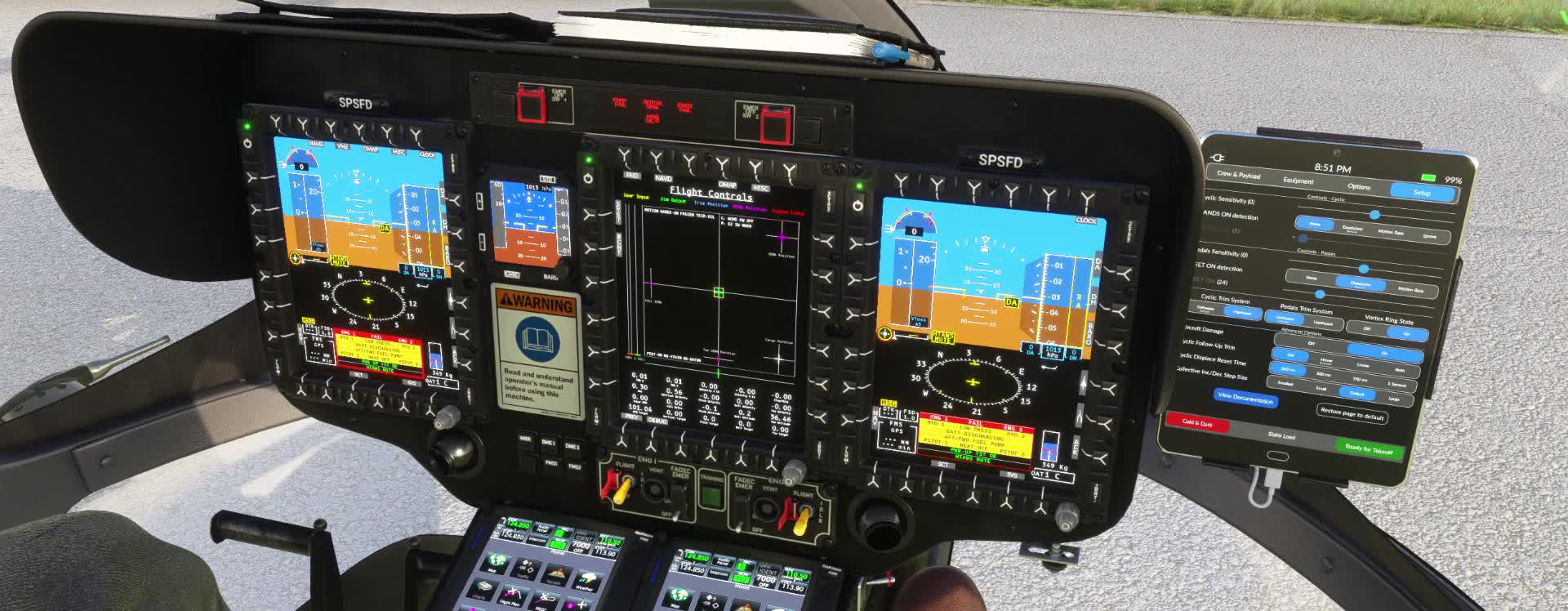
Watch "Microsoft Flight Simulator - 1.38.2.0 2024-11-09 20-50-55" on Streamable.
 D
DOk, thanks for your comments! I took the same actions as you and it's much better with fewer usb devices connected!
 D
DI had pretty much the same problem as you and I think @Number481 is on the case. Since the last TELEMFFB update I had HANDS ON with the default profile. Everything was working fine in the past. I was able to correct these odd elements by loading a profile from H145 which - itself - still worked. I changed all the names of my Airbus Hxx liveries (aircraft.cfg file) and associated all this with my old profile. Anyway, not necessarily your problem, but I have the impression that there's some weird behavior with these new updates.
Check out other liveries if you come across this (take liveries that aren't part of the hype, e.g. on flightsim.to).
Check out other liveries if you come across this (take liveries that aren't part of the hype, e.g. on flightsim.to).
DMaybe not your problem at all, but you can take a look at this and see if it helps.
 S
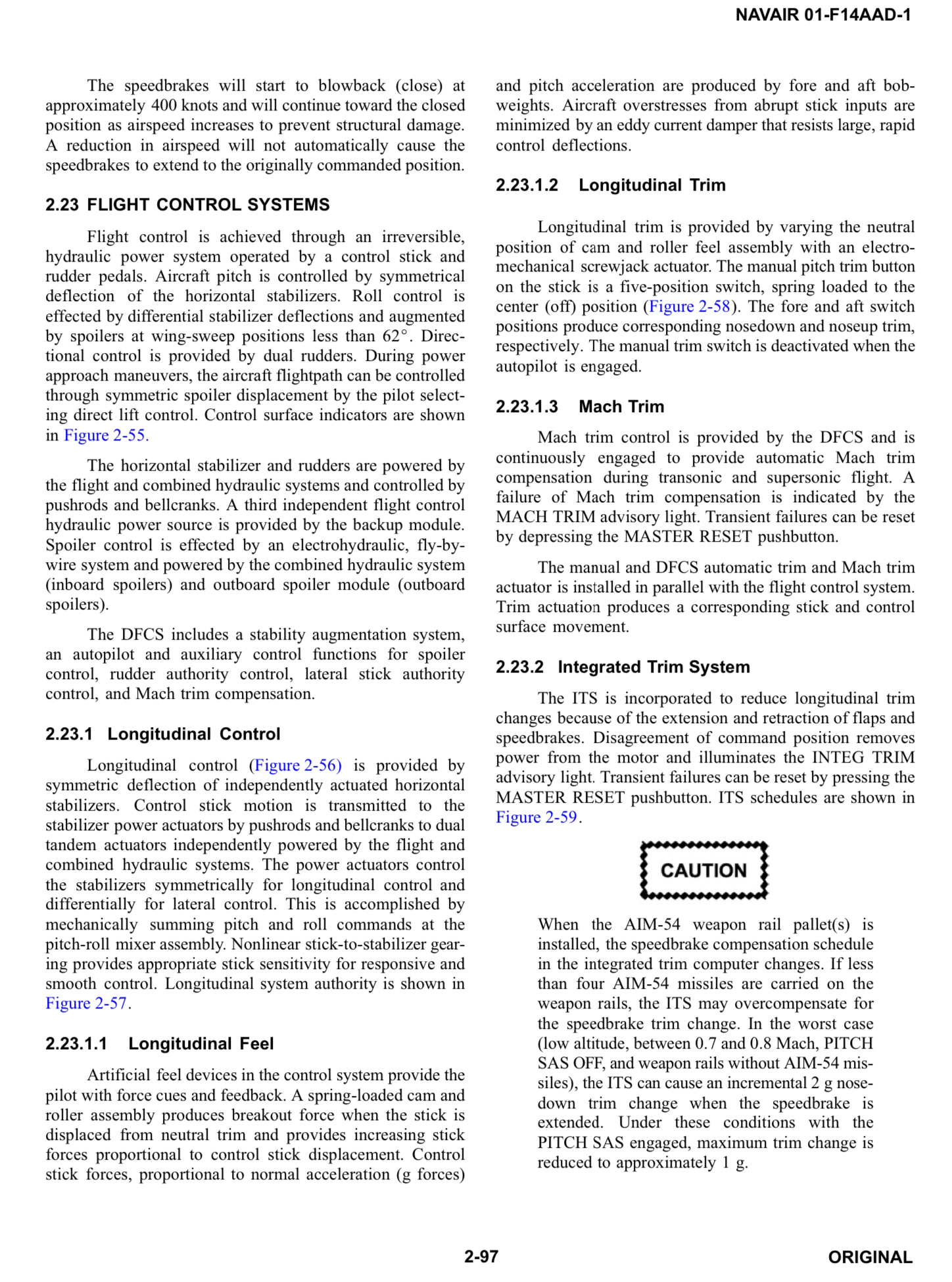
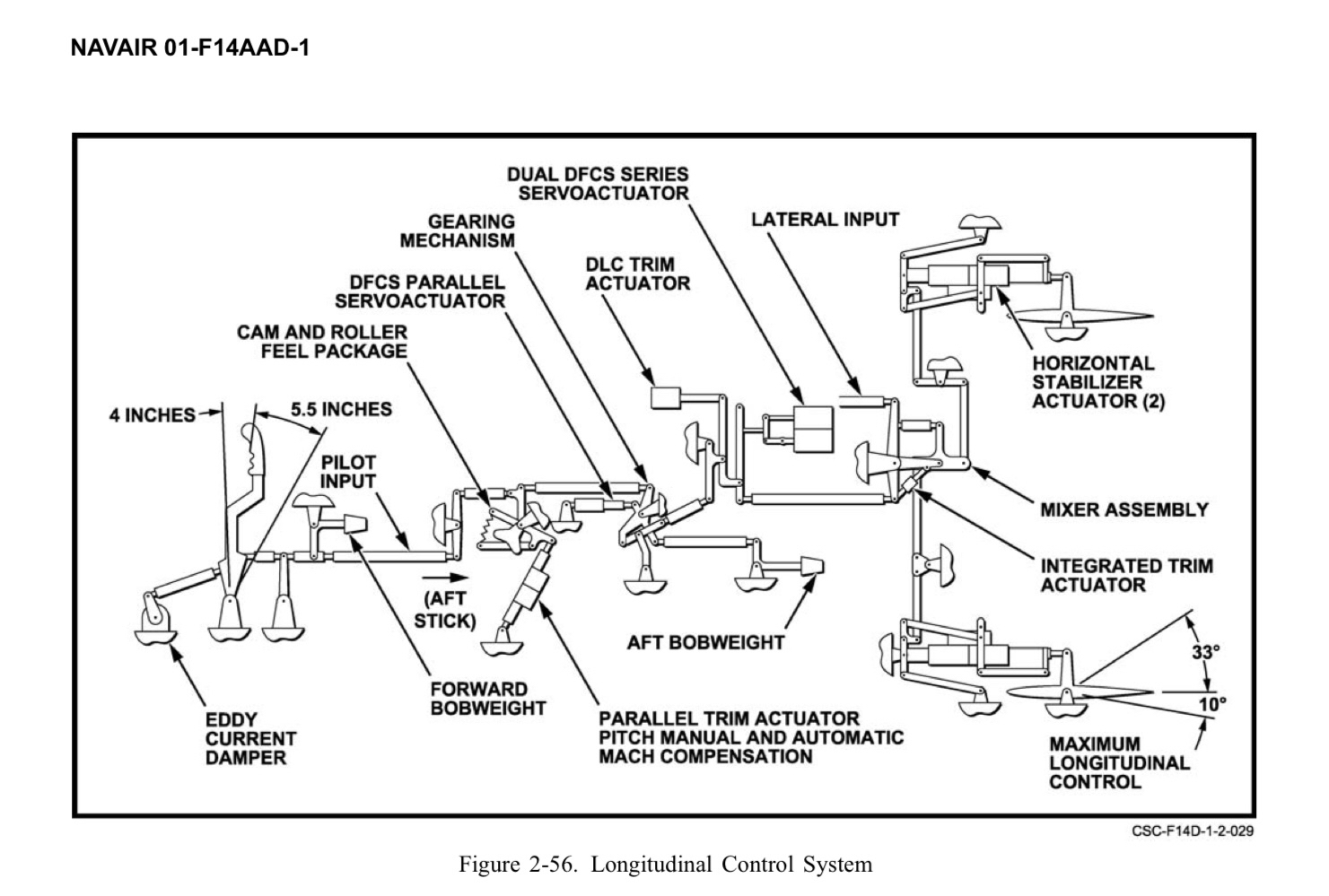
SEarlier there was discussion about F-14 control feel. These excerpts are from F-14D natops. Its for the D-model but I’d guess they didn’t change the control system between models. If I understand these correctly there shouldn’t be dynamic pitch forces that change according to speed. To me it seems that the module default spring effect, g-force effect and some damper to simulate the eddy current damper could be quite close to somewhat realistic feel.
 F
FThat's exactly what I based my settings on for the F-14
NSee my post on the Hype discord... definitely something wonky with H160 B83
 O
OI had a problem with a certain USB device preventing the Rhino from being recognized (on any port). There was no indication either except for deep, deep within the system.
 T
TMy order says it's nearing completion but my order number is in the 1600s, did I do something wrong?
 N
N@sydost That is a great find but totally proves the point that there SHOULD be an increased longitudinal (PITCH) dynamic force felt on the control stick under certain circumstances and it's all in one paragraph quite clear!
Extra forces should definitely be felt through the stick in 3 specific events and are artificially added to the F-14 control stick in real life
Event 1 normal Flight!
2.23.1.1 Longitudinal feel!
Paragraph one!
"A spring loaded cam and roller assembly produces break out forces when the stick is displaced from neutral trim position and provides increasing stick forces proportional to control stick displacement."
In other words if you pull on the stick you should feel the stick become harder and harder to pull against the further from the neutral trim position you try to pull the control stick. So a Dynamically increasing force is applied to the control stick of the F-14 the harder you pull on it. This is not related to pulling "G's" but simply a dynamically increasing force letting the pilot know how far he is from the neutral stick position during normal flight and this resistance would increase with the speed of the aircraft!
We currently DO NOT have this in the Rhino telemetry from DCS!
Event 2 Pulling G's
Following directly on from the previous sentence in the above documentation.
"Control stick forces proportional to normal acceleration (G Forces) and pitch acceleration are produced by fore and aft bob weights (similar in fashion to the F-4 Phantom) In other words the higher the G forces produced in a turn the harder the stick should be to pull against due to the influence of the bob weights fore and aft!!
This can be and is replicated by the G forces effect in Telem FFB software! and is the option being talked about by myself and @f14billy
Event 3 Sudden and dangerous large movements of the control stick!
Again continuing on from the last sentence in the paragraph 2.23.1.1 Longitudinal feel!
"Aircraft overstress's from abrupt stick inputs are minimised by an eddy current damper that resists large rapid control deflections!"
Currently not an effect we have from telemetry from DCS but I believe could be done using a Damper effect in the Config software and making it a sticky for the F-14 profile you use!
The entire description of how the F-14 should "feel" is in this entire paragraph.
The following is a quote from a real life retired RAF QFI that is currently my Flight instructor for DCS and has described to me personally what a pilot of any fast jet should feel realistically in flight.
Extra forces should definitely be felt through the stick in 3 specific events and are artificially added to the F-14 control stick in real life
Event 1 normal Flight!
2.23.1.1 Longitudinal feel!
Paragraph one!
"A spring loaded cam and roller assembly produces break out forces when the stick is displaced from neutral trim position and provides increasing stick forces proportional to control stick displacement."
In other words if you pull on the stick you should feel the stick become harder and harder to pull against the further from the neutral trim position you try to pull the control stick. So a Dynamically increasing force is applied to the control stick of the F-14 the harder you pull on it. This is not related to pulling "G's" but simply a dynamically increasing force letting the pilot know how far he is from the neutral stick position during normal flight and this resistance would increase with the speed of the aircraft!
We currently DO NOT have this in the Rhino telemetry from DCS!
Event 2 Pulling G's
Following directly on from the previous sentence in the above documentation.
"Control stick forces proportional to normal acceleration (G Forces) and pitch acceleration are produced by fore and aft bob weights (similar in fashion to the F-4 Phantom) In other words the higher the G forces produced in a turn the harder the stick should be to pull against due to the influence of the bob weights fore and aft!!
This can be and is replicated by the G forces effect in Telem FFB software! and is the option being talked about by myself and @f14billy
Event 3 Sudden and dangerous large movements of the control stick!
Again continuing on from the last sentence in the paragraph 2.23.1.1 Longitudinal feel!
"Aircraft overstress's from abrupt stick inputs are minimised by an eddy current damper that resists large rapid control deflections!"
Currently not an effect we have from telemetry from DCS but I believe could be done using a Damper effect in the Config software and making it a sticky for the F-14 profile you use!
The entire description of how the F-14 should "feel" is in this entire paragraph.
The following is a quote from a real life retired RAF QFI that is currently my Flight instructor for DCS and has described to me personally what a pilot of any fast jet should feel realistically in flight.
NThere DEFINITELY should be dynamic changing forces felt through the control stick by the pilot of any aircraft that has either direct mechanical or indirect hydraulically linked control of the flight control surfaces of any aircraft from the pilots control stick. Failure to have this in any Hydraulic only aircraft will create a situation where massive inputs are easily requested by the pilot through the control stick while the jet is at high speed/Mach that can be easily carried out by the hydraulic systems and these hydraulic controls do have the strength to overcome aerodynamic forces on the control surfaces of the aircraft!
Allowing these large inputs to be carried out without restriction at High speed/Mach on any aircraft at high speed/Mach would instantly cause complete structural failure of the aircraft due to the massive sudden aerodynamic and G-Forces that would be applied to the airframe as 2 things will happen. The Aircraft will simply Over-G due to the control surfaces forcing the aircraft to perform a faster than structurally capable (and more than likely human capable) manoeuvre causing structural failure due to excessive load in the aircraft.
Or number 2 the hydraulic forces push the control surfaces quickly out of the normal "allowable" aerodynamic flow over the aircraft, probably forcing a structural failure of that control surface due to the excess aerodynamic loading on that control surface forcing the aircraft into uncontrolled flight and probable complete loss of the aircraft!
Unless restrictions are placed on the pilots ability to make such fast and large stick inputs with the use of severely increased load forces as the speed of the jet increases nearly all planes that have mechanically or hydraulically assisted "help" for the pilot would have some sort of accident due to overstressing the airframe or control surface!
Allowing these large inputs to be carried out without restriction at High speed/Mach on any aircraft at high speed/Mach would instantly cause complete structural failure of the aircraft due to the massive sudden aerodynamic and G-Forces that would be applied to the airframe as 2 things will happen. The Aircraft will simply Over-G due to the control surfaces forcing the aircraft to perform a faster than structurally capable (and more than likely human capable) manoeuvre causing structural failure due to excessive load in the aircraft.
Or number 2 the hydraulic forces push the control surfaces quickly out of the normal "allowable" aerodynamic flow over the aircraft, probably forcing a structural failure of that control surface due to the excess aerodynamic loading on that control surface forcing the aircraft into uncontrolled flight and probable complete loss of the aircraft!
Unless restrictions are placed on the pilots ability to make such fast and large stick inputs with the use of severely increased load forces as the speed of the jet increases nearly all planes that have mechanically or hydraulically assisted "help" for the pilot would have some sort of accident due to overstressing the airframe or control surface!
FIf I understand correctly then new Gforce algorithm in telemffb takes into account gforce and stick displacement. It's not related to speed but it's closer to what you are wanting. Maybe in the future speed can be taken into account to fully replicate the real F14 behavior. In my case I prefer the simpler legacy Gforce implementation since it allows me to know how many Gs I'm pulling. Since I can't feel them it is very helpful for me in a dogfight even if it's not realistic.
FAt high speeds I just try to be gentle with it to avoid overstressing the aircraft... Although sometimes I do it just for fun 
NIt is all down to personal preferance as to what "effects" are felt and how they are felt. I am going for as realistic as I can get with some extra that should be felt through the Airframe but putting it through the stick as my motion rig is not active at the moment!
NFun Fact it is impossible to Over-G the wings on an F-14! The test pilots found that as G and AOA increases on the F-14 the body of the aircraft starts acting as the lifting force and takes the G loading off the wings over about 7G and put the loading on the body of the F-14 which can easily take the extra load but did cause some cracking in the tail due to the angular stresses put on it which gave us the "STAPLE" that you may have seen in use on early F-14A's
FIn DCS you can only break wings with a sudden high G onset. If you do it gradually they don't break. I use a fairly high amount of dampening to avoid that from happening accidentally with the rhino.
NIn DCS if you slowly pull into a fast high G turn you will never rip the wing off it and can pull over 10G!
NGreat minds think alike lol
FHaha 
HAnd let‘s not forget that you need considerable power to pull that hard on the stick. The main reason so many people constantly rip the wings of some aircraft is that you essentially have unlimited „muscle“ power in a regular non-ffb setup.
 S
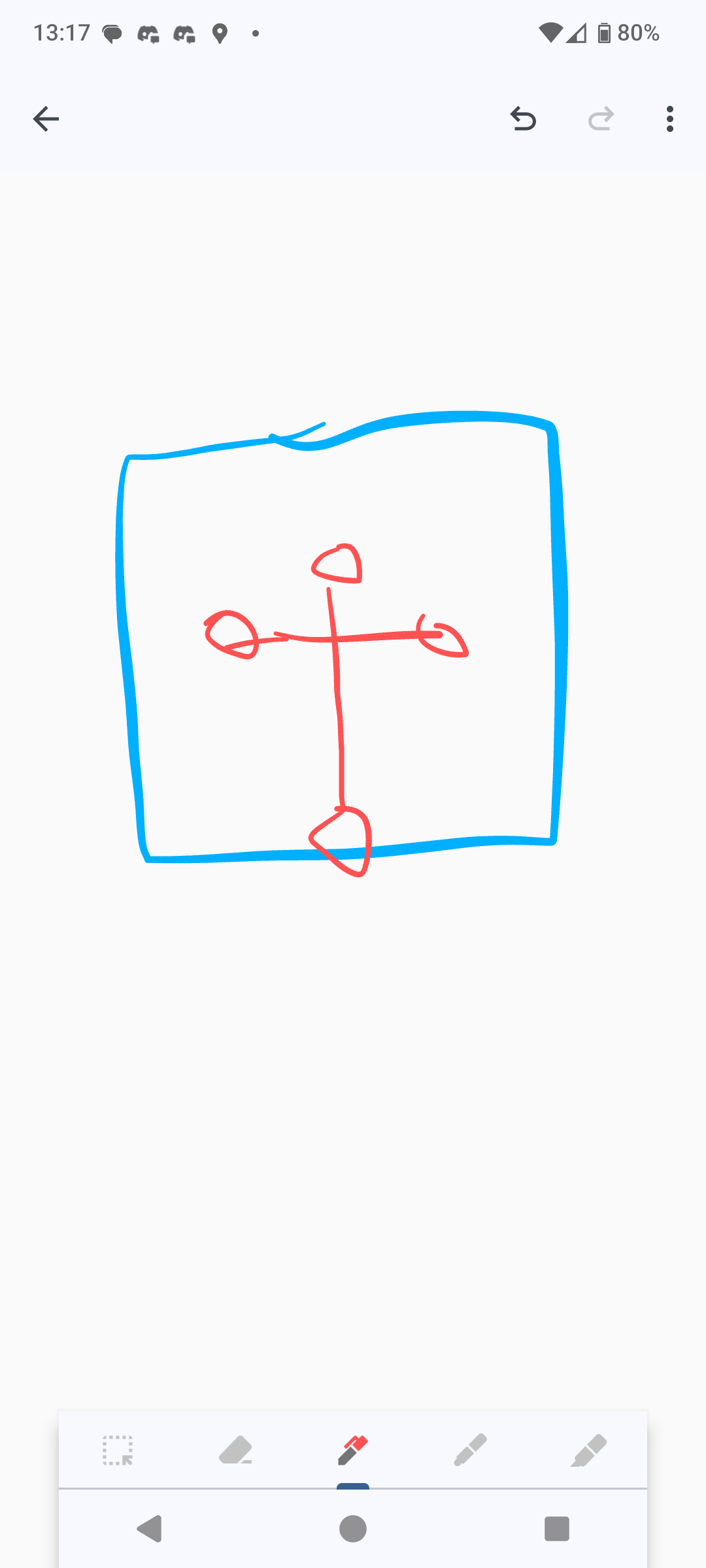
SWhen I start calibrating from scratch, I have noticed my raw values prior calibration look like this. Y is significantly shifted down. Should I be concerned?
 H
H„prior“ to calibration? That is irrelevant. Do the calibration and all will (most likely) be good.
HThe raw values in the middle position should be in the proximity of ~2048 though. If they are too far off, it could lead to problems when the unit is powered on with the stick not in the center.
Syeah seems calibrated fine after, it is just that it states centre values should be around 2048, but mine is like 3000 in Y axis. Stick is centered though.
HThat is the result of applying the belt in the „wrong“ position (not really wrong, just not perfect). It will most likely be no problem though,
SJust wondering if I should be concerned and open it up and rotate motor assembly or something.
HIn case it becomes a problem just reapply the belt.
HNo! No need.
Nas long as the extents are between 0 and 4096, that is all that matters. The center is irrelevant.
SGood info, thank you