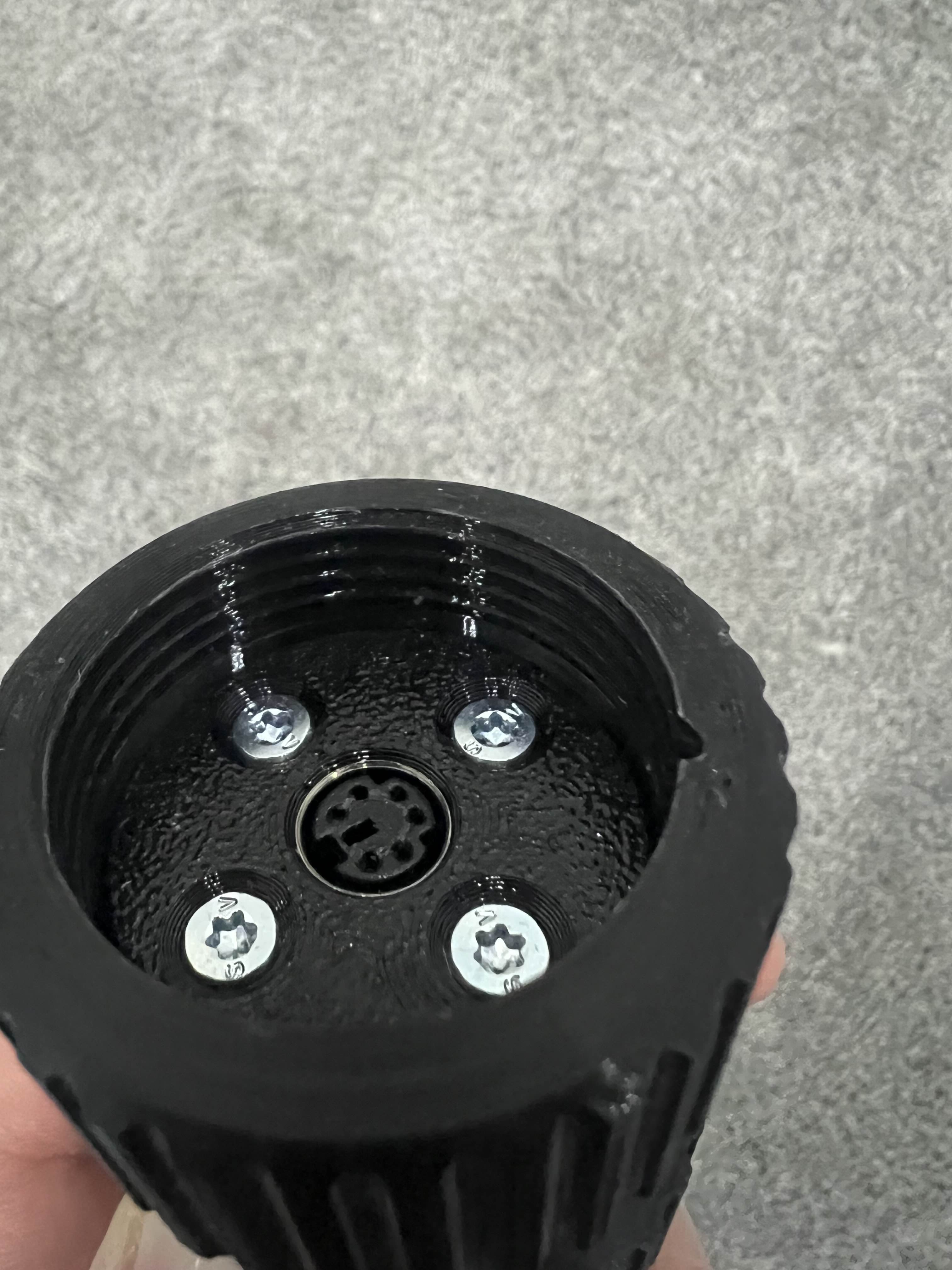
There is to much space between the adapter and grip button put some rubber o-rings inbetween to give it something to rub against to prevent the rotation
A similar thing happens on the winwing base (at least the somewhat older one i got) and there is a screw u insert at the side of the tightening ring to prevent that from happening
Dunno if its the right channel for writing this but Imma be selling my diy Rhino with MCG Ultimate from @SR-FWinger[73]_David since I am giving up on the hobby due to personal reasons. Pedals and Throttle are also for sale in case someone is interested. Pictures and more info in PM. Thanks
Do i put the o rings inside the grip underneath the stick? Also this is a brand new adapter so I don’t know why I need to modify it to get it to work. It should work right out of the box.
Looks like the the extension doesn't want tighten fully. I tested on my WW F-16 grip and it tightens okay, maybe the extension has a bit different thread profile. But it seems the adapter collar also needs an increased thread depth. Would you be able to make spacer/washer under it? I could mail you one or new collar, but that would take a while. If you need an STL to print, let me know.
It has the same issue when I use it without the extension. The extension had the same threads as the stick. It looks like the outer piece slides up too far and ends up past the threads. I will try putting some washers in the bottom of it but not sure if that will solve it.
I currently have a TM Warthog Stick. I'm thinking of switching to a Winwing ViperAce EX. I don't currently own a Winwing stick. Will I need to purchase a winwing base in order to make it work with the Rhino?
I'd get at least two just in case. Then you can test. They have connections to power 3 boards in one. If it can handle it then you can have a backup PSU
Yeah I saw the there are 3 outputs per power supply. Wiring is bit of my thing being a fire system engineer & a licensed electrician . @walmis What is the current draw of the 86BLF04?
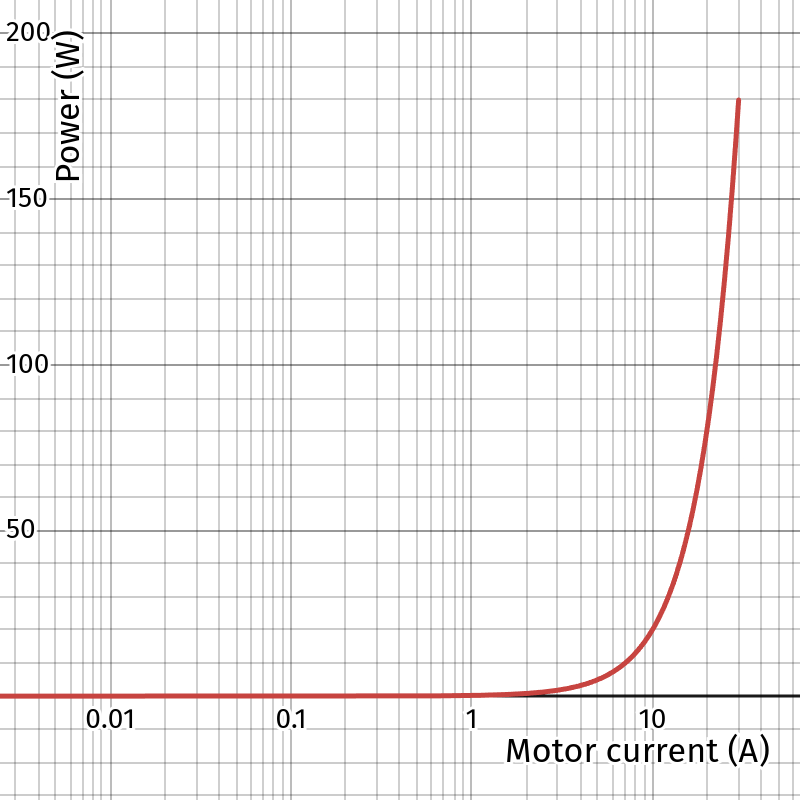
I mean if 4 motors were driven at balls to the wall at 30 amp each you would be pushing over 120 amps. Most people in rural areas have a 100 amp service coming to their homes. If someone had a 200 amp service (I have a 400 coming into my house) then technically you would need 40 AMP dedicated circuits. The next option would be to go to 220V to cut the AMPs in half. This is why it doesn't make sense to me. The output on the motor may deliver 30A but what is the required input? Is there any rectification happening etc..
This would make more sense, I have 120v coming in aka if the motors draw a peak of 720w then that is 6A in my case. I could always clamp on my amp meter and check while the motor is running as well
Do you know how much pedal pressure should me present? I would think it is less in a helicopter than an old propeller plane? Maybe the momentary amps turn out to be a non-issue?
Well I fly an H145 which has an AFCS so never really facing the true force especially with 2 hydraulic systems. I've flown old Cessna 182s in real life which is mechanical cable system so you feel the forces. There is a difference in different aircraft so I can't really tell you. I remember the feel of a 182 so when I had brunner pedals I set it to the way it felt to me closest in real life.
This is true but I haven't flown an H145. I asked an engineer who works on the aircraft. He will tell me what the force would be both on/off the afcs required
Don't confuse the motor amps (which aren't applied continously and at different voltages) with the current that is drawn from the PSU. You can actually see it in the VP config where the values for max motor amps and max PSU amps are seperate and the latter is usually way below <4. Something around 6 is plenty for a single motor. I know I'm not the first to point that out to you, but I think it could help spread awareness and understanding for people that may drop by here.
Regarding the 15A Meanwell. A collective and Rudder Pedals (in a Helicopter) will never actually draw max current. And you can limit the allowed amount in the config. I'd say it is pretty unlikely, that a 4 motor setup will pull max current for each motor at the same time. I wouldn't worry to drive 4 motors from a single PSU and just limit the max allowed amps per motor/device accordingly.
Thank you, to be safe I'm going to use one psu for rhino monster and the 2nd to drive pedals and Collective. I'll set the psu amps in VP for 12 amps to give me headroom. I'll wire up the power supplies each with a 12awg power cord.
@walmis I have no clue what have you done but in latest firmware you have fixed all my disconnecting issues when using higher spring force . Fantastic job! Thank You!
First of all, what have you assigned to the Poti? Most people probably assign Master Gain or Spring Gain. But why would you default it to anything else than 100? doesn’t make much sense to me….. I would see the poti as a tool to reduce forces on the fly, if I feel the need.
I've set it to 70% master gain when playing DCS. With 100% there was some creaking noises coming from the adapters/base (I'm using 150mm extension and WW adapter + grip) and I was worried something might break. In MSFS I use 80-90%, because you usually get the max forces only in high airspeed situations.
I see. Personally I would rather create dedicated profiles and let them load by TelemFFB. So but your real questions boils down than to „how are your gain settings for DCS“, no? Because ultimately it doesn’t matter if you achieve your effective gain by poti or by any other setting. The math is „effects settings or game“ times „master gain“ times „master spring gain“ times „potentiometer“. So if either one of those is set to 20% e.g. the overall maximum gain is 20%. I choose spring as an example here, because that is really the only one you need to worry about, because it causes by far the biggest forces. I have set Master Gain to 100% all the time but (Settings-)Spring Gain is usually at around 50% with a slightly steepend curve (would translate to something like 60-70% with a straight curve). Have a look one the telemetry and check how many amps are drawn at max reflection. it doesn’t make much sense if you reach the maximum before reaching the end of throw. My Potentiometers (I have two) are set to Spring and Friction and usually only use them on helicopters to fine tune the cyclic.