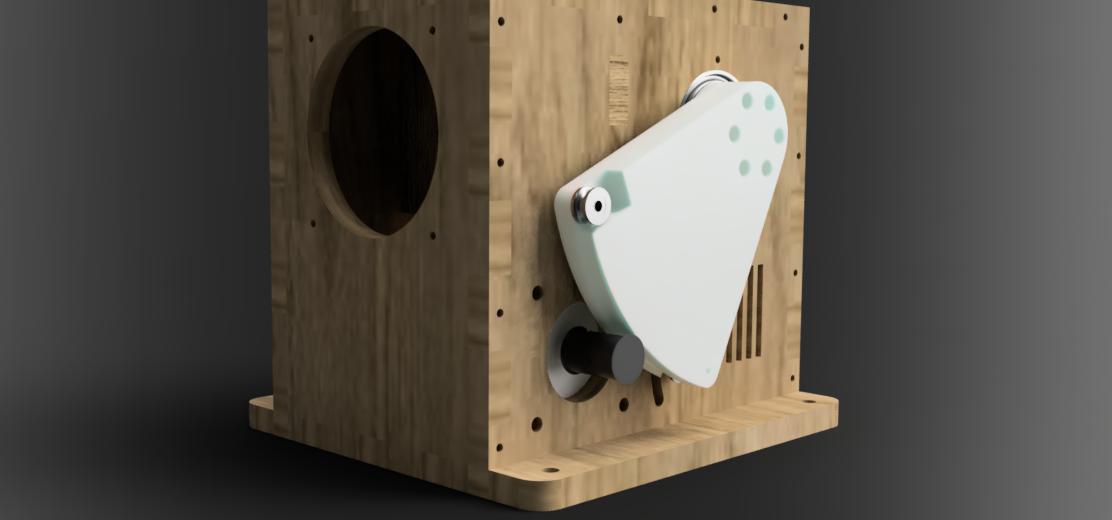
The reason why you might not find much information on that is that the smaller the radius, the higher the force in the cable, which is theoretically good, as you would need only a relatively small pulley on the gimbal for the same final torque. ...but also, the higher the force in the cable, the higher the force the bearings need to hold. If you increase this force too high, the bearings might fail fairly quickly. And I am not too keen on how easy it is to replace the bearings inside the motor. The pre-tension you need in a cable drive is also higher than in a toothed pulley drive.
Tension on the cable is much less than what a belt would need. it's just enough to keep it in the rollers. Also, the side loading on the motor shaft is almost nothing- since the cable pulls are 180 degrees apart. A belt has to be pulled tight in one direction to keep the teeth from skipping. Also if you're looking for a better name than 'cable drives', look for 'flight control cables'
Not technically related to the RHINO, but I saw you built your own VKB adapter. Does anyone know if the plastic piece with the contact pads for the stick had to be custom built or is it an off the shelf component from somewhere?
Does anybody know of a shop that sell HTD5 pulleys and ships with DHL? I got my pulleys today, but the chinese Ebay store managed to send one wrong pulley and one was missing. The two motor pulleys and the belt was correct thoughβ¦
The problem of the motor bearing load does however exist when one is trying to use a cable instead of a pulley in a normal pulley drive configuration like we see on the Rhino, which is what the OP described as far as I can tell. I admit that indeed the pretension might be a non-issue. And as long as you just want to use the cable as a belt replacement and not to make the drive put out 3 times the torque, you should probably be good regardless.
I havenβt designed any yet, just starting with the existing 70t in the FFB base files floating around here/discord. I did make some changes in fusion 360 to the hub to fit my use but still leaving it at 70t diameter.
Yep and if you do multiple wraps of the cable around the motor pulley (enough to unwind its travel) and the cable is secured to it, it will be a lot less
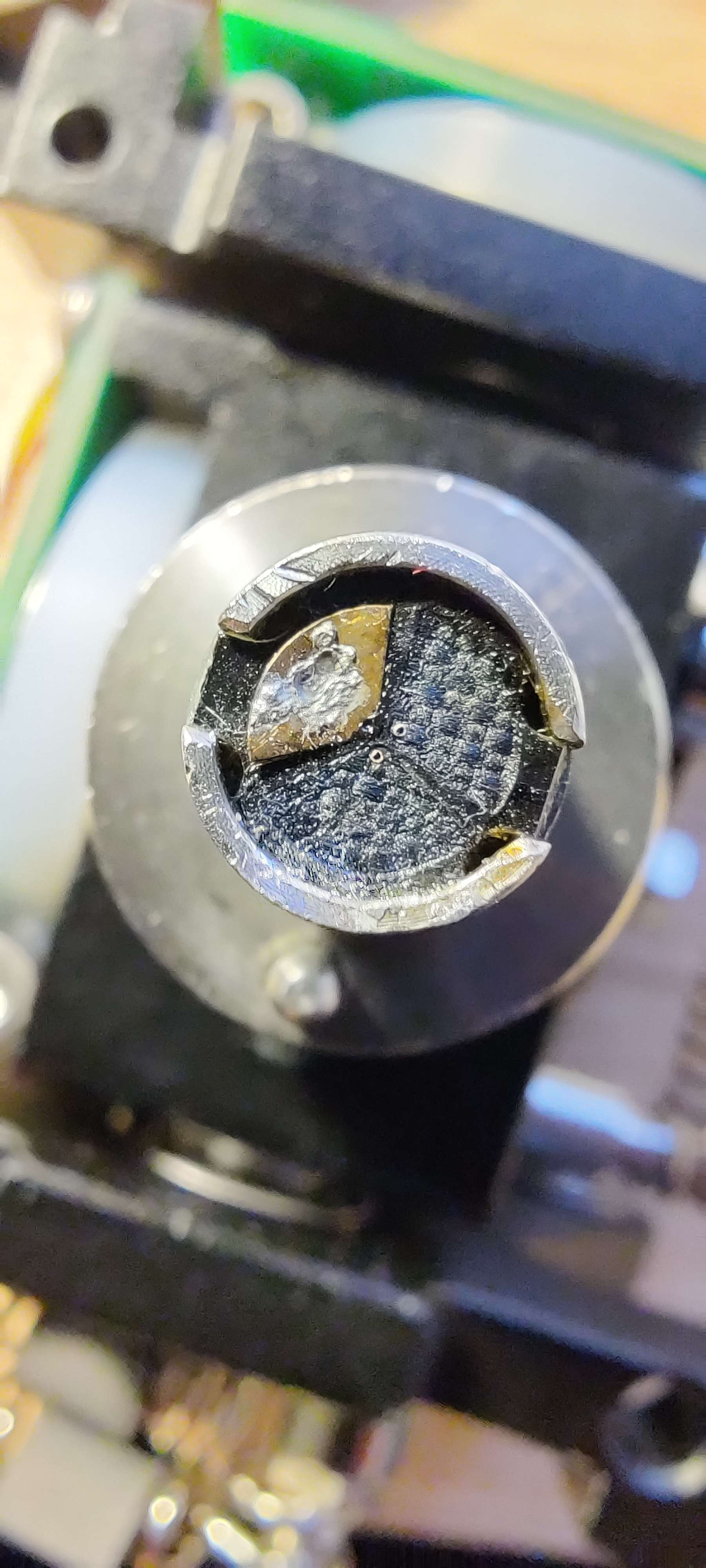
The shaft winding technique req a cross-hole in the drive shaft, and 3-4 full wrapps of cable either side of the hole before going to the final pully. The advantage of this type of system is it allows extremely small drive 'gear', allowing high ratios in compact form factor. Also eliminates the need for matching belts/pulleys. You just need to figure out a way to tension the cable in situ, which there are several ways to accomplish.
Kevlar rope is ideal for this because it has almost zero stretch where steel cable is rellatively springy. Kevlar stretch like 1-2% @ 50% break strength, steel is like 20% iirc.
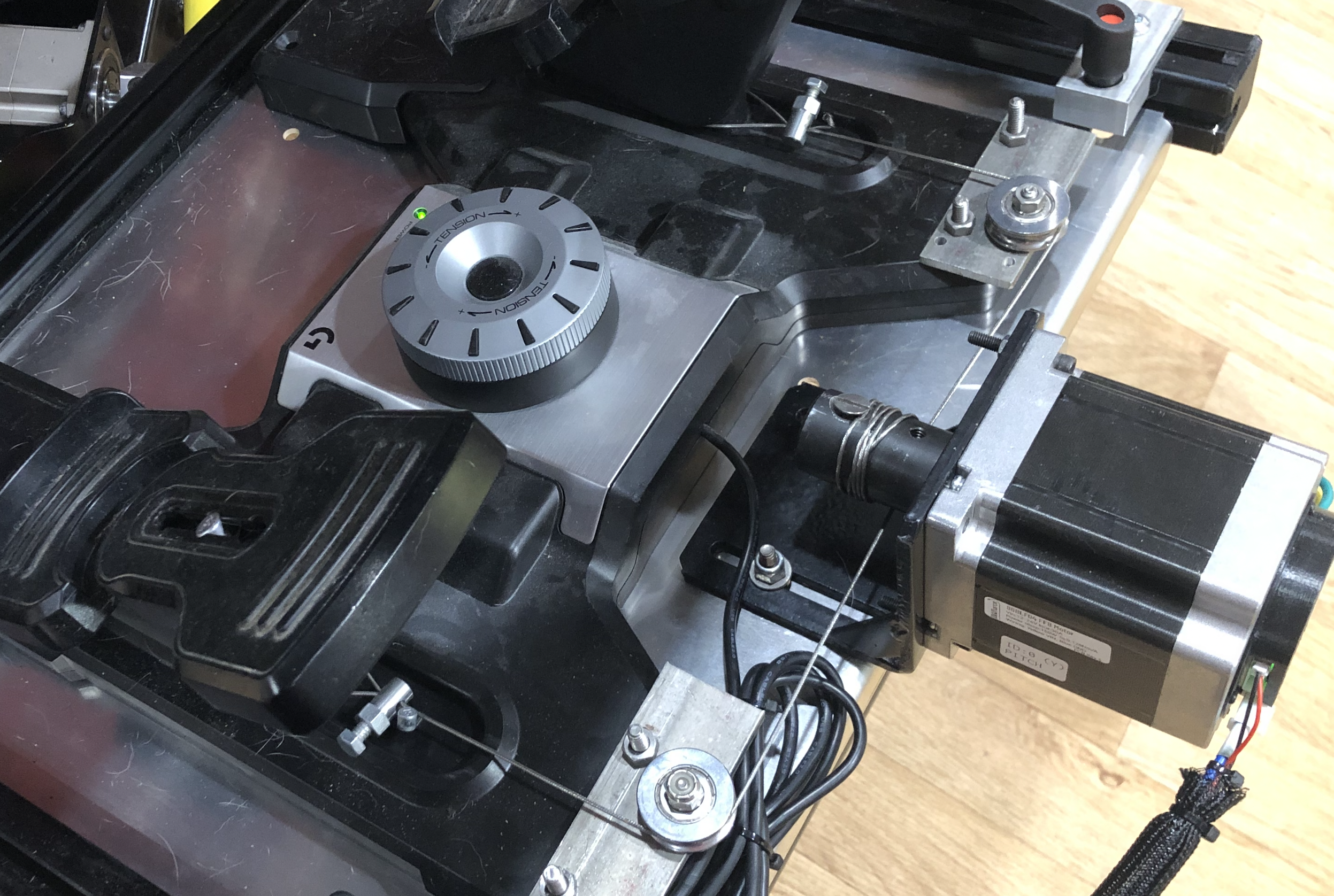
Here's an example of shaft winding, using steel cable in this case.
on my pedals i probably used a thicker steel cable than necessary (1.5mm bike brake cable) but it works well. at rest there is no motor shaft side load, even in a belt replacement setup there is no load at rest. the only tensioning needed would be just enough to keep the wire in the pulley grove, any more is unnecessary. these cables have ~150kg break strength so stretch isnt an issue. even the 1.2mm stuff is good to 110kg
Thanks all for the insight into cable driven systems. Thatβs super helpful! I too donβt quite understand why the side load forces would be greater. With non-stretch cable the load is low at least in perception (when I tension the wires for zero backlash). My stupid order for belts isnβt supposed to arrive until June so I will be able to go through quite a few iterations to see if I can make something work well before then. If this works, I think itβs lack of specific components (belts, gears, pulleys) would make it a flexible option for FFB systems.
it's 800 Euro's for the fully built unit (option 9). Otherwise you can build it out of a kit (other options), however the kit is incomplete, it only has motors/electronics/software, the actual enclosure/gimbal/etc you need to design/implement yourself.
Being in the middle of building one from the DIY kit. The Rhino is an exceptional deal. If you can wait, and donβt need custom enclosures, itβs just huge value / monetary unit.
Hey @amadeus, So the last Shipped RHINO is #0090 on 2023-05-04 Average waiting time from preorder to shipped is 161 days, median is 196 days, max is 219 days 89 Rhinos are shipped in total
I'm currently trying out a design that is closest to this. It still uses a pulley but the pulley has a cross drilled hole and the cable wraps around both sides of the hole. I could have gone with a much smaller pulley but this design gives me around 13:1 gear ratio which seems overkill as is. Who knows if it will work though I couldn't model the cable in CAD, but it is anchored and tensioned around the back side of one of the edge pulleys (you cant see it but there is a hole where the tensioning bolt will be right behind the top edge pulley. The other side of the cable is wrapped around another edge pulley and fixed in place. This gives 50 degrees of rotation so I'm still limited by the gimbal arms.