Welcome @Abhishek Hipparagi! Can you tell us a little about yourself and your technical background? What brings you to DevHeads? What are you working on currently?
Hello, I'm Abhishek, an undergraduate student actively seeking job opportunities while immersing myself in the world of embedded systems. I have two years of experience as an intern, working with AVR/Arduino, STM32, and ESP series microcontrollers, as well as PCB designing using KiCAD. Additionally, I've gained experience with Pixhawk and DJI-based drones. Currently, I'm focused on expanding my knowledge and skills in this exciting field. Excited to connect and learn within the DevHeads community!
Thanks dude! Happy to have you here! The best resources for you are likely the @HW-Lead and @Computing Lead roles.
Do you have any images/examples of your drone work you can share with us here or in the #projects-and-self-promotion channel? We'd love to have a look.
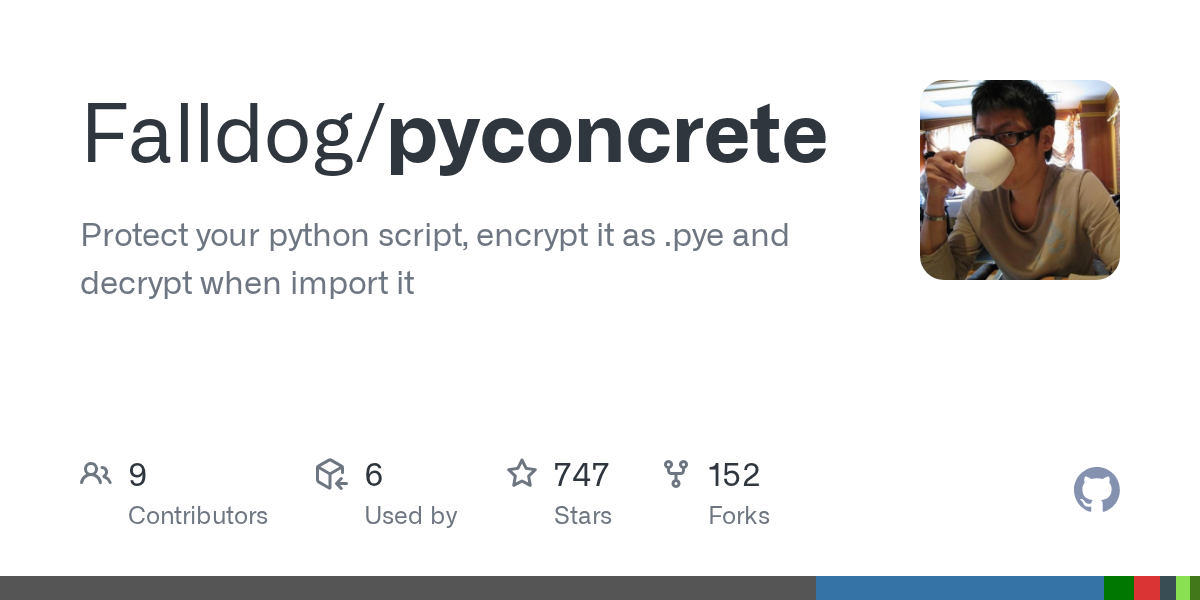
Protect your python script, encrypt it as .pye and decrypt when import it - GitHub - Falldog/pyconcrete: Protect your python script, encrypt it as .pye and decrypt when import it
@Sachin K Welcome , Can you tell us a little about yourself and your technical background? What brings you to DevHeads? What are you working on currently?
Why 10-bit I2C Slave Addressing is not widely used in device libraries and example codes? Even, I often use a 7-bit slave address. It seems to me that either 10-bit addressing is only for special cases or it's a bit of a challenge to implement in code. Appreciate any perspective, experience @abhishek awasthi @Navadeep @ShreeshaN @Aditya thakekar
Hi @techielew , encrypt the .py source code or .pyc compiled code and decrypt them on the fly so the Python interpreter could run it. I was curious about the best practices in doing so. Thanks
My guess is that use of 8-bit or 10-bit slave address will add a byte more in every communication packet of data and considering slow speed of I2C, devices using 8-bit or 10-bit are not popular and adding extra implementation of addressing will increase I2C device library for small microcontrollers.
I'm a cybersecurity student at National University, and previously was an intern at tinyvision.ai inc. (the company that made the Upduino v3 ice40 FPGA dev board)
I agree though. Not sure who will love this 10-bit addressing and implementation. I wonder even for MPU users are there enough bus drivers support for 10-bit I2C addresses in user space packages
Is this for a commercial project? How imperative is it that either the source or the binary are encrypted? What are you concerned about protecting against? IP theft/cloning? Vulnerabilities? Something else?
There are commercial products like IAR Embedded Trust that provide application encryption and other security measures. And other services that encrypt binaries. Of course, those aren't FOSS..
Most mcu work on the assumption that slave disables itself on not receiving matching address. 10 bit is used in STM32 series but not all support. NACK is disabled function.
Curious: What was your highest? I've used 8 of them multiplexed with the same address and 8 such ones in a single bus. In SPI though I've seen designs having 64 subordinate nodes.
If you could ask the head manager of the Electronics, Computer Sciences, and Embedded Systems Department at Polytech Sorbonne one question - what would that be? Asking for a friend
Hi! I am embedded linux developer as well as hardware hacker. I am currently a student doing my undergrads from india. I am currently learning rust for embedded and aiming to build projects with rust only. Willing to collaborate and share ideas as well as learn stuff
The question will be: " Quelles initiatives ou stratégies le département entreprend-il actuellement pour rester à l'avant-garde des technologies émergentes et garantir que les étudiants soient bien équipés des compétences et des connaissances nécessaires pour les domaines en constante évolution de l'électronique, des sciences informatiques et des systèmes embarqués ? " lol