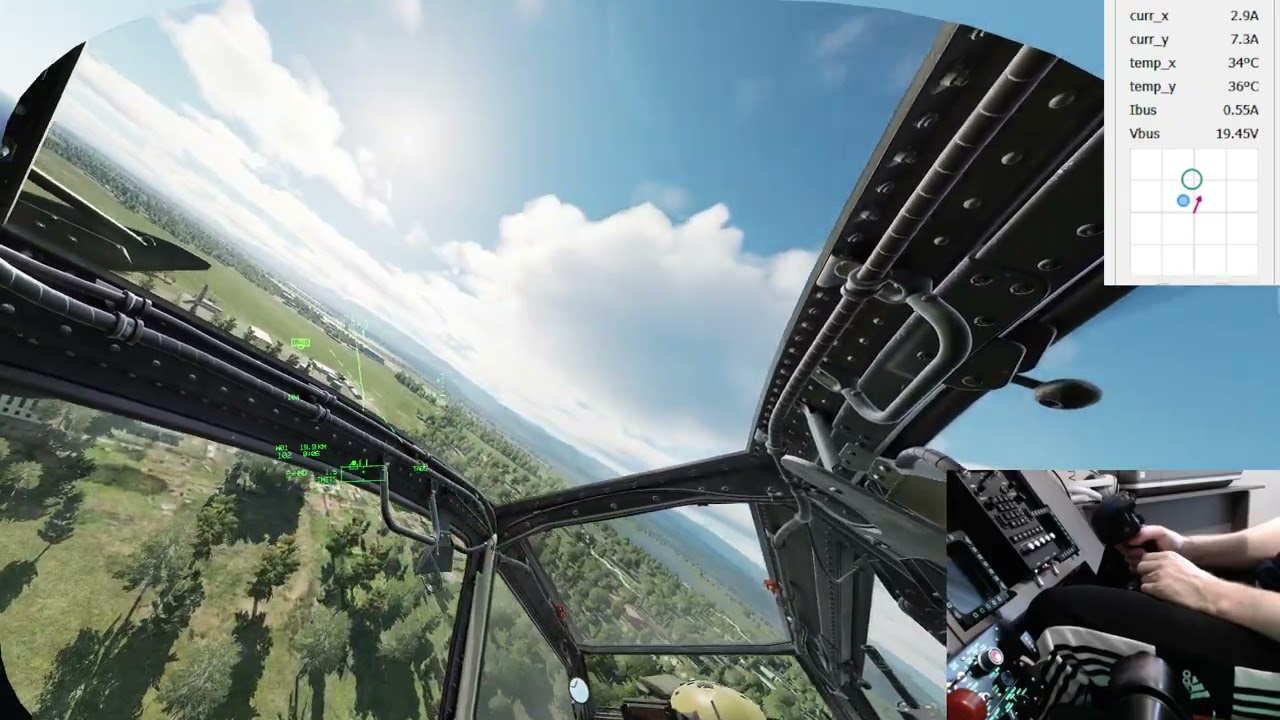
I might get this wrong, so I will defer to any rotary pilot expert who corrects me.
In a fixed wing aircraft you normally trim a little at a time, eg you adjust a trim wheel or trim “hat” to get the control input trimmed so no more force is applied to keep the aircraft in a stable attitude. The more trim required, the more you have to adjust the trim wheel or trim “hat”.
Forced trim is found in certain helicopters. It is called “force trim” because even if you have a large amount of trim to adjust to remove your cyclic forces, it is just a single button press of the “Force Trim” button and takes immediate trimming effect. No need for lots of trim adjustments. There may be a similar function on some fixed wing aircraft, I do not know for certain, I am only aware of it being used in rotary aircraft.
EDIT: I should have added, that for both fixed wing and helicopters, trimming will remove control forces, therefore the control (Rudder/Yaw pedals, and Stick/Cyclic) will stay in the new position without you having to add an input if properly trimmed and in balanced flight. However, there are possibly exceptions to this as there are many ways an aircraft can trim out flying forces, and also how the control surfaces are linked to the control inputs.
After checking with a colleague who is a rotary pilot, some helicopters also have a trim hat similar to fixed wing.
same as DL above, i might be wrong but in my understanding: - Trim: change the pitch/roll of aircraft without changing stick position - Force Trim: change pitch/roll of aircraft with changing stick position with new center
Force trim is holding your cyclic in place by electromagnetic clutches that you interrupt when holding the button. Aka you interrupt, move stick, release -> new center.
With trim he probably refers to the hat trimming where you move the new center by pressing the hat in a direction with the system moving the stick there.
@walmis just wanted to thank you for everything you've done. I recently completed a DIY with your motors and board... and it is fantastic. So, thank you for all your work!
@Number481 I’m searching through the channel looking for photos/people using the virpil z-extension with their setup, are you still using it? what do(did) you like and dislike the most about it?
VPrhino owner #820 here. Oh my god this is amazing. Just plugged it in for the first time and I feel like a woman having her first experience with an electric vibrator. I’m never going back to the old ways, I’m forever changed
The F16 is a fly-by-wire aircraft which have little FFB in the first place, and then its also a force sensing stick which basically has no feedback. I assume there will be little you can do unless you make something with telemFFB
There are some basic effects, you can for example feel g's as you pull, with telemffb of course. And you can use a profile with significantly reduced throw range to make it feel real snappy.
DCS creates a profile for each iteration of controller, for each plane and cockpit postion. It will automatically use that profile whenever DCS detects that controller is active. You will want to save these profiles, one for each device\plane somewhere you can get to them. I use a folder inside of my saved games folder for this.
Hi there, Coming back to DCS after a long break, flying warbirds only at the moment. Does anybody have a good setting to get the stick stiffening with increasing airspeed ? Thanks
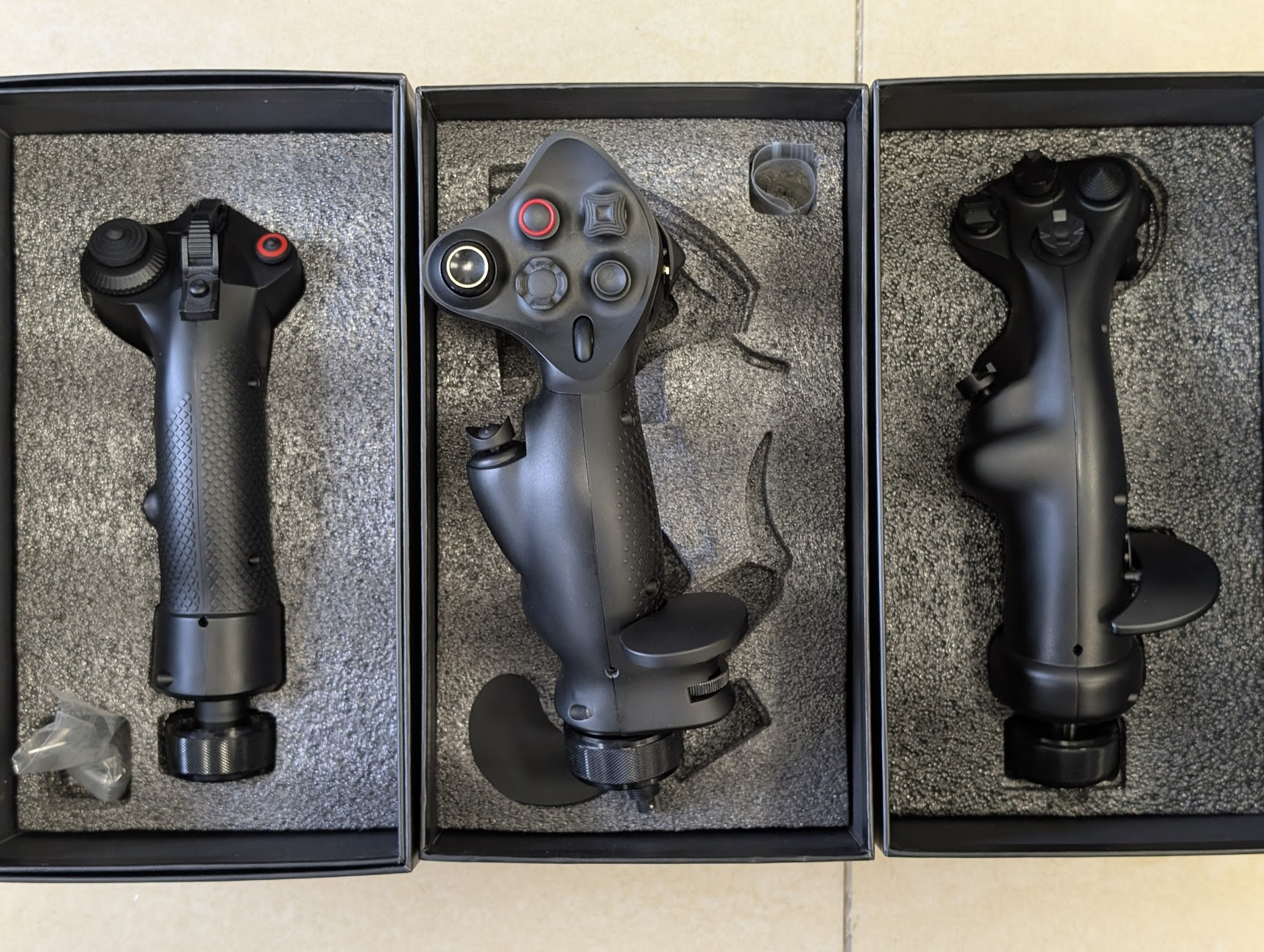
FC Technologies were kind enough to lend me their line of grips for testing and support for the next firmware revision In the photo - NS-37, EVO and FC-35 grips. Gotta say, the build quality feels pretty nice.